

A Guide to Selecting Artist Grade Oil Paints Online in 2026
What if the tube of paint you just bought contains more marble dust and linseed oil than actual pigment? It's a valid concern when you're looking for artist grade oil paints online in 2026, especially with recent global …What if the tube of paint you just bought contains more marble dust and linseed oil than actual pigment? It's a valid concern when you're looking for artist grade oil paints online in 2026, especially with recent global pigment shortages and the rise of synthetic fillers. We understand the hesitation of investing your hard-earned A$ in materials that might not live up to the professional standards your work deserves. You want the peace of mind that comes with knowing every brushstroke is lightfast and archival, ensuring your paintings remain vibrant for generations without fading or cracking.
This guide will give you the technical knowledge to navigate labels and pigment codes with total confidence. You'll learn exactly how to identify genuine professional-grade materials and why choosing high-pigment options like Langridge oil paints makes a practical difference to your finished results. We'll also look at setting up a studio with archival surfaces, from kiln-dried pine frames to triple-primed linen, so you can focus on practising your technique knowing your tools are up to the task.
Key Takeaways
- Learn why high pigment concentrations and premium binders like linseed oil are essential for creating a durable paint film that resists cracking over time.
- Discover how to navigate technical labels and series numbers when purchasing artist grade oil paints online to ensure you get the best value and colour purity for your palette.
- Understand the importance of using archival surfaces, such as triple-primed cotton or linen canvas, to protect your work from oil rot caused by acidic binders.
- Find out how buying full cartons of professional canvas can help you save on studio essentials, leaving more in your budget for premium pigments like Langridge oils.
What Defines Artist Grade Oil Paints?
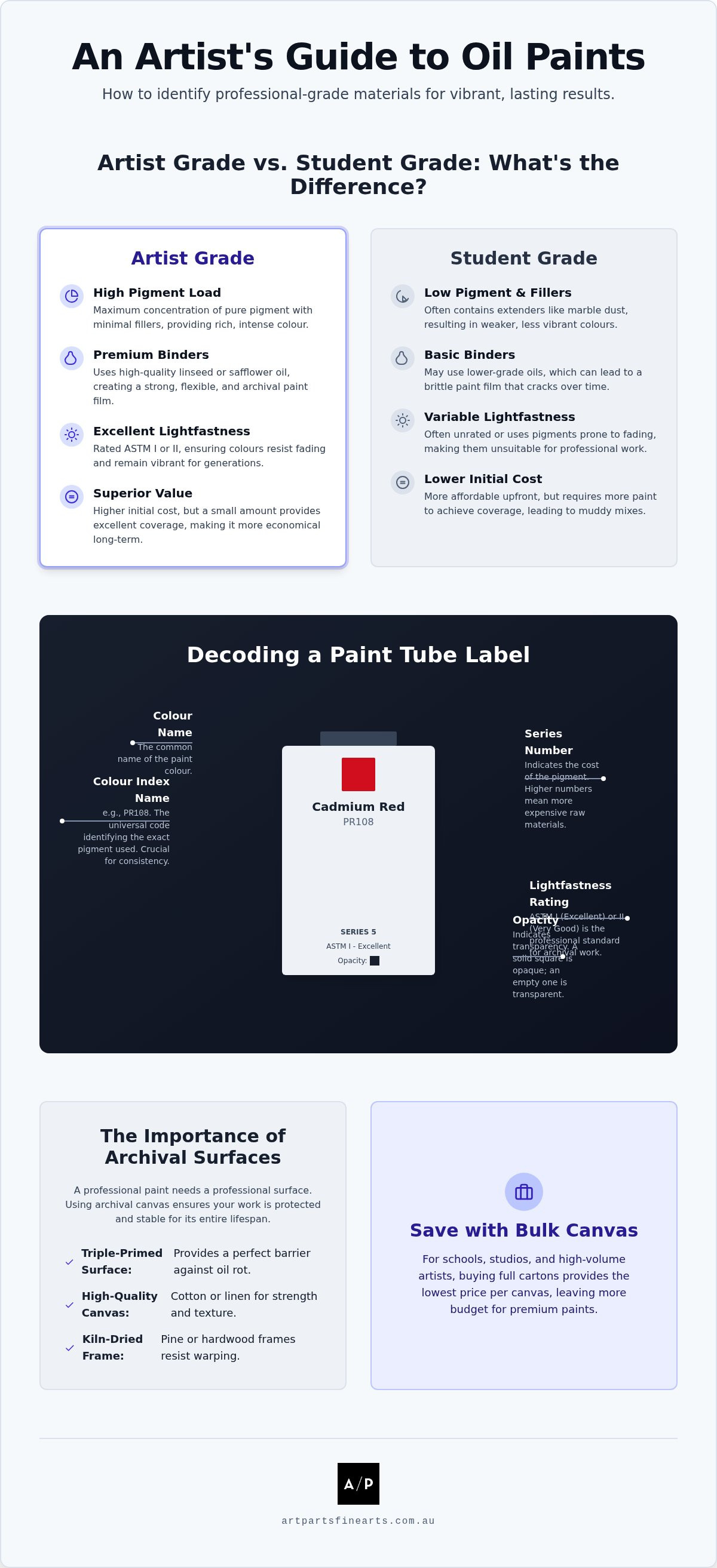
Artist grade oil paint is a high-pigment medium free from excessive extenders or fillers. When you browse for artist grade oil paints online, you're looking for a product where the ratio of pigment to binder is as high as possible. Student-grade paints often use "hues" or bulking agents like marble dust to keep costs down. This usually results in weaker colours and muddy mixes. Professional paints prioritise the purity of the pigment, giving you vibrant results and better control over your palette.
The binder used also dictates the longevity of your work. Most professional ranges use high-quality linseed oil, though some use safflower oil for whites and light blues to reduce yellowing. This chemical relationship between pigment and oil creates the paint film. For those interested in the chemistry, you can find a comprehensive overview of oil paint and its historical development. Using premium binders ensures the paint remains flexible. This prevents the brittle cracking that often plagues cheaper alternatives over decades.
Pigment Load vs Fillers
Student-grade paints are often bulked out with transparent fillers. This means you must use more paint to achieve the same coverage. In contrast, professional colours like those in our oil paint collection have a dense pigment load. This density allows for cleaner colour mixing. Because there are fewer fillers to interfere, your secondary and tertiary colours stay bright rather than turning grey. Investing in artist grade oil paints online saves money in the long run because a small amount of paint goes much further on the canvas.
The Importance of Lightfastness
Professional paints are rated using the ASTM international standard. Ratings of I (Excellent) or II (Very Good) are the benchmark for gallery-standard work. These ratings tell you how well a pigment resists fading when exposed to light. Choosing paints with high lightfastness ensures that your work stays true to your original vision. It's a vital consideration for any artist intending to sell their work or exhibit in a professional setting.
Technical Specifications: Pigments, Binders, and Labels
Reading a label is the first step when you buy artist grade oil paints online. You'll often see symbols like squares or circles indicating opacity. A solid black square means the paint is fully opaque, while an empty square indicates transparency. Single pigment paints like those from Langridge oil paints prevent "muddy" results when mixing because you aren't combining pre-mixed secondary colours. This purity allows for more predictable and vibrant colour shifts on your palette.
The oil used as a binder also changes the paint's behaviour. Linseed oil is the standard for its strong, flexible film, but it can yellow slightly over time. Safflower and poppy oils are clearer alternatives often used for whites to maintain brightness. While traditionalists stick to these, research into modern paint formulations shows how synthetic binders and additives can offer different drying characteristics for contemporary techniques.
Reading the Colour Index Name
Look for the Colour Index Name on the back of the tube. Codes like PB28 (Cobalt Blue) or PR108 (Cadmium Red) identify the specific mineral or chemical used. This is crucial because two brands might call a colour "Naples Yellow", but the pigment codes will tell you if it's a genuine mineral or a synthetic imitation. Relying on these codes ensures consistency across different batches and brands.
Drying Times and Fat over Lean
Not all pigments dry at the same rate. Earth colours like Umber dry quickly, while Cadmiums can take days. Understanding this helps you follow the "fat over lean" rule, where you increase the oil content in upper layers to prevent cracking. Using technical painting mediums helps manage these drying rates effectively. If you're planning a large-scale project with these professional materials, consider our bulk canvas options to ensure you have enough archival surface to work on.
A Practical Guide to Buying Professional Oils Online
Choosing artist grade oil paints online requires more than just picking a pretty shade from a grid. Digital colour charts are helpful, but they are limited by your screen's calibration and brightness settings. To get an accurate idea of what you're ordering, check the series numbers on the tubes. These numbers, usually ranging from 1 to 5, reflect the rarity and sourcing cost of the raw pigment. Earth colours like Yellow Ochre are typically Series 1, whereas genuine Cadmiums or Cobalts sit in higher series due to their production costs. Understanding this helps you budget for a professional palette without any surprises at the checkout.
For more specific details on chemical composition and handling, refer to our Langridge oil paints guide. Shipping art supplies within Australia also presents unique challenges. Professional oil tubes are dense and heavy, requiring sturdy packaging to prevent bursting or leaking during transit. We take extra care to ensure your paints arrive in perfect condition, regardless of whether you're in a capital city or a regional studio.
Interpreting Swatches and Samples
When you browse online, look for images that show both the "mass tone" (paint straight from the tube) and the "undertone" (the colour when spread thinly). The undertone reveals the true character of the pigment, such as a Phthalo Blue's distinct green bias. Comparing these characteristics across professional brands allows you to build a versatile palette that behaves predictably when mixed on the palette or the canvas.
Safe Handling and Studio Storage
Our Australian climate can be harsh on fine art materials. Extreme heat often causes the linseed oil to separate from the pigment inside the tube. It's best to store your paints in a cool, dark cupboard to maintain their creamy consistency and prevent the oil from going rancid. Remember that some professional pigments contain heavy metals like cadmium or cobalt. Practise safe studio habits by wearing gloves or using a barrier cream, and always wash your hands thoroughly after a painting session.
The Importance of Professional Surfaces: Bulk Canvas Solution
Investing in artist grade oil paints online is only half the battle for archival longevity. If you apply professional pigments to a poorly prepared, thin canvas, you risk the structural failure of your work. Low-quality surfaces often lack proper "sizing", which is the sealant that prevents the linseed oil in your paint from soaking into and rotting the fabric fibres. A professional surface provides a consistent "tooth"-the physical texture that grips the paint-ensuring that heavy layers don't delaminate or flake off over time.
Most professional canvases, like our CreateART range, come triple-primed with high-quality acrylic gesso. This creates a flexible, non-absorbent barrier that supports the oil film. Understanding the technical side of professional priming and surface preparation is crucial for ensuring the longevity of your artwork.
Achieving Better Value with Full Carton Orders
Professional artists and schools can offset the higher cost of premium pigments by purchasing bulk stretched canvas in full cartons. Buying by the carton significantly lowers the price per unit, making it easier to maintain a high standard of materials across a whole series. It's a practical way to ensure your studio is always stocked with archival-ready surfaces without blowing the budget.
Selecting the Right Profile and Weight
The weight of your canvas matters, especially for heavy impasto techniques. A 380gsm cotton duck is versatile for most work, while a heavy 500gsm linen provides the extra strength needed for large-scale commissions. We use kiln-dried pine frames with profiles ranging from 16mm to 37mm to ensure your work stays square. These frames resist warping even in the varying humidity of the Australian climate, providing a reliable foundation for your creative legacy.
Building Your Professional Creative Legacy
Choosing the right materials is a commitment to the longevity of your work. By understanding how to identify artist grade oil paints online through pigment codes and binder quality, you've taken a vital step toward professional excellence. High-quality pigments always perform best on a stable foundation. Archival surfaces with triple-primed professional acrylic gesso and kiln-dried pine frames ensure your paintings won't warp or rot over time. Whether you're working on heavy 500gsm linen or a versatile cotton duck, proper preparation supports your creative vision for decades.
We're here to help you find the tools that match your creative ambition. It's a rewarding process to see your work evolve as you master these premium mediums and surfaces. If you have questions about technical specs or need advice on building your first professional palette, reach out to our expert team. We're practising artists ourselves and always happy to help a fellow creator grow.
Frequently Asked Questions
Is artist grade oil paint worth the extra cost for a beginner?
Artist grade oil paint is definitely worth the investment for beginners because the higher pigment concentration makes colour mixing far more predictable. While the upfront cost is higher, you use significantly less paint to achieve vibrant results compared to student grade alternatives. Starting with quality materials prevents the frustration of "muddy" colours, allowing you to focus on developing your technique with professional standard tools from the very beginning.
What is the difference between linseed oil and safflower oil in professional paints?
Linseed oil is the traditional binder known for creating the most durable and flexible paint film, though it can yellow slightly over time. Safflower oil is a clearer alternative often used for whites and light blues to maintain their purity and prevent that yellowing. When you look for artist grade oil paints online, check the binder to ensure your choice suits your specific palette needs and long term archival goals.
How can I tell if an oil paint colour is lightfast when shopping online?
You can identify a colour's lightfastness by looking for the ASTM rating, typically displayed as Roman numerals I or II on the product description. Rating I indicates excellent lightfastness, while II signifies very good permanence. Professional retailers will list these specifications alongside the pigment codes. This ensures your work won't fade when exposed to light, which is a critical requirement for any pieces intended for gallery exhibition or sale.
Can I mix different brands of artist grade oil paints?
You can safely mix different brands of professional oil paints as long as they use compatible binders like linseed or safflower oil. Most reputable manufacturers adhere to similar chemical standards, allowing for a seamless transition between ranges on your palette. This flexibility is a major benefit when sourcing artist grade oil paints online, as it lets you cherry pick specific favourite pigments from various makers to build a customised kit.
Why do some professional oil paint colours cost more than others?
Professional oil paint prices vary based on the rarity and processing requirements of the raw pigments, which are categorised into series numbers. Earth colours like siennas are easier to source and fall into Series 1, making them more affordable. In contrast, genuine minerals like cobalt or cadmium require complex mining and refining processes, placing them in higher series. This tiered pricing reflects the actual cost of the raw materials in each tube.

Article by
Art Parts Fine Arts
Art Parts Fine Arts is an Australian art-supplies store based in Albury, shipping Australia-wide. Hand-picked by artists, our range covers paints, canvas, brushes, paper, printmaking and more, for everyone from students to professionals. We share practical guides and tips to help you get the most out of your materials.
Disclaimer
This article is general information to help you choose and use art materials. It is not professional, health or safety advice. Always follow the manufacturer's instructions and safety guidance for any product, and take care when using solvents, varnishes and other materials. Product availability, specifications and pricing may change, so please check the current product page for details.