

Best Drawing Paper: A Guide for Australian Artists
The most expensive professional pad on the shelf isn't necessarily the best paper for drawing your specific subject. You might find that a high-tooth pastel paper makes your fine graphite lines look jagged, while a smoot…The most expensive professional pad on the shelf isn't necessarily the best paper for drawing your specific subject. You might find that a high-tooth pastel paper makes your fine graphite lines look jagged, while a smooth hot-pressed sheet causes your charcoal to slide right off the surface. We've all felt the frustration of investing in a beautiful block of paper only to have it buckle under a light wash or pill when you try to lift a small mistake.
We know that choosing between different weights and textures can feel overwhelming when you just want to get on with your work. This guide simplifies the selection process, giving you the confidence to find the ideal surface for everything from quick sketches to archival watercolour and acrylic applications. We'll explain what technical terms like gesso, tooth, and gsm actually mean in a practical studio context. You'll learn how to match your chosen medium to the right material, ensuring your paper supports your technique and preserves your art for years to come.
Key Takeaways
- Learn how to match paper weight (gsm) and tooth to your specific medium to prevent buckling and ensure better pigment adhesion.
- Discover why smooth hot-pressed papers are ideal for fine graphite detail while a pronounced tooth is essential for charcoal and pastel work.
- Explore our top recommendations from professional collections like Baohong and Art Spectrum to find the best paper for drawing your next masterpiece.
- Understand the technical difference between standard acid-free paper and 100% cotton rag to guarantee the archival longevity of your artwork.
Understanding Paper Weight, Tooth, and Sizing
Selecting the best paper for drawing starts with understanding the technical specs on the cover of your pad. These terms describe how the surface will behave when you apply pressure or moisture. If you want to learn all about paper and its properties, you'll find that weight, texture, and chemistry are the three pillars of a good surface.
Why GSM Matters for Your Technique
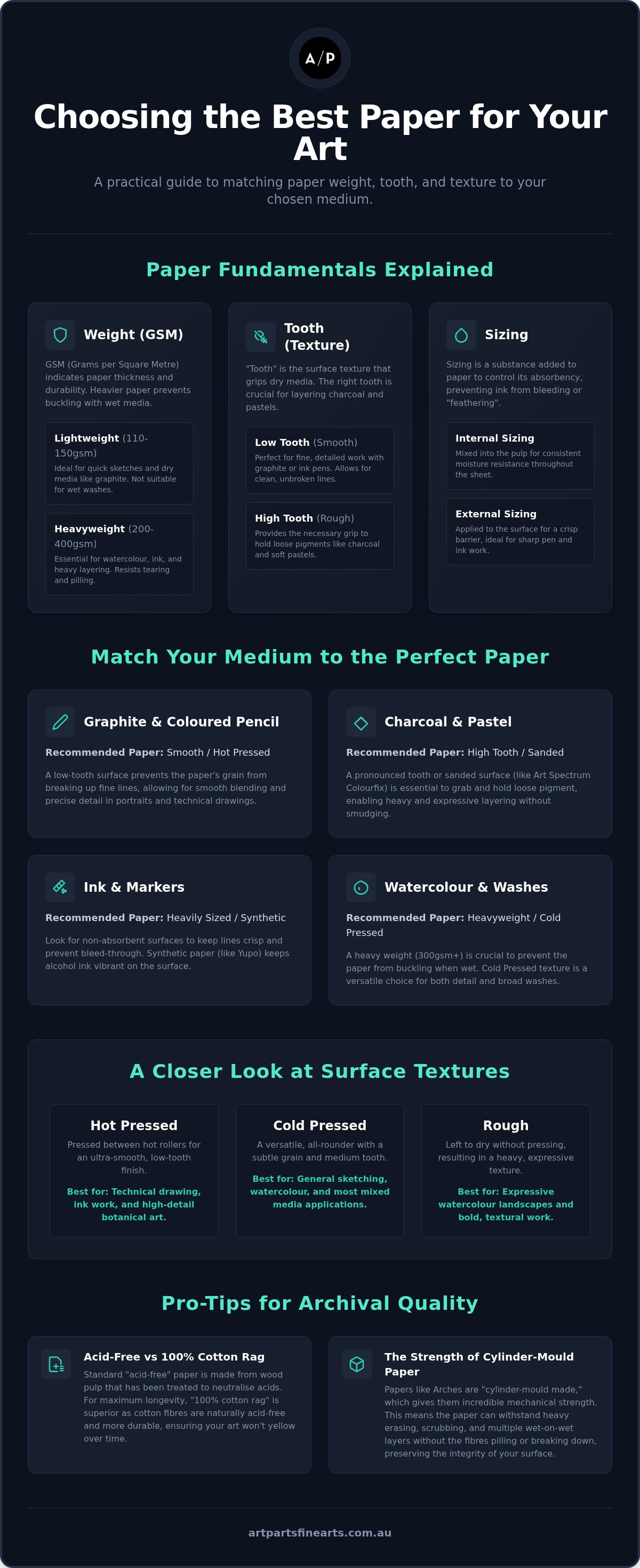
GSM is the weight of one square metre of paper. It tells you how much abuse the sheet can take before it buckles or tears. Choosing the right weight depends entirely on your process:
- Lightweight (110-150gsm): These are standard for sketching and dry media like graphite or coloured pencil. They're affordable but won't handle heavy erasing or wet layers.
- Heavyweight (200-400gsm): Essential for wet media, heavy layering, or mixed media work. These sheets stay flat and won't pill when you work back into them.
Tooth refers to the surface texture that holds dry media like charcoal and pastel. A smooth sheet has "low tooth," which is great for fine detail but won't hold many layers of pigment. A rougher sheet has "high tooth," providing the mechanical grip needed to keep loose particles from falling off the page.
Sizing is the treatment that controls how paper absorbs moisture and ink. Internal sizing is mixed into the pulp during manufacturing, providing consistent resistance throughout the sheet. External sizing is applied to the finished surface, creating a crisp barrier that's perfect for sharp pen work. This balance prevents your ink from "feathering" or bleeding into the fibres. For artists in our drawing community, finding the best paper for drawing often comes down to how this sizing lets colours sit on the surface rather than sinking into the page.
Selecting the Best Paper for Your Specific Medium
Your choice of medium is the biggest factor when hunting for the best paper for drawing. Each tool interacts differently with the paper fibres, which are shaped by the paper manufacturing basics used during production. If the surface isn't matched to your tool, you'll find yourself fighting the material instead of focusing on your art.
For graphite and coloured pencil work, smooth surfaces are king. Hot Pressed papers allow your pencil to glide across the page, which prevents the paper's grain from breaking up fine lines in detailed portraits. Conversely, charcoal and pastel need a pronounced tooth to grab and hold loose pigment. We often recommend Art Spectrum Colourfix for these media; its unique sanded surface allows for heavy layering that standard cartridge paper just can't support.
Ink and marker artists face the challenge of feathering or bleed-through. To keep your lines crisp, look for non-absorbent or heavily sized surfaces. Art Spectrum Yupo is a synthetic option that's completely non-porous, making it the best paper for drawing with alcohol inks or markers where you want the colour to stay vibrant on the surface. If you're incorporating wet washes, remember to choose a heavier weight to prevent the sheet from buckling as it dries.
Surface Textures: Hot Pressed vs Cold Pressed vs Rough
Choosing a texture depends on the look you want for your finished piece. You can browse our full paper collection to see these varieties in person, but here's the general rule for most projects:
- Hot Pressed: Pressed between hot rollers to create an ultra-smooth finish. It's the go-to for technical drawing and high-detail botanical work.
- Cold Pressed (Medium): The versatile all-rounder. It has a subtle grain that offers a lovely tactile feel for general sketching and light washes.
- Rough: This surface is left to dry naturally without pressing, resulting in a heavy, expressive texture perfect for landscapes.
Top Recommendations from Our Professional Paper Collection
We've hand-picked a selection of surfaces that meet our professional standards. For many professional artists, Arches Natural White (300gsm) remains the best paper for drawing and watercolour because of its incredible mechanical strength. It's cylinder-mould made. This provides superior stability, meaning it can withstand heavy erasure and multiple wet-on-wet layers without the fibres breaking down or pilling.
If you're looking for a reliable everyday option, Arttec Como Pads (210gsm) offer a versatile surface for students and hobbyists. They're thick enough to handle ink and light washes while staying affordable for daily practice. For those working on the move, the Baohong Academy Watercolour Sketchbook provides professional-grade 100% cotton paper in a sturdy, portable format that handles field studies beautifully.
When longevity is your absolute priority, Art Spectrum 100% Cotton pads are a reliable choice for professional archival work. These papers ensure your pigments won't shift or fade over time because they're free from wood pulp and harsh chemicals. You can find more details on how conservationists view these material choices in this National Gallery of Art guide to works on paper.
Specialty Papers for Modern Techniques
Sometimes traditional cotton fibres don't fit the vision for experimental pieces. Art Spectrum Yupo is a synthetic, completely non-porous surface that's perfect for alcohol ink or high-flow acrylic work where you want the paint to sit on top of the sheet. If you enjoy working with highlights and mid-tones simultaneously, Art Spectrum Toned Journals provide a neutral base that makes white charcoal or gouache highlights pop instantly.
Explore our full range of professional paper and pads here
Ensuring Longevity: Archival Standards and Studio Storage
Many artists assume that a label saying "acid-free" is a total guarantee of longevity. While it's a good start, there is a significant difference between wood pulp paper treated to be pH neutral and 100% cotton rag. Wood pulp contains lignin, which naturally turns yellow and brittle. Manufacturers use chemicals to neutralise this, but for professional work, 100% cotton is the best paper for drawing because it's naturally acid-free and far more durable over decades.
True archival quality also depends on the absence of optical brighteners. These are chemical dyes used to make paper look brilliant white, but they eventually fade and cause the paper to shift back to a natural cream colour. To ensure your work remains consistent, choose papers that rely on high-quality fibres rather than chemical additives. Always look for pH-neutral options to protect your pigments from chemical reactions within the sheet itself.
Storage is just as vital as the material choice. Large sheets should be stored flat in a plan drawer or acid-free folder to prevent edge damage and curling. If you're working with dry media like charcoal, a light application of fixative will help bond the loose particles to the paper's surface. This prevents smudging during handling or when you're ready to frame your finished piece.
Studio Tips for Handling Fine Art Paper
Your skin contains natural oils that can leave invisible marks on high-quality surfaces. These marks often only become visible once you apply a wash or fine shading. We recommend wearing clean cotton gloves or placing a clean barrier sheet under your hand while you work. This simple habit keeps the surface pristine and ensures even pigment application.
If you're using paper from a roll, avoid reverse-rolling it too tightly to flatten it. This can crease the delicate fibres. Instead, unroll it on a flat surface and weigh down the corners for a day. You can also learn about professional drawing tools and charcoal to see how different materials interact with these archival surfaces.
Elevate Your Art with the Right Surface
Finding the best paper for drawing involves more than just picking a pad off the shelf; it's about matching the surface's tooth and weight to your specific technique. We've covered the essential differences between wood pulp and 100% cotton rag, along with the studio habits that preserve your work. These technical details provide the foundation for better drawing results and long-lasting archival stability, ensuring your art remains as vivid as the day you finished it.
Our collection features professional-grade brands like Arches and Saunders Waterford, each carefully chosen by our staff of local artists for their exceptional durability and performance. We focus on providing archival options that give you the freedom to layer, erase, and experiment without compromise. Whether you're sketching in the field or working on a detailed studio portrait, the right paper makes every mark count.
We're always here in our Albury store to help you choose the perfect material for your next project. Happy creating.
Frequently Asked Questions
What is the difference between Hot Pressed and Cold Pressed paper?
Hot Pressed paper is smooth because it's passed through heated rollers, while Cold Pressed has a distinct texture. Many find Hot Pressed is the best paper for drawing fine details because it doesn't break up your lines. Cold Pressed is more versatile for general sketching and watercolour washes. Choosing the right texture depends on whether you want your medium to sit flat or catch on the paper's grain.
Is 100% cotton paper worth the extra cost for beginners?
Investing in 100% cotton paper is worthwhile if you plan to use heavy layering or wet media. Cotton fibres are stronger than wood pulp, allowing you to erase or scrub the surface without pilling. While beginners can practise on cheaper cartridge paper, using a professional surface helps you understand how high-quality materials should behave. It builds confidence as you won't be fighting with a fragile surface.
Can I use watercolour paper for graphite drawing?
Yes, watercolour paper is frequently the best paper for drawing with graphite or coloured pencils. Hot Pressed watercolour sheets provide a heavy, smooth surface that supports fine detail and heavy shading. This thickness prevents the paper from tearing when you apply pressure. Many professional illustrators prefer it over standard drawing pads because of its superior durability and the way its sizing keeps pencil marks crisp.
What does "acid-free" actually mean for the life of my artwork?
Acid-free paper has a neutral pH, which prevents the sheet from turning yellow or becoming brittle as it ages. Standard wood pulp papers contain lignin that creates acid over time, eventually destroying the fibres and your artwork. Choosing archival, acid-free surfaces ensures your drawings remain stable for decades. For the highest standard of longevity, look for 100% cotton rag options that are naturally free from these damaging acids.
How do I stop my paper from buckling when using wet media?
To prevent buckling, you should use paper with a weight of at least 300gsm or stretch your paper before starting. Stretching involves wetting the sheet and taping the edges to a board with gummed tape. As it dries, the paper tightens like a drum and stays flat even when you apply heavy washes. Using a paper with strong internal sizing also helps the fibres resist moisture more effectively.

Article by
Art Parts Fine Arts
Art Parts Fine Arts is an Australian art-supplies store based in Albury, shipping Australia-wide. Hand-picked by artists, our range covers paints, canvas, brushes, paper, printmaking and more, for everyone from students to professionals. We share practical guides and tips to help you get the most out of your materials.
Disclaimer
This article is general information to help you choose and use art materials. It is not professional, health or safety advice. Always follow the manufacturer's instructions and safety guidance for any product, and take care when using solvents, varnishes and other materials. Product availability, specifications and pricing may change, so please check the current product page for details.