

Daniel Smith Watercolour Sets in Australia: How to Choose
A larger colour selection doesn’t automatically make a watercolour set more useful. When comparing daniel smith watercolour sets australia, look at the colours included, how they might mix and whether you’ll use them reg…A larger colour selection doesn’t automatically make a watercolour set more useful. When comparing daniel smith watercolour sets australia, look at the colours included, how they might mix and whether you’ll use them regularly.
Start with the subjects you like painting, the colours you already own and whether you want a compact or broader selection. This guide shows you how to compare set details, choose colours that suit your practice and pick paper and basic tools to get started.
Key Takeaways
- Check the listed colours for each Daniel Smith watercolour set rather than assuming every set contains the same paints.
- Match the palette to what you enjoy painting, such as landscapes, florals or a mix of subjects.
- Compare the colour list with paints you already own to avoid doubling up on colours you rarely use.
- Choose watercolour paper to use with your paints, then try a small mixing exercise to see how the colours work together.
- Start with a manageable palette. You don’t need specialist knowledge to make a thoughtful choice.
Choosing Daniel Smith watercolour sets in Australia
A watercolour set is a group of paints sold together. The colours and format can vary, so read the details for the specific set rather than assuming every set contains the same paints. A useful palette is one with colours you’ll use, not necessarily the one with the most paints.
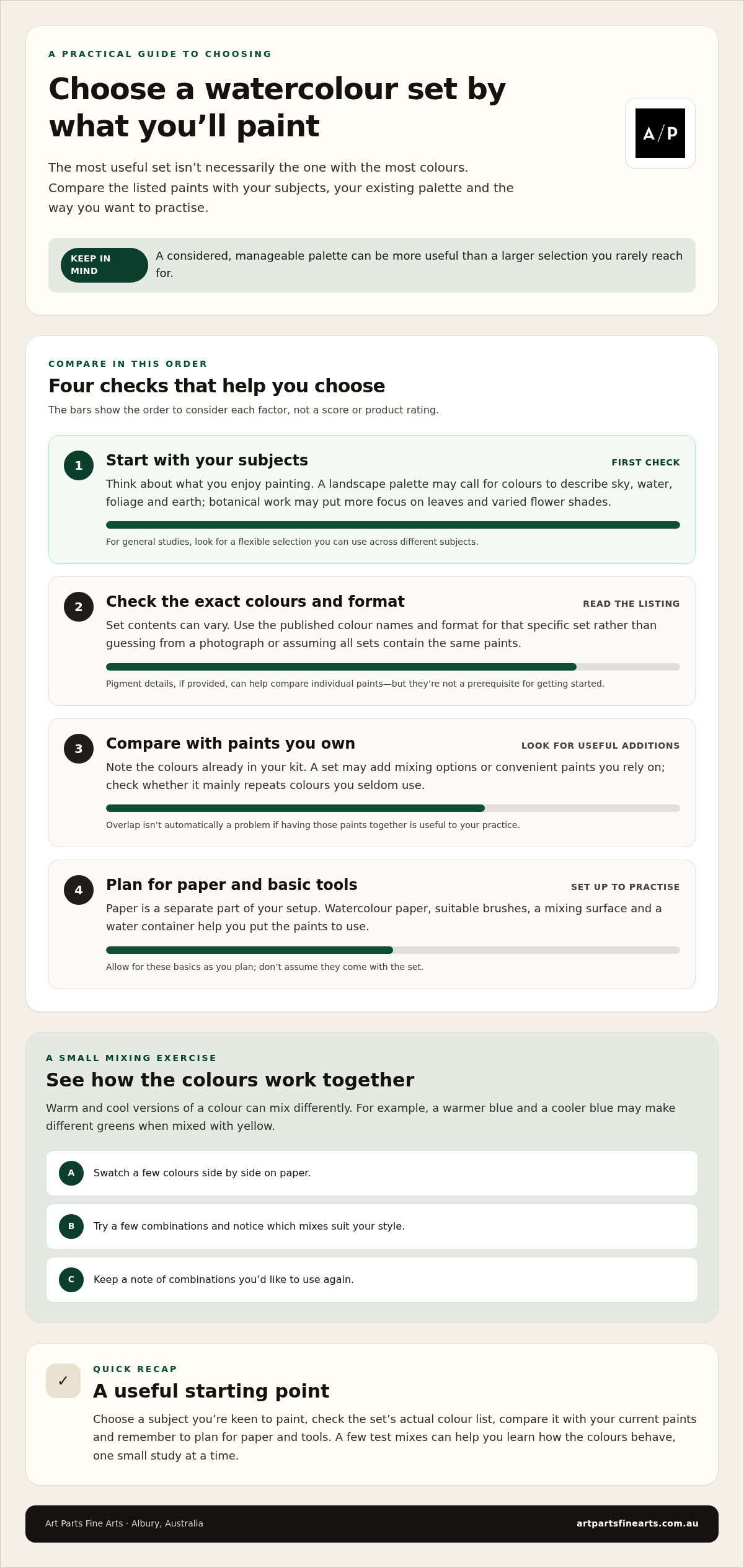
If you’re comparing daniel smith watercolour sets australia, start with what you like to paint. A landscape palette may have different priorities from one for florals, while a general practice palette needs to work across the subjects you want to try. Think about your existing paints, too. A set that adds useful mixing options may suit you better than one that repeats colours you already own.
How a watercolour set differs from choosing individual paints
A set gives you a ready-grouped selection, which can make it easier to begin without choosing every colour separately. Buying individual paints lets you build a palette around particular subjects, preferred colours and techniques. Neither approach suits everyone. Consider whether you’d rather start with a selected group or choose each paint to fit an established way of working.
What to check before buying a Daniel Smith set
Check the exact colour names and format shown for the set you’re considering. Then think about whether those colours suit your subjects and how they might work with paints you already have. If you’re new to watercolour, you don’t need to know pigment codes or have a fixed palette in mind. Begin with colours you’re likely to use and learn how they mix through practice.
- Read the listing: Confirm the colours and format for that particular set.
- Picture your subjects: Consider whether the selection supports the landscapes, florals or other work you enjoy.
- Check for overlap: Compare the set with paints already in your kit.
For a broader introduction to the medium, see Watercolor painting, which covers materials and techniques as well as the history of watercolour. You can also browse the watercolour and paint range as you compare options.
How palette choices shape a Daniel Smith watercolour set
A palette is the group of colours you use together, not a promise of what any particular set contains. When comparing daniel smith watercolour sets australia, consider your subjects and the colours you reach for most. Then judge the listed colours by how well they fit your palette, rather than by the colour count alone.
A focused palette can make mixing more consistent because you become familiar with how the same paints combine. It also makes it easier to spot which colours you use often and which ones you can leave out of your working selection.
Match colours to the subjects you enjoy painting
Your subjects are a practical starting point. A landscape painter might look for colours to describe sky, water, foliage and earth, while someone painting botanicals may prioritise colours for leaves and varied flower shades. For general studies, a flexible selection can help you explore different subjects without filling your palette with colours you seldom use.
Before choosing, note the colours you already use. If you often mix a particular shade, consider whether the colours in the set could help you make it or whether they simply duplicate paints you own. Warm and cool versions of a colour can also mix differently. For example, a warmer blue and a cooler blue may create different greens when mixed with yellow. You don’t need to memorise colour theory. A few test mixes will show you which combinations suit your style.
Understand pigment information without getting lost in jargon
A pigment is the colouring material in paint. If a product listing provides pigment details, they can help you compare individual colours, especially when two paints have similar names. Use this information to understand what’s in the paint, not as a test you must pass before you begin. Start with the colours and subjects that interest you, then look up unfamiliar terms when they become useful.
Swatch a few colours side by side and mix them on paper to see how they work together. Keep a note of combinations you like so you can make more deliberate choices as your practice develops. To compare individual paints as you refine your palette, browse the watercolour paint range.
How to choose a Daniel Smith watercolour set for your painting practice
A simple process makes comparing daniel smith watercolour sets australia more straightforward. You don’t need specialist knowledge to choose a useful starting point. Focus on what you want to paint and which colours you’ll actually use.
- Identify your subjects. Think about the landscapes, botanicals or other studies you most want to paint. This gives you a practical way to judge whether a set’s colour selection fits your plans.
- Review the listed colours and format. Read the product details for the specific set. Use its published colour list rather than guessing from a photograph, which may not show every paint included.
- Compare with paints you own. If you already have watercolours, note their colours and see whether the set adds options you’d use or mainly repeats familiar choices.
- Consider paper and tools. These are separate parts of your setup. Watercolour paper, suitable brushes, a mixing surface and a water container help you put the paints to use.
A simple set-selection checklist for beginners
Start with a subject you’re keen to paint, then check whether the set’s listed colours seem useful for it. A manageable palette gives you room to practise mixing without making a long list of technical decisions first. Learn how the colours behave as you paint, one small study at a time.
Paper affects the painting process, so consider it alongside your paints rather than assuming it comes as part of a set. Browse watercolour paper and pads for a surface to practise on, and allow for basic tools as you plan your setup.
Choosing a set when you already own watercolours
If you already have a palette, compare the set’s published colour list with your current paints. Ask whether it would broaden the colours you can mix or give you convenient access to paints you rely on. Overlap isn’t automatically a drawback if you want a spare or prefer a grouped selection, but it helps to know what you’re adding before you choose.
Once you’ve identified what would complement your existing supplies, browse the watercolour paint collection to compare related paints.
Ready to begin? Explore Daniel Smith watercolours at Art Parts Fine Arts.
Using your watercolour set: paper, practice and next steps
Paint is only part of a workable watercolour setup. Paper is made to work with water-based painting, and its feel and response affect how you apply washes and build colour. As you put daniel smith watercolour sets australia into practice, give yourself room to test the paints rather than expecting the first study to go perfectly.
Choose paper and tools to support your paints
Choose watercolour paper that suits the way you plan to paint, whether you're making small colour studies or working on a larger piece. You don't need to settle every detail before you begin. Consider paper, brushes and useful accessories as you build your setup, and explore the paper and watercolour pads range to compare options.
A brush, a mixing surface and a container of clean water are useful basics. Start with tools that let you apply a wash and mix colours comfortably, then add supplies as you learn what your painting practice calls for.
Build confidence through simple colour studies
Set aside a practice sheet and try this short exercise:
- Paint a small swatch of each colour, keeping its name beside it.
- Mix pairs of colours and add a small swatch of each mixture.
- Note combinations you'd like to use again, such as a mix that suits a recurring subject.
These tests help you see how your paints behave on your chosen paper and give you a personal reference to return to. Keep notes brief: the colours used and a few words about the result are enough. If a mix surprises you, treat it as useful information, not a mistake. Experimentation is part of learning your palette, whether you're new to watercolour or refining an established approach.
Explore the paper and painting supplies at Art Parts Fine Arts as you prepare for your next study. If you also work in acrylic or oils, you can explore the canvas range separately for those projects.
Choose a palette that fits your next painting
A useful watercolour set suits what you paint and the colours you enjoy using, not simply the set with the most paints. When comparing daniel smith watercolour sets australia, check the listed colours and format, consider what you already own, and choose a palette you can see yourself reaching for.
Give your paints time on paper, too. A few swatches and simple mixing tests can show you how the colours behave together and help you feel more confident in your choices. You don’t need specialist knowledge to begin. Curiosity and practice are enough to get familiar with a palette.
Art Parts Fine Arts offers Daniel Smith watercolours alongside paper and other art materials, with Australia-wide shipping. If your studio work also includes painting on canvas, you can explore the full-carton range as a separate option.
Take your time choosing, then make a small study and see where your colours lead. To compare Daniel Smith watercolours and other paints, explore the paint range at Art Parts Fine Arts.
Frequently Asked Questions
Is a Daniel Smith watercolour set suitable for beginners?
Yes, a Daniel Smith watercolour set can be a convenient way to begin if its colours suit the subjects you want to paint. Read the product details and compare the listed colours with any paints you already own. You don’t need to understand every pigment term before choosing. Start with a few simple swatches and mixing studies to learn how the paints behave together.
What should I compare when choosing a Daniel Smith watercolour set?
Compare the published colour list with your subjects, existing paints and preferred palette. For daniel smith watercolour sets australia, check the specific product details rather than assuming sets share the same contents. If pigment information is included, use it to distinguish individual colours, but don’t let unfamiliar terminology put you off. A smaller selection you’ll use regularly may suit your practice better than a larger group of colours you rarely use.
Can I use Daniel Smith watercolour paints with any watercolour paper?
Choose paper intended for watercolour, and remember that papers can differ in surface and format. Those differences may affect how the paint feels to apply, particularly for broad washes or controlled details. Try a small study on the paper you plan to use to see how your paints and chosen surface work together before starting a larger piece.
How do I choose a watercolour palette for landscapes or florals?
Begin with the subjects you paint most and note the colours you reach for often. Landscape work and florals may call for different colour priorities, but neither subject requires one particular set. Read the listed colours, then test a few combinations on practice paper. You’ll learn which mixes suit your way of painting and can adjust your working palette as your subjects or preferences change.
Do I need a watercolour set, or should I buy individual colours?
A set provides a grouped selection of paints, while buying individual colours gives you more control over your palette. A set may suit you if you want a convenient starting point. Individual paints can make sense if you already know which colours you use. Compare the exact set contents with your existing supplies. Neither option automatically offers better value, so choose based on what you’ll use.
What else do I need to start painting with a watercolour set?
Alongside your paints, plan for watercolour paper, suitable brushes, clean water and a surface for mixing. You can begin with these basics rather than buying every accessory at once. Make a few small colour studies, then consider whether another tool would genuinely help with a technique or subject you want to explore.

Article by
Art Parts Fine Arts
Art Parts Fine Arts is an Australian art-supplies store based in Albury, shipping Australia-wide. Hand-picked by artists, our range covers paints, canvas, brushes, paper, printmaking and more, for everyone from students to professionals. We share practical guides and tips to help you get the most out of your materials.
Disclaimer
This article is general information to help you choose and use art materials. It is not professional, health or safety advice. Always follow the manufacturer's instructions and safety guidance for any product, and take care when using solvents, varnishes and other materials. Product availability, specifications and pricing may change, so please check the current product page for details.