

Gouache Painting for Beginners: A Practical Guide
Gouache is often described as the bridge between watercolour and acrylic, yet it possesses a temperamental personality all its own. Achieving that signature flat, velvet finish requires more than just a steady hand; it d…Gouache is often described as the bridge between watercolour and acrylic, yet it possesses a temperamental personality all its own. Achieving that signature flat, velvet finish requires more than just a steady hand; it demands a specific understanding of how pigment and water interact on the surface. Many artists start their journey only to be met with cracked paint or muddy layers that refuse to stay put.
We understand how discouraging it is to watch a promising piece buckle because the paper weight was too light, or to see vibrant colours turn dull during the layering process. This guide focuses on essential gouache painting techniques for beginners to help you avoid these common pitfalls from your very first stroke. You'll learn the professional secrets to managing moisture and why your choice of surface is the foundation of every successful work.
We will walk through the exact water-to-paint ratios needed for opacity, the benefits of using archival surfaces like 300gsm paper or triple-primed CreateART canvases, and how to choose professional-grade supplies that grow with your skills. This practical approach ensures you spend less time fighting your materials and more time enjoying the unique, opaque beauty of this versatile medium.
Key Takeaways
- Understand why selecting a heavy surface between 380gsm and 500gsm is vital for preventing paper buckling and ensuring archival longevity.
- Master the "tea to butter" water-to-paint ratio to achieve the perfect balance of transparency and opaque coverage.
- Learn essential gouache painting techniques for beginners, including the flat wash method for creating professional, streak-free backgrounds.
- Discover why synthetic brushes are the preferred choice for moving heavy pigment compared to softer natural hair alternatives.
- Identify how to prevent common issues like paint cracking and muddy colours by managing layer thickness and drying times.
What is Gouache and How Does it Work?
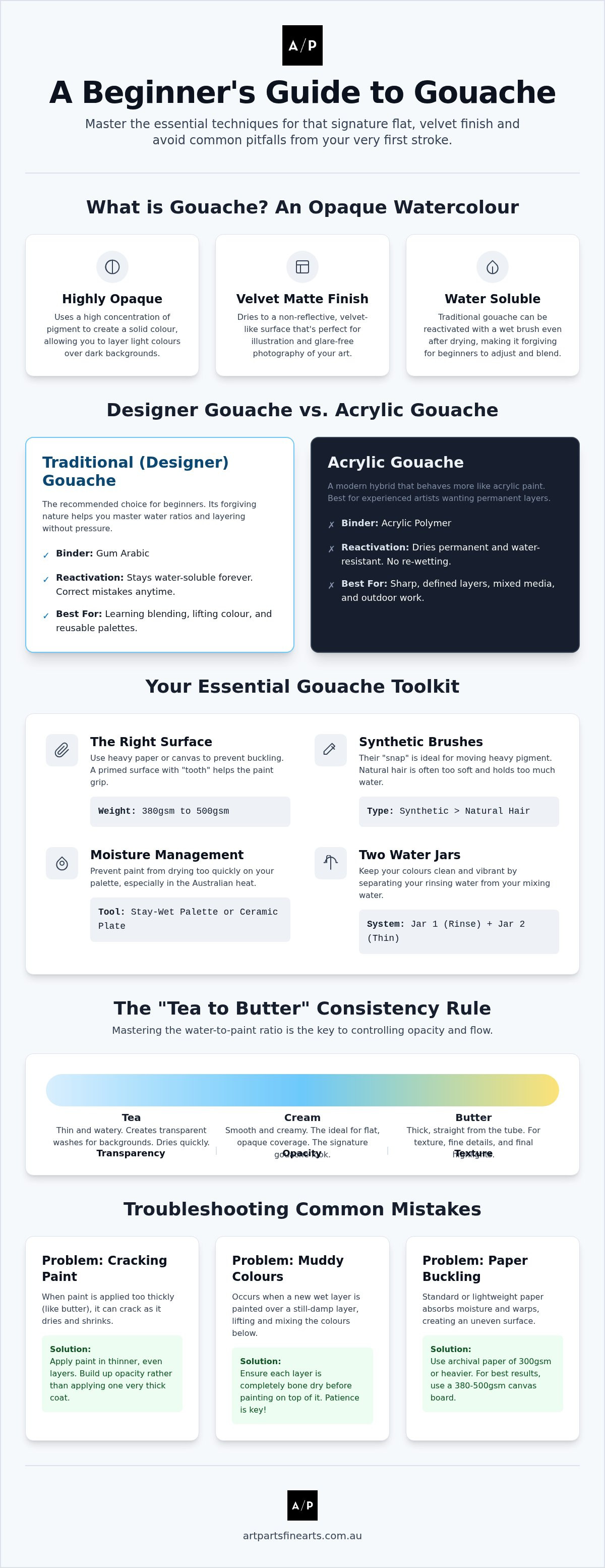
Gouache is a unique medium that many describe as an opaque watercolour. It uses a high concentration of pigment mixed with a natural binder, usually gum arabic, to create a paint that is heavy and solid. While traditional watercolours are prized for their transparency, gouache is designed to hide the surface beneath it. This opacity allows you to layer light colours over dark ones, which is a fundamental part of mastering gouache painting techniques for beginners.
The most striking feature of this paint is its beautiful matte finish. Because the surface doesn't reflect light, it provides a velvet-like appearance that is perfect for illustration and photography. You won't have to worry about glare or hot spots when digitising your work. Unlike acrylics, which dry with a slight plastic sheen and become permanent, traditional gouache remains water-soluble. This means you can reactivate the paint with a wet brush even after it has dried on your palette or the paper.
This ability to re-wet the paint makes it a very forgiving and economical choice for those just starting out. You can browse our range of professional paints to see the different pigments available. If you make a mistake or want to soften an edge, a little water is often all you need to make adjustments. It offers a level of control that sits comfortably between the fluidity of watercolour and the structure of oil or acrylic.
The Difference Between Designer and Acrylic Gouache
Traditional gouache, often called "Designer Gouache," stays water-soluble forever. This allows for easy colour mixing and blending directly on the surface. Acrylic gouache is a different beast entirely; it uses an acrylic binder that makes the paint permanent once it dries. We generally recommend that beginners start with traditional gouache. Learning how to manage the reactivation of the paint is a vital skill that helps you understand water ratios and layering without the pressure of a permanent drying time.
Essential Supplies for Beginner Gouache Artists
Choosing your tools is the first step in mastering gouache painting techniques. While you might be tempted to use soft, natural hair brushes, synthetic brushes are actually better for this medium. They provide a specific "snap" that helps you move the thicker, heavier pigment across the surface with precision. Natural hair often holds too much water, which can make your paint streaky and thin.
The surface you choose is just as critical. Many beginners use standard paper only to find it buckles under the moisture. We recommend using professional-grade paper or CreateART canvases with weights between 380gsm and 500gsm. This thickness provides the durability needed for heavy washes. You should also look for surfaces treated with gesso. This is a primer that creates "tooth," which is a subtle texture that helps the paint grip the surface instead of sliding off.
Choosing the Right Surface
For larger beginner works, a stretched canvas offers a stable, professional foundation. Ensure your canvas is triple-primed with acrylic gesso to prevent the paint from sinking into the fabric. If you're planning a series of studies or working in a studio environment, you might consider a full carton of canvas to keep your costs down while you practise your craft.
Palette and Water Management
Managing your paint's moisture is a vital part of gouache painting techniques for beginners. In the Australian heat, pigments can dry out on your palette faster than you can use them. A stay-wet palette or even a simple ceramic plate can help keep your colours workable for longer periods. Always keep two jars of water on your desk. Use one exclusively for cleaning your brushes and the other for thinning your paint to ensure your colours stay vibrant and clean throughout the process.
Four Core Gouache Painting Techniques
Getting the water-to-paint ratio right is the foundation of most gouache painting techniques for beginners. We often use the "tea to butter" rule to help artists find the correct consistency for their goals. If you want a transparent background, thin your paint to a tea-like consistency. For solid, opaque coverage, aim for a creamy texture. For final highlights or thick accents, use the paint straight from the tube with a buttery feel.
One of the most rewarding aspects of gouache is its ability to layer from dark to light. Unlike watercolour, where you must carefully plan around your lightest areas, gouache allows you to paint a bright white highlight directly over a dark shadow once the base is dry. This opacity gives you the freedom to correct mistakes and build complex, vibrant compositions without losing the clarity of your colours.
Dry brushing is another essential skill for adding character to your work. By using paint with very little water on a stiff synthetic brush, you can skim the surface of your paper or canvas. This creates broken, textured strokes that are perfect for capturing the rough bark of a tree or the glint of light on a moving stream.
How to Achieve a Perfect Flat Wash
A flat wash provides that iconic, streak-free matte finish seen in professional illustrations. To get this right, mix a large pool of paint before you start to ensure colour consistency across the entire area. Use a wide, flat brush and work in steady, horizontal rows. Always overlap your strokes slightly and keep moving quickly to maintain a "wet edge," which prevents the paint from drying in visible sections.
Blending and Softening Edges
Blending with gouache requires a delicate touch. To soften a transition between two colours, wait for them to dry and then use a slightly damp brush to gently pull the edges together. This is known as wet-on-dry blending. Be careful not to overwork the area; scrubbing too hard with a wet brush will lift the bottom layer of paint and lead to muddy results.
Order a full carton of canvas for your technique practice
Troubleshooting Common Gouache Mistakes
Even with the best supplies, you will likely encounter a few hurdles as you learn the unique properties of this medium. Most frustrations stem from the way gouache reacts to water and layering. Addressing these issues early prevents you from wasting paint and helps you achieve the professional, matte finish that makes gouache so appealing. Here are the most common challenges and how to fix them:
- Muddy Colours: This occurs when you apply a wet layer over a base that hasn't fully set. While the Australian heat helps paint dry quickly, moisture can stay trapped in the lower layers of heavy paper. Always wait until the surface is completely matte and cool to the touch before adding detail.
- Cracking: Applying gouache too thickly, a style known as impasto, often leads to cracking. Unlike acrylic, gouache lacks a flexible plastic binder and will fracture as the water evaporates. Keep your layers thin and build opacity through pigment load rather than physical height.
- Lifting: Because gouache is always water-soluble, your brush can easily pick up the underlayer. To avoid this, use a soft touch and a brush that isn't dripping with water. One or two confident strokes are better than scrubbing back and forth.
Since gouache remains sensitive to moisture, you must protect your finished work. A light spray of fixative can help stabilise the surface, but framing your art under glass is the most reliable way to ensure its longevity. This protects the delicate matte surface from dust, fingerprints, and humidity.
Storing Your Gouache Paintings
Never store your paintings in damp areas like garages or sheds. Gouache will absorb moisture from the air, which can lead to smudging or mould growth over time. We recommend organising your finished works and studies using acid-free paper and pads. These archival materials prevent the yellowing and degradation that can occur with standard stationery paper.
Developing Your Skills Further
Mastering gouache painting techniques for beginners takes time and consistent practise. One of the best ways to improve is by attending creative workshops where you can see these techniques demonstrated by experienced artists in person. We also suggest practising with a limited colour palette of just three or four tubes. This helps you master value and colour mixing without the distraction of too many choices, building the confidence you need for more complex compositions. If you are interested in applying these colour-mixing skills to other art forms, a Face Painting Course Online provides professional training in using opaque pigments for character design.
Mastering Your Gouache Journey
Mastering gouache painting techniques for beginners is a process of learning how to manage water ratios and surface texture. By sticking to the "tea to butter" consistency and allowing layers to dry properly, you can achieve that professional matte finish without the risk of muddy colours. Choosing a durable, archival surface is just as important as the paint itself for ensuring your work lasts over time.
As an independently owned business operated by local artists, we are committed to helping you find the right supplies for your craft. We supply professional CreateART and Wright & Co canvases nationally, offering the 380gsm to 500gsm weights that prevent buckling and provide a reliable foundation for your gouache studies. Our team understands the nuances of the medium and is always ready to share practical advice from our own studio experience.
Explore our range of professional paints and surfaces at Art Parts Fine Arts
We are excited to see your progress as you explore this versatile and forgiving medium. If you ever have questions about water ratios or surface selection, don't hesitate to reach out to our team for a chat about your next project.
Frequently Asked Questions
Can I use gouache on a normal canvas?
You can use gouache on a normal canvas provided it is primed with acrylic gesso to give the surface the necessary tooth for the paint to grip. We recommend using triple-primed surfaces like CreateART or Wright & Co stretched canvases, which are ready for immediate use. The gesso ensures the paint sits on top of the fabric rather than being absorbed into the fibres, which keeps your colours vibrant and opaque.
How do I stop my gouache paint from cracking?
To prevent gouache from cracking, you must avoid applying it in very thick, impasto-style layers. Because gouache lacks the flexible plastic binder found in acrylics, it becomes brittle when dry and will fracture if the layer is too heavy. Focus on achieving opacity through the high pigment load of the paint itself rather than the physical thickness of the application on your paper or canvas.
Is gouache better than watercolour for beginners?
Gouache is often seen as more forgiving when learning gouache painting techniques for beginners because of its ability to layer light colours over dark ones. In traditional watercolour, you must carefully plan your highlights and work from light to dark, which can be difficult for newcomers. Gouache allows you to fix mistakes and change your mind as you go, making it a less intimidating medium for those just starting their creative journey.
Do I need to varnish my gouache painting?
You shouldn't use traditional liquid varnishes on gouache because they can permanently alter the colours and destroy the signature matte finish. If you want to protect the surface from dust and humidity, a light coat of archival spray fixative is a much safer option. For the best long-term protection, we recommend framing your finished work under glass with a mount to prevent the surface from touching the glazing.
How much water should I mix with gouache?
The correct amount of water depends on the effect you want, but for most applications, you should aim for a consistency similar to heavy cream. This allows the paint to flow smoothly off your brush while maintaining its opaque, non-streaky appearance. If the paint feels draggy or leaves visible ridges, add a tiny drop of water; if it looks transparent like watercolour, you've added too much and need to mix in more pigment.

Article by
Art Parts Fine Arts
Art Parts Fine Arts is an Australian art-supplies store based in Albury, shipping Australia-wide. Hand-picked by artists, our range covers paints, canvas, brushes, paper, printmaking and more, for everyone from students to professionals. We share practical guides and tips to help you get the most out of your materials.
Disclaimer
This article is general information to help you choose and use art materials. It is not professional, health or safety advice. Always follow the manufacturer's instructions and safety guidance for any product, and take care when using solvents, varnishes and other materials. Product availability, specifications and pricing may change, so please check the current product page for details.