

Guide to 380gsm Cotton Canvas for Australian Artists
A 380gsm cotton canvas is a cotton painting surface with fabric that weighs 380 grams per square metre; the figure describes weight, not a quality grade. For Australian artists, studios, schools and art centres, choosing…A 380gsm cotton canvas is a cotton painting surface with fabric that weighs 380 grams per square metre; the figure describes weight, not a quality grade. For Australian artists, studios, schools and art centres, choosing one means checking how its fibre, priming and stretcher-bar construction suit the work and the quantity needed.
This guide explains what to look for when comparing listings, matching canvas to your medium and technique, and considering a full carton for regular use.
Key Takeaways
- Read 380gsm as the weight of the canvas fabric, not a grade that tells you everything about its quality or feel.
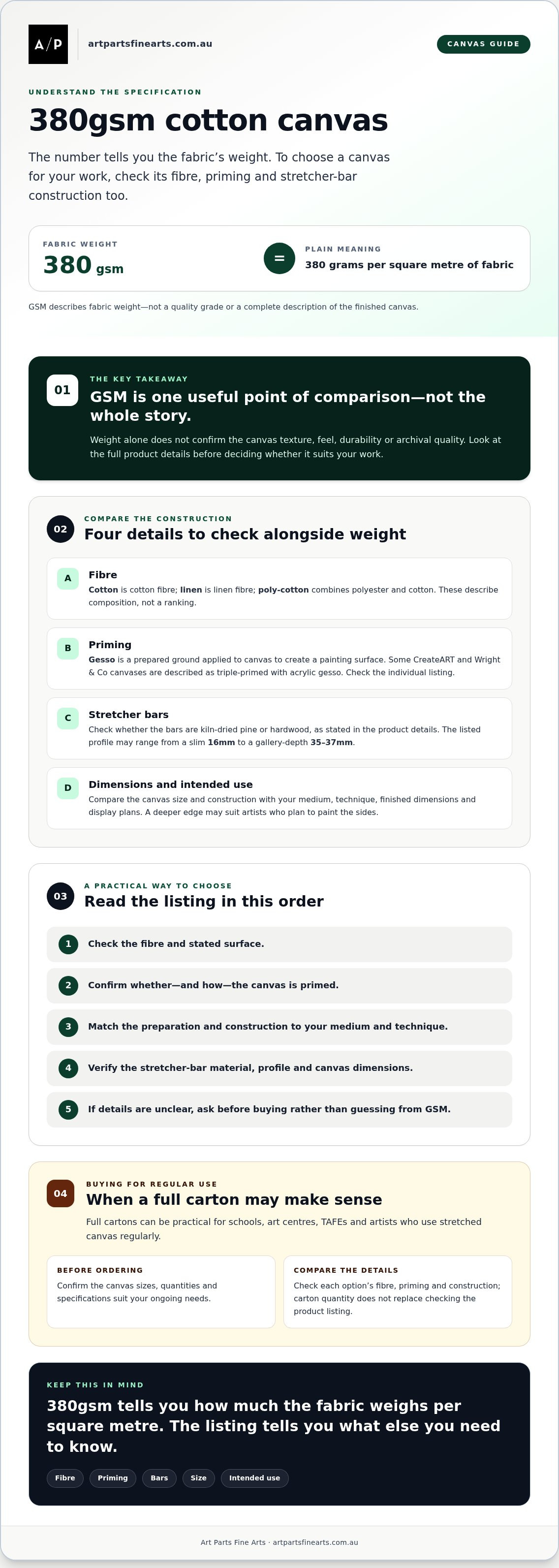
- When comparing cotton canvas 380gsm, check the fibre, priming and stretcher-bar details as well as the weight.
- Match the prepared surface and canvas construction to your medium, technique and intended finished dimensions.
- Before ordering a full carton, confirm the canvas sizes, quantities and specifications so they suit your ongoing needs.
- Full cartons may be practical for schools, art centres, TAFEs and artists who use stretched canvas regularly.
What does 380gsm cotton canvas mean for your painting?
Gsm means grams per square metre. It describes the weight of a fabric over a set area: a 380gsm canvas fabric weighs 380 grams per square metre. For artists and buyers, 380gsm cotton canvas is a cotton painting support specified by the weight of its fabric, not a quality grade.
That figure gives you one useful point of comparison, but it doesn’t tell you everything about the surface you’ll paint on. Canvas is a durable plain-woven fabric used as a painting support, and its feel and performance also depend on the fibres, preparation and how it’s stretched.
What the 380gsm figure tells you, and what it does not
Think of gsm as a measure of fabric weight across an area, rather than a score for the finished canvas. A higher number doesn’t, on its own, confirm a particular texture, level of durability or archival quality. Nor does it tell you whether the surface will feel smooth or have more texture under a brush.
Check the exact product listing for the canvas construction, priming, stretcher bars, dimensions and any stated intended use. These details help you judge whether the surface suits your medium and technique. If a listing is unclear, don’t assume that the weight alone answers the question.
Cotton canvas alongside linen and poly-cotton
Fibre type is another part of the choice. Cotton canvas is made from cotton fibres; linen canvas uses linen fibres; and poly-cotton combines polyester and cotton. Each describes the material, but none is automatically the right surface for every artist or project.
Consider how the surface feels to you, what you plan to paint, how you work and your budget. For example, an artist choosing between brushwork and palette-knife applications may want to compare the listed surface and priming, rather than relying on fibre or gsm alone. Check those specifications against your own preferences before committing to several canvases.
If you’re comparing options for ongoing use, you can inspect the available full carton stretched canvas. Use the listing details to compare materials and construction, then consider whether the surface and format fit the work you have in mind.
How do priming and canvas construction affect a 380gsm surface?
GSM alone cannot describe a canvas surface; fibre, priming and stretcher-bar construction are also part of what you’re buying. Read the product details together: the weight describes the fabric, while the fibre, prepared surface and frame help you assess whether the cotton canvas 380gsm suits your medium and working preferences.
What triple-primed acrylic gesso means
Gesso is a prepared ground: a coating applied to canvas to create a painting surface. Art Parts Fine Arts’ CreateART and Wright & Co ranges include canvases described as triple-primed with acrylic gesso, but don’t assume every 380gsm cotton canvas has this preparation. Check the individual listing.
Priming is a separate specification from fabric weight. Check what the listing says, then consider whether that prepared surface suits your chosen medium and how you like paint to sit on the canvas. If the details don’t say whether the canvas is primed, ask before buying.
Compare the fibre, not just the weight
Fibre type tells you what the canvas fabric is made from. The categories below describe composition, not a ranking. Your surface preference, medium, technique and budget can help guide the choice.
| Canvas type | What the fibre description tells you | What to consider |
|---|---|---|
| Cotton | The fabric is cotton. | Check the weave and priming details against your preferred brushwork or paint application. |
| Linen | The fabric is linen. | Consider whether its listed surface and price suit the work you plan to make. |
| Poly-cotton | The fabric combines polyester and cotton. | Check the product description for surface and preparation details that match your technique. |
Why stretcher-bar depth belongs in your checks
The listed stretched-canvas construction may include kiln-dried pine or hardwood bars, but confirm the material on the specific product. A slim 16mm profile has a different edge depth from a gallery-depth profile of 35 to 37mm. That difference may matter if you plan to paint the sides or prefer a deeper edge for display.
Before choosing, match the bar profile to your finished dimensions and display plans, and verify it in the listing. You can also compare full carton canvas options by their stated materials and construction.
How to choose 380gsm cotton canvas for your medium and technique
Choose a canvas by checking how its stated construction fits the way you paint, not by weight alone. This checklist helps you assess a cotton canvas 380gsm listing before you buy, whether you are selecting one canvas or planning repeat purchases.
- Medium: Check that the canvas is intended for your paint, such as acrylic or oil, and read the priming details.
- Technique: Consider how you apply paint. Fine brushwork, broad brushstrokes and palette-knife work can each call for a surface that feels right to you.
- Surface preparation: Confirm whether the canvas is primed and what the listing says about its ground. Match that prepared surface to your medium and working preferences.
- Dimensions: Check the canvas measurements against the intended finished work and where you will store or display it.
- Construction: Verify fibre, stretcher-bar material and profile for the exact item, rather than assuming these details from its weight.
Questions to ask before selecting a canvas
Start with the listing. Does it identify the fabric as cotton, and does it state a weight of 380gsm? Then confirm the priming, dimensions and bar details for that particular size. If you are buying canvases regularly, think about whether the format will suit your usual projects and how easily you can replenish it with a consistent specification.
Matching the surface to acrylic and oil painting
For acrylic practice, check the stated priming and surface preparation, and consider how they suit your brushwork or layered approach. Art Parts Fine Arts’ CreateART and Wright & Co ranges include canvases triple-primed with acrylic gesso, but check the individual listing rather than assuming every cotton canvas at this weight has that specification. You can also test your preferred heavy-body or fluid acrylics and assess material compatibility alongside your canvas choice.
For oil painting, pay particular attention to the product’s stated preparation and intended use. Do not infer suitability from gsm alone. Specialised approaches may have specific surface preferences, so check the canvas details against your own materials and technique before you commit.
When does full carton 380gsm cotton canvas make practical sense?
Full cartons are available for schools, art centres, TAFEs and high-volume artists who use stretched canvas regularly. Buying in bulk may offer savings and help maintain consistency across a group of canvases, but check the carton details first to make sure they suit your needs.
Is a full carton right for your studio or organisation?
Start by looking at how many canvases you use over a teaching period, project cycle or run of studio work. Compare that demand with the carton quantity and sizes listed, rather than assuming a particular mix. Check that the stated weight, canvas fibre, priming and stretcher-bar details suit the work planned.
A carton is more practical if its formats fit your projects and you have a suitable place to keep the canvases. If you use different sizes or surfaces, consider whether the listed contents will meet your needs before ordering.
Keep repeat orders organised and consistent
When a canvas works well for your classes or practice, record its key specifications so you can compare them with future listings. Note the fibre, weight, priming, dimensions and bar profile. Keeping those details together makes it easier to check whether a repeat order matches the materials you use.
Store canvases neatly where they’re less likely to be pressed, knocked or damaged by other supplies. This can help you track remaining sizes and plan replenishment. Art Parts Fine Arts ships Australia-wide; check the listing for carton contents and product details before ordering.
For a regular studio or teaching programme, compare the listed carton sizes and specifications with your expected use. The right full carton cotton canvas 380gsm canvas is the one that fits your work, storage and replenishment plans.
Choose a canvas that fits the work ahead
A 380gsm figure is a helpful starting point, not a complete description of a canvas. Check the fibre, priming, dimensions and stretcher-bar details together, then match them to your medium, technique and display plans. The right cotton canvas 380gsm is the one whose listed construction suits the way you work.
Art Parts Fine Arts carries CreateART and Wright & Co stretched canvas ranges, with options including cotton, linen, poly-cotton and black-primed surfaces. Full cartons may suit schools, art centres, TAFEs and artists who use canvas regularly. Before ordering, confirm the carton contents and specifications, and consider whether the sizes suit your ongoing projects.
Take time to compare the details, and you’ll be better placed to choose a surface that feels right for your practice. Whether you’re buying one canvas or planning for regular use, a clear match between the canvas and your work is a good place to begin.
Frequently Asked Questions
What does 380gsm mean on cotton canvas?
380gsm means the cotton canvas fabric weighs 380 grams per square metre. It’s a measure of fabric weight, not a rating of quality and not necessarily the weight of the complete stretched canvas with its bars. For a cotton canvas 380gsm listing, use the figure as one point of comparison, then check the fibre, priming, dimensions and stretcher-bar details to understand what you’re buying.
Is 380gsm cotton canvas suitable for acrylic painting?
It can be suitable for acrylic painting, provided the canvas’s preparation and surface suit your materials and technique. Check the individual listing to see whether it’s primed and what ground is specified. Art Parts’ CreateART and Wright & Co ranges include canvases triple-primed with acrylic gesso, but don’t assume every cotton canvas at 380gsm has this preparation. Consider your preferred surface for brushwork or palette-knife painting.
Can I use 380gsm cotton canvas for oil painting?
You may be able to use it for oil painting, but check the product’s stated priming and intended use rather than relying on gsm alone. A prepared ground is the coating that creates a painting surface, and its details matter when choosing canvas for your medium. Confirm the exact listing information, especially if you have a particular painting method or surface preference, and seek clarification if the preparation isn’t stated.
What is the difference between 380gsm cotton and linen canvas?
The main difference is the fibre: cotton canvas is made from cotton, while linen canvas is made from linen. The 380gsm figure describes fabric weight, so compare the stated weight of each listing rather than assuming both materials share that specification. Weave, priming and stretcher-bar construction can also differ. Choose based on the surface you prefer, your medium and technique, and the budget for your project.
Does a higher gsm mean a better canvas?
No. A higher gsm means the fabric has more weight per square metre, but it doesn’t automatically mean the canvas is better for your work. Weight alone doesn’t establish surface feel, priming, construction or suitability for a particular technique. Compare those details on the individual product listing, then choose a canvas that meets your practical needs and feels right for the way you paint.
Is buying full carton canvas practical for an individual artist?
It can be practical if you use canvas regularly, have room to store it and expect to work with the listed sizes. Before ordering, check the carton quantity and contents, including each canvas’s dimensions, weight, priming and bar details. Bulk buying may be worth comparing for value, but avoid assuming a particular saving or size mix. If your needs vary, estimate your use first and check the carton suits your plans.

Article by
Art Parts Fine Arts
Art Parts Fine Arts is an Australian art-supplies store based in Albury, shipping Australia-wide. Hand-picked by artists, our range covers paints, canvas, brushes, paper, printmaking and more, for everyone from students to professionals. We share practical guides and tips to help you get the most out of your materials.
Disclaimer
This article is general information to help you choose and use art materials. It is not professional, health or safety advice. Always follow the manufacturer's instructions and safety guidance for any product, and take care when using solvents, varnishes and other materials. Product availability, specifications and pricing may change, so please check the current product page for details.