

How to Choose the Best Heavy Body Acrylic Paint Brands for Professional Results
If you have ever finished a textured impasto piece only to find your peaks have slumped into flat puddles by morning, you have experienced the frustration of using the wrong heavy body acrylic paint brands. It is a commo…If you have ever finished a textured impasto piece only to find your peaks have slumped into flat puddles by morning, you have experienced the frustration of using the wrong heavy body acrylic paint brands. It is a common disappointment to see vibrant, thick strokes lose their volume or dry down to a dull finish that looks nothing like the wet paint on your palette. Many artists find the price difference between student and professional ranges confusing, especially when the tubes appear identical on the shelf.
We believe that understanding your tools is the first step toward creative confidence. Choosing a professional-grade paint is about more than just a label; it is about how pigment load and rheology, or how the paint flows and holds its shape, affect your final result. In this guide, you will discover how to evaluate different brands to ensure your texture work stays crisp and your colours remain brilliant long after they dry. We will look at the technical differences between artist-quality ranges, including the Australian-made Matisse Structure, and provide a simple checklist for testing paint quality in your own studio.
Key Takeaways
- Learn to distinguish between genuine professional viscosity and student-grade thickeners to ensure your impasto work maintains its shape and volume.
- Discover how to evaluate professional heavy body acrylic paint brands based on pigment concentration and archival lightfastness ratings for long-lasting results.
- Master simple studio techniques, such as the peak test and opacity check, to verify paint performance before starting a major work.
- Understand the benefits of using Australian-made Matisse Structure for its world-class texture and unique colour range inspired by the local landscape.
Understanding Heavy Body Acrylic Paint and its Role in Fine Art
Heavy body acrylic is characterised by its high viscosity and buttery, thick consistency. Unlike fluid acrylics that pour like cream, heavy body paints hold their shape firmly when squeezed from the tube. This makes them the primary choice for artists who want to leave visible brushstrokes or use a palette knife to build up physical layers on a stretched canvas. While many heavy body acrylic paint brands exist, the difference between professional and student-grade versions is often found in the guts of the paint.
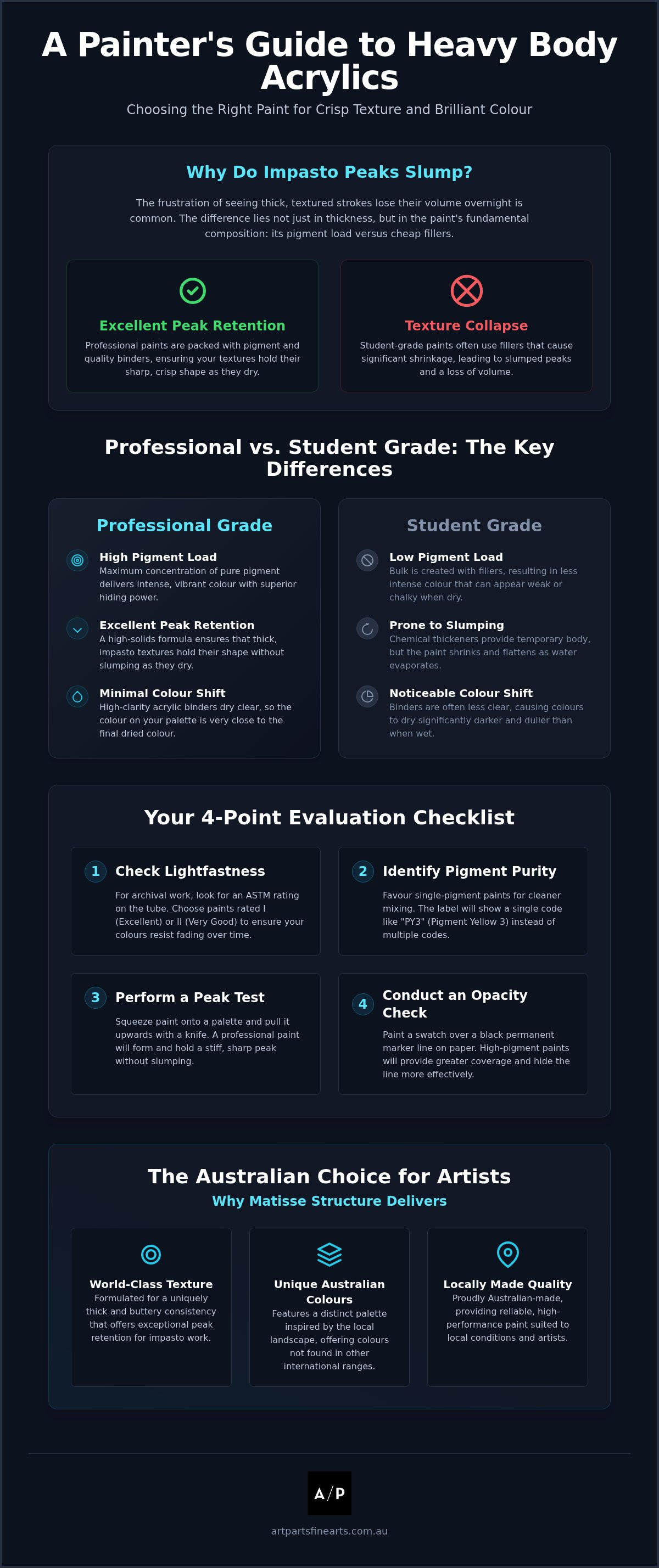
Professional ranges contain a higher concentration of pigment and a thicker acrylic polymer binder. Student-grade thick paints often achieve their body through the use of inexpensive fillers and chemical thickeners. While these might feel similar on the palette, they often dry down with significant shrinkage or a duller finish because they lack the solid pigment content of an artist-quality range. When you are looking for professional results, you need a paint that stays exactly where you put it.
The Chemistry of Viscosity
The thickness of professional paint comes from a careful balance of acrylic polymer emulsions and high pigment solids. High-quality brands avoid excessive fillers or extenders, which are non-pigment materials used to bulk out the paint. By focusing on pure pigment and resin, the paint maintains its structural integrity. This ensures that the colour remains intense and the film stays durable once the water has evaporated. It is this high solid content that prevents the paint from looking thin or transparent when applied in thick mounds.
Texture and Peak Retention
In the studio, we often talk about short versus long paint textures. A short paint has a buttery feel and breaks off cleanly from the brush or knife, making it perfect for crisp, standing peaks. A long paint is more syrupy and strings out as you pull it away. Professional heavy body acrylic paint brands are designed for peak retention, meaning they keep their vertical shape during the drying process. As the water leaves the paint film, the high solid content prevents the texture from collapsing, allowing your impasto marks to look exactly as they did when you first applied them to your surface.
Key Features to Evaluate in Professional Paint Brands
Evaluating heavy body acrylic paint brands requires looking past the marketing and into the technical specs of the tube. Professional results depend on four main pillars: pigment load, lightfastness, binder clarity, and consistency. While student paints are fine for practice, they often lack the "guts" needed for serious studio work. Artist-quality paints are packed with high-grade pigments, whereas cheaper alternatives use extenders to create bulk. This higher concentration means your colours stay vibrant even when tinted with white or mixed with mediums.
Lightfastness is another non-negotiable feature for archival work. Most professional brands follow ASTM (American Society for Testing and Materials) standards, typically rated I or II. This rating tells you exactly how resistant the pigment is to fading when exposed to light over time. Consistency across a range is also a mark of quality; high-end brands ensure a uniform, buttery feel across every tube, so your technique doesn't have to change just because you've switched colours.
Understanding the Colour Shift
One of the biggest challenges for acrylic painters is the colour shift. This occurs because the wet binder is opaque and milky, but it becomes clear as the water evaporates. Premium brands use high-clarity resins that significantly reduce this darkening effect. This predictability is essential when you're trying to match a specific hue across different painting sessions. When you compare different heavy body acrylic paint brands, you'll notice that the best ones maintain their brilliance long after the water has left the film.
Single Pigment vs Convenience Blends
Serious painters usually favour single-pigment paints over convenience blends. A single-pigment paint contains only one type of colour particle, which leads to much cleaner results when mixing. You can check this by looking for the pigment code on the label, such as PY3 for Hansa Yellow. Convenience blends are pre-mixed colours that often contain three or more pigments; while they look great in the tube, mixing them with other colours often results in muddy tones.
If you're building your professional palette, it's worth investing in these high-performance options. Exploring a quality range of Art Supplies and Paint will help you find the right balance for your style. Having reliable tools makes it much easier to focus on your technique rather than fighting your materials. If you're preparing for a large series of works, you might also consider stocking up on bulk stretched canvas to ensure you have a consistent surface ready to go.
How to Test and Select the Best Brand for Your Studio
You don't have to guess which heavy body acrylic paint brands are worth your investment. By running a few simple tests on your own bench, you can see exactly how the paint will behave under real studio conditions. We recommend trying these trials with a single tube of a new brand before you commit to a full palette.
- The Opacity Test: Draw a thick black line on a scrap of primed canvas with a permanent marker. Swipe the paint across the line in a single, even stroke. High-quality opaque pigments should hide the line entirely, while cheaper versions often appear streaky or thin.
- The Peak Test: Use a palette knife to pull a vertical point of paint from your palette. A professional heavy body should hold its shape firmly. If the peak slumps or rounds off within minutes, the paint lacks the structural integrity needed for impasto.
- The Dry Film Check: Leave your swatches to dry for at least 24 hours. Look for excessive shrinking or cracking. Professional paints should dry to a flexible, durable film that retains most of its original wet volume.
- Tinting Strength Trial: Mix a small, controlled amount of colour with a larger portion of Titanium White. A high-pigment professional brand will maintain its hue much better than a student-grade paint, which can quickly become washed out.
Matching Brand to Technique
Your choice often depends on whether you prefer a stiff, sculptural feel or a buttery, fluid movement. If you find a paint is too thick for a specific layer, you can adjust its consistency with Acrylic Mediums. Adding a gel medium allows you to maintain the heavy body structure while increasing transparency for glazing or extending your paint further.
Building a Professional Palette
It is far more effective to own a limited range of professional tubes than a massive set of low-quality ones. Start with a warm and cool version of each primary colour to ensure you can mix almost any hue without it turning muddy. For more advice on choosing gear that lasts, check out our guide on Investing in High-Quality Art Supplies.
Browse bulk stretched canvas for your next series
Why Matisse Structure is the Preferred Choice for Australian Artists
While global heavy body acrylic paint brands are widely known, Matisse Structure stands out as a world-class, Australian-made alternative that specifically caters to professional standards. It is a high-viscosity paint designed for artists who require the thick, buttery consistency necessary for impasto techniques. Because it is manufactured locally, you are often getting a fresher product with a pigment profile that is uniquely suited to our environment.
The range includes colours inspired by the Australian landscape, providing hues that are difficult to replicate with international palettes. This archival-quality paint is built to last, meeting gallery standards for lightfastness and durability. When paired with Matisse Mediums, you can further customise the structure, allowing for even more extreme impasto peaks or high-gloss glazes without compromising the integrity of the paint film. The resin remains flexible once dry, ensuring your work resists cracking over time.
The Benefits of Australian-Made Pigments
Choosing locally produced supplies means supporting the Australian creative economy while accessing tools that rival any international brand. The consistency of Matisse Structure is maintained through rigorous quality control, ensuring that every batch meets the same professional expectations. Freshness matters in acrylics; paint that hasn't spent months in international shipping containers often retains better handling properties and binder integrity. This makes it a reliable staple for any serious studio practice.
Practical Application in the Studio
In the studio, Matisse Structure performs exceptionally well on high-quality surfaces like Professional Stretched Canvas. Its high pigment load ensures that even when applied over a textured gesso, the colour remains saturated and true. For those wanting to dive deeper into the technical specifications and pigment codes, our Matisse Acrylic Paint Structure Heavy Body Guide provides a comprehensive look at the range. Having these professional tools at your disposal allows you to focus entirely on your creative process.
Elevate Your Creative Practice with Professional Tools
Selecting the right materials is a significant step in your artistic development. By understanding the technical differences between various heavy body acrylic paint brands, you can ensure your impasto work remains as bold and structured as you intended. Professional results depend on high pigment concentration and a clear binder that minimises colour shift. Taking the time to test your paints for opacity and peak retention will help you build a palette you can truly trust for years to come.
We are artist owned and operated, acting as specialist stockists for premium ranges like Matisse Structure and Langridge. Our team is always here to share practical advice based on real studio experience. We provide national shipping across Australia, ensuring that professional grade supplies are accessible no matter where your studio is located.
Explore our range of Matisse Structure Heavy Body Acrylics
We look forward to seeing the texture and depth you bring to your next project. If you have questions about which medium or pigment is right for your technique, please get in touch for a chat.
Frequently Asked Questions
What is the difference between heavy body and soft body acrylic paint?
Heavy body acrylics have a high viscosity and a thick, buttery consistency that holds peaks and brush marks. Soft body acrylics are much more fluid, resembling the consistency of heavy cream, which makes them better for smooth applications or fine detail work. While both contain high pigment loads in professional ranges, your choice depends on whether you want physical texture or a flat, even finish.
Can I mix different brands of heavy body acrylic paint?
You can generally mix different professional heavy body acrylic paint brands because they share a compatible acrylic polymer binder. It's best to stick to artist-quality ranges when mixing to ensure the pigment load and drying times remain consistent. Mixing a professional paint with a cheaper student range can sometimes result in a weaker paint film or unexpected changes in sheen and texture.
Do I need to prime my canvas before using heavy body acrylics?
Most modern stretched canvases come triple-primed with acrylic gesso, so you can paint on them immediately. If you are working on raw canvas or timber, you must apply gesso to create "tooth," which is the surface texture that helps the paint grab hold. Priming also acts as a barrier, preventing the oils or tannins in the support from discolouring your paint over time.
Why is some heavy body paint more expensive than others?
The price difference usually comes down to the pigment "series" and the concentration of those pigments. Professional heavy body acrylic paint brands categorise colours into series numbers; earth colours like Yellow Ochre are inexpensive to produce, while rare pigments like Cadmium or Cobalt cost significantly more. Professional paints also avoid the cheap fillers and bulking agents found in student-grade tubes, giving you much better tinting strength.
How do I prevent heavy body acrylics from cracking?
Cracking, sometimes called crazing, typically occurs if the top layer of a very thick application dries too quickly while the paint underneath is still wet. You can prevent this by keeping your studio at a stable temperature and avoiding the use of hair dryers to speed up the process. It's also important to work on a stable support, as a sagging canvas can cause the dry paint film to snap under tension.

Article by
Art Parts Fine Arts
Art Parts Fine Arts is an Australian art-supplies store based in Albury, shipping Australia-wide. Hand-picked by artists, our range covers paints, canvas, brushes, paper, printmaking and more, for everyone from students to professionals. We share practical guides and tips to help you get the most out of your materials.
Disclaimer
This article is general information to help you choose and use art materials. It is not professional, health or safety advice. Always follow the manufacturer's instructions and safety guidance for any product, and take care when using solvents, varnishes and other materials. Product availability, specifications and pricing may change, so please check the current product page for details.