

How to Gesso a Canvas for a Professional Smooth Finish
The quality of your finished painting is often decided before the first brushstroke of colour even touches the surface. Many artists find themselves struggling with uneven paint absorption or worrying that oil paints mig…The quality of your finished painting is often decided before the first brushstroke of colour even touches the surface. Many artists find themselves struggling with uneven paint absorption or worrying that oil paints might eventually rot the underlying fibres. Learning how to gesso a canvas correctly is the most effective way to ensure your work remains vibrant and structurally sound for decades. While most professional ranges like CreateART or Wright & Co come triple-primed with acrylic gesso, adding your own layers allows you to customise the tooth and texture to suit your specific style.
It's frustrating when a beautiful glaze sinks into the weave or a fine detail is lost because the surface is too thirsty. You deserve the confidence that comes with a perfectly prepared ground that supports your creative vision rather than fighting against it. This guide covers the practical steps to achieve a professional smooth finish, from choosing the right brushes to determining exactly how many layers you need for an archival result. We will look at how to refine the 380gsm cotton or 500gsm linen surfaces you use in your studio, ensuring every application of paint behaves exactly as you intended.
Key Takeaways
- Understand the role of gesso as an archival barrier that provides the necessary tooth for paint to grip the surface properly.
- Learn the specific techniques for how to gesso a canvas, including thinning the first coat and applying even layers with cross-hatched brushstrokes.
- Identify why professional-grade materials like CreateART and Wright & Co canvases offer a superior foundation for your creative work.
- Discover how to customise your surface texture to achieve a professional smooth finish or a specific grain that suits your painting style.
- Gain confidence in preparing large-scale works by learning how to apply primer without warping the kiln-dried timber bars.
Understanding Gesso and Its Role in Your Creative Process
Gesso is the essential foundation of any professional painting. It acts as a primer, creating a protective barrier between the absorbent canvas support and your paint. Without this layer, the canvas would soak up the binder from your paint, leaving the colours dull and the surface brittle. For those learning Understanding Gesso and how to gesso a canvas, it's helpful to think of it as the bridge between the raw fabric and your artistic vision.
One of the most vital concepts to understand is "tooth." This refers to the microscopic texture of the surface that allows the paint to grip the canvas. Too much tooth can make fine detail difficult, while too little can cause the paint to slide around or peel off over time. By mastering your priming technique, you control exactly how much grip your surface provides.
The Difference Between Sizing and Ground
Historically, artists had to apply "sizing" to seal the natural fibres of the canvas before adding a "ground" or painting surface. Sizing is crucial because it prevents the oils in traditional paints from rotting the cotton or linen over time. Most modern acrylic gessos, such as those found in our mediums collection, serve as both a size and a ground. This dual-purpose formula ensures archival quality while simplifying the preparation process for the artist.
Why Pre-Primed Canvases Benefit from Extra Gesso
You might wonder why you need to know how to gesso a canvas if you're using a high-quality product like a CreateART or Wright & Co 380gsm cotton canvas. While these are triple-primed and ready for immediate use, many professionals add one or two extra layers to customise the feel. Adding gesso allows you to:
- Reduce the absorbency of the surface for smoother blending.
- Fill in the grain of the weave for ultra-fine portrait work.
- Create unique textures by mixing in Matisse Structure Acrylic or other thickening mediums.
Customising your ground gives you total control over the paint flow. It transforms a standard support into a bespoke surface tailored to your specific technique. This is particularly useful for artists who buy full cartons of canvas and want to ensure a consistent finish across an entire series of works.
Selecting the Right Materials for a Professional Surface
Choosing the right materials is just as important as the technique itself. A professional surface starts with a high-quality support like the CreateART or Wright & Co ranges. These canvases use weights between 380gsm and 500gsm, providing a sturdy foundation that won't sag under heavy paint application. Using kiln-dried pine or hardwood bars ensures the frame remains stable, preventing the common issue of warping as your primer dries. When you are learning how to gesso a canvas, the quality of the timber is often overlooked, but it is essential for a flat, professional result.
The quality of your primer significantly impacts the final result. Professional-grade gesso contains a higher concentration of titanium white pigment and acrylic binder than student-grade alternatives. This higher pigment load means you'll achieve a brilliant, opaque white ground with fewer layers. For local artists, Matisse acrylic gesso is a dependable Australian-made option that balances archival quality with ease of use. When you are learning how to gesso a canvas, starting with a reliable medium saves time and prevents future issues with paint adhesion.
Acrylic Gesso vs Oil Primer
Acrylic gesso is the most versatile choice for modern studios because it's compatible with both acrylic and oil paints. While some traditional oil painters prefer oil-based primers for their non-absorbent qualities, these require more preparation time and specific ventilation. A quality acrylic ground provides a flexible, non-yellowing surface that meets archival standards without the long wait times associated with oil-based products.
Essential Tools: Brushes and Sanding Equipment
Achieving a smooth finish requires the right application tools. A wide, flat brush with soft synthetic bristles helps spread the gesso evenly without leaving deep brush marks. You'll also need fine-grit sandpaper, typically around 240 grit, to lightly sand the surface between coats. This process removes any tiny lumps or raised fibres, resulting in a professional finish. Having the right accessories on hand ensures your preparation is methodical and efficient.
For artists working on a series or preparing for an exhibition, ordering bulk stretched canvas provides both consistency and value for money.
Step-by-Step: How to Gesso a Canvas Properly
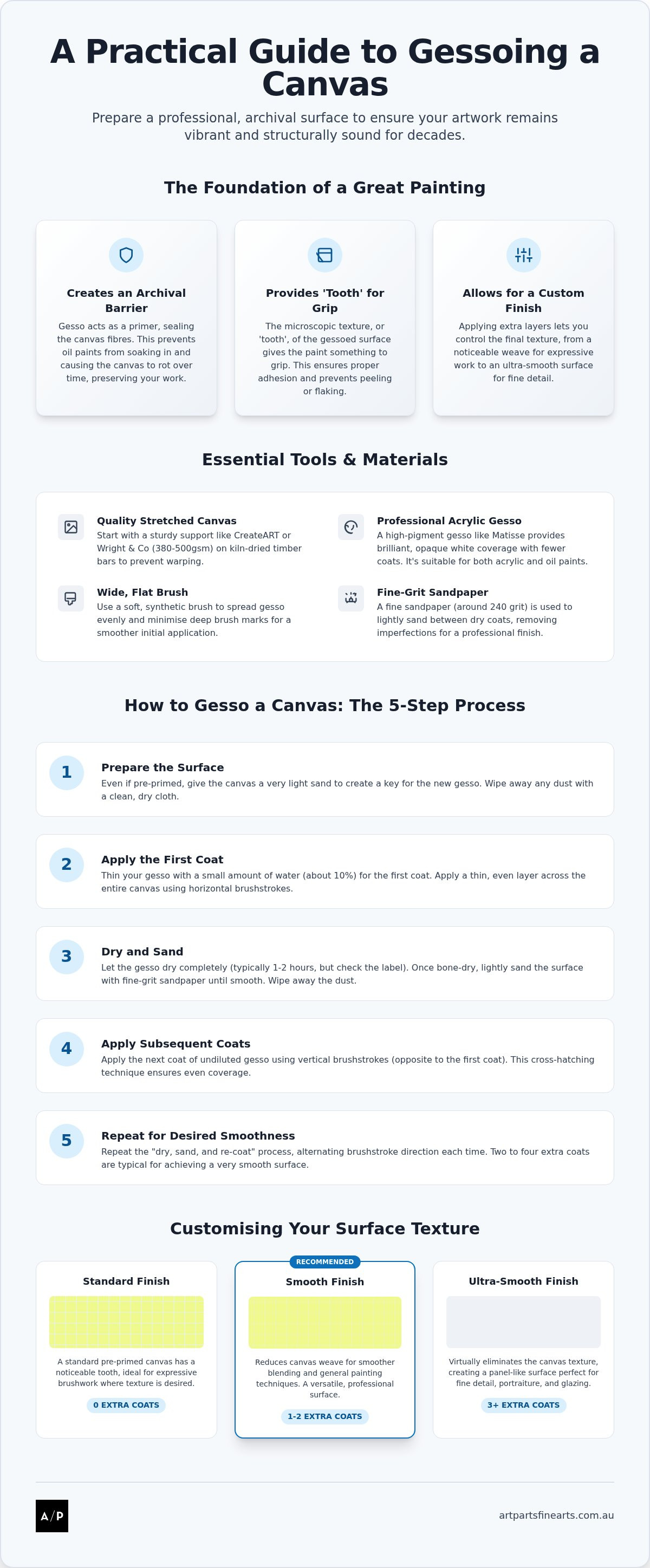
Learning how to gesso a canvas properly transforms your painting experience. The first coat should always be thinned slightly with water, roughly 20 percent, to help the primer sink into the weave of the fabric. This is especially important for heavier 500gsm linen or raw cotton duck. In the Australian climate, gesso can dry quite quickly on a hot day, but it's vital to let each layer cure fully before you start sanding.
If the surface feels cool to the touch, it's still releasing moisture and isn't ready for the next step. Patience during this phase prevents the primer from tearing or gumming up your sandpaper. By following these steps on how to gesso a canvas, you ensure your work has the archival longevity it deserves.
Preparing Your Workspace and Materials
Before you begin, ensure your studio is free from dust or pet hair that might settle on the wet ground. Gesso is a combination of pigment, binder, and chalk. Check the tension of your CreateART or Wright & Co canvas; it should be taut but not overly strained. If you're working on large-scale pieces, ensure your workspace allows for even airflow to prevent uneven drying across the surface.
Application Techniques: Layering and Sanding
Apply your first thinned coat using long, horizontal strokes across the entire width. Once it's completely dry, use fine-grit sandpaper to lightly buff away any raised fibres or brush marks. This sanding step is what separates a student-level preparation from a professional gallery-standard finish. For the second coat, apply the gesso vertically, perpendicular to your first layer.
This cross-hatching technique fills the grain of the 380gsm cotton canvas more effectively than single-direction strokes. If you prefer an ultra-smooth surface for detailed portraiture, a third coat and final sand will provide the perfect tooth. Always wipe away any sanding dust with a slightly damp, lint-free cloth before you start painting.
Advanced Priming and Maintenance for Professional Results
While white is the standard choice, black or coloured gesso offers a strategic advantage for many artists. Starting on a dark ground creates immediate depth and allows you to work from dark to light more effectively. This technique is particularly useful for dramatic landscapes or still life where you want to establish shadows early. When mastering how to gesso a canvas with colour, you can buy pre-mixed black gesso or tint your white primer with a small amount of professional acrylic paint.
Storing your prepared supports is just as vital as the application itself. In humid parts of Australia, mould can be a concern for organic fibres like cotton and linen. Keep your canvases in a clean, dry environment, stored vertically and slightly off the floor to encourage airflow. This practice ensures your archival preparation isn't compromised by environmental factors before you even begin to paint.
Priming Large Canvases and Bulk Stocks
Handling oversized canvases requires a methodical approach to maintain structural integrity. For gallery-depth profiles like the 35mm or 37mm ranges from CreateART and Wright & Co, ensure the gesso covers the sides consistently to create a finished look. To prevent the kiln-dried pine bars from warping on large-scale works, avoid over-saturating the fabric with water during the first coat. Our full carton canvas range is a popular choice for TAFEs, schools, and high-volume professionals across the country who require consistent quality. Buying in bulk ensures every canvas in a series has the same weight and priming foundation, which is essential for a cohesive body of work.
Working with Custom Grounds and Mediums
Beyond standard priming, you can experiment by mixing Matisse mediums into your gesso. Adding a structure medium can create a heavy, impasto-style ground that retains brush marks, providing a unique starting point for expressive work. Professional-grade supplies ensure these custom mixtures remain flexible and archival over time. If you're looking for hands-on guidance on how to gesso a canvas or prepare complex grounds, our creative workshops offer practical instruction and a chance to learn from experienced peers in the creative community.
Ready to Prepare Your Perfect Painting Surface
Mastering how to gesso a canvas is a foundational skill that pays dividends in the quality and longevity of your artwork. By choosing professional-grade materials and following a methodical layering and sanding process, you create a surface that supports your technique rather than hindering it. Whether you're working on a fine portrait or an expressive abstract, a well-prepared ground ensures your colours remain vibrant and your support stays stable for years to come.
We stock a comprehensive range of professional 380gsm to 500gsm cotton and linen canvases available for delivery across Australia. Our range includes bulk savings on full carton orders, providing consistent quality for active studios, schools, and art centres nationwide. Investing in a high-quality foundation like CreateART or Wright & Co means you can focus entirely on your creative process with the confidence that your work is built on an archival base.
We look forward to seeing the incredible work you create on these professional surfaces. If you have questions about specific mediums or need advice on large-scale preparation, feel free to get in touch with our team of fellow artists. Our goal is to ensure you have the right tools and knowledge to take your craft to the next level.
Frequently Asked Questions
How many coats of gesso should I put on a canvas?
Two to three coats are standard when you are learning how to gesso a canvas for a bespoke surface. While CreateART canvases arrive triple-primed, adding extra layers allows you to refine the tooth to your preference. Apply a thinned first coat, followed by one or two full-strength layers in alternating directions. This builds a consistent, archival ground that prevents your paint from sinking into the fabric weave.
Can I use white acrylic paint instead of gesso?
White acrylic paint is not a suitable substitute for gesso because it lacks the necessary absorbency and texture. Gesso contains calcium carbonate or chalk, which provides the tooth required for paint to grip the surface. Standard acrylic paint is non-porous once dry, which can lead to poor adhesion and potential peeling over time. Using a professional primer like Matisse acrylic gesso ensures your work remains stable and archival.
Do I need to sand the canvas after applying gesso?
Sanding is essential if you want to achieve a gallery-standard smooth finish. Use a fine-grit sandpaper, such as 240 grit, to lightly buff the surface after each coat has dried completely. This process removes any raised fibres or brush marks that could interfere with fine detail work. Always wipe away the dust with a damp, lint-free cloth before applying the next layer of primer or starting your painting.
How long does gesso take to dry in Australia?
In the Australian climate, gesso typically dries to the touch within 20 to 30 minutes, but it needs longer to cure fully. On high-humidity days or in cooler regions, moisture stays in the primer longer. You should wait at least 24 hours before starting an oil painting to ensure the acrylic binder has completely stabilised. This patience prevents the gesso from lifting or cracking as you apply heavier paint layers.
Can I paint with oils over acrylic gesso?
You can safely use oil paints, such as Langridge oil paints, over acrylic gesso. Modern acrylic primers are designed to be universal, meaning they provide a flexible and permanent bond for both acrylic and oil mediums. The gesso acts as a critical barrier that prevents the oils from reaching the raw canvas fibres. This protection is vital for the long-term durability and archival quality of your finished artwork.
What is the difference between cotton and linen canvas for priming?
Cotton and linen respond differently to the priming process due to their natural fibre characteristics. A 380gsm cotton canvas is generally more absorbent and has a more noticeable grain that requires more gesso to fill. In contrast, 500gsm linen is a stronger, more stable material with a finer weave. Professional linen often requires fewer coats to achieve a smooth finish and is less likely to sag or expand with temperature changes.

Article by
Art Parts Fine Arts
Art Parts Fine Arts is an Australian art-supplies store based in Albury, shipping Australia-wide. Hand-picked by artists, our range covers paints, canvas, brushes, paper, printmaking and more, for everyone from students to professionals. We share practical guides and tips to help you get the most out of your materials.
Disclaimer
This article is general information to help you choose and use art materials. It is not professional, health or safety advice. Always follow the manufacturer's instructions and safety guidance for any product, and take care when using solvents, varnishes and other materials. Product availability, specifications and pricing may change, so please check the current product page for details.