

Langridge art materials: How to choose the right paints and mediums
The right Langridge choice starts with the work you want to make. This guide helps artists compare oil colours, mediums, solvents and pigment materials by their intended task, technique and handling, so you can narrow th…The right Langridge choice starts with the work you want to make. This guide helps artists compare oil colours, mediums, solvents and pigment materials by their intended task, technique and handling, so you can narrow the options to suit your practice.
Product descriptions may include technical terms, but the practical question is simple: what do you need the material to do? Start there, then check the current listing for the product’s stated purpose, available options and directions before choosing.
Key Takeaways
- Choose a Langridge product category by the studio task you have in mind, then compare options within that category.
- When comparing oil colours, weigh individual tubes against larger formats based on how you work and how much paint you expect to use.
- Use listed colour names and pigment details to compare paints, without assuming qualities the product description doesn’t confirm.
- Before choosing a medium or solvent, consider your technique, the handling you want and the product instructions.
- Use the buying checklist to decide whether oil colours, refined linseed oil, impasto medium, dry pigment sets or another studio material fits your next project.
Choosing Langridge products: Start with what you want to make
Langridge materials include oil colours, painting mediums, dry pigments and related studio products for artists working with oil paint and paint-making materials. Narrow the options by task: choosing colour for a painting, adjusting how paint handles or preparing paint from pigment.
The brand name alone won’t tell you which product suits your work. Technique, desired handling and the job at hand are better guides. If you’re new to the medium, this overview of what oil paint is explains its basic ingredients and pigment types.
Which Langridge category fits your painting task?
Use this quick guide to identify a starting point, then check the product description and listing instructions.
| Your task | Category to explore | What to check |
|---|---|---|
| Painting with colour | Oil colours | Colour name, listed pigment details and format |
| Changing how oil paint handles | Painting mediums | The stated purpose and directions for use |
| Building thicker paint passages | Impasto medium | Whether its listed purpose suits your technique |
| Making paint from dry pigment | Dry pigments and a suitable binder | That you have a binder intended for paint-making |
| Supporting studio work | Related materials, such as varnish or tools | The product description and any use instructions |
For traditional oil painting, start with the oil-colour options. To alter handling, compare mediums by their stated purpose rather than assuming similar names mean similar results. Dry pigment is powdered colour, not ready-to-use paint, so making paint requires a suitable binder.
What should you decide before browsing?
First, identify what your work needs: colour, altered flow, added body or material for paint preparation. Then consider your process. Wet-on-wet painting, palette-knife work and mixing paint from pigment call for different materials, so defining the task helps you avoid choosing a product that doesn’t fit.
- Note the technique you plan to use.
- Decide what handling change, if any, you want.
- Check the listing for directions, solvent details and product-specific delivery or collection information.
Art Parts Fine Arts supplies Langridge materials. Browse the paint range and compare listed purposes to build a practical shortlist.
How to compare Langridge oil paints, colours and formats
Choose a paint format around how you work, not just the amount in the container. Individual tubes can suit artists selecting particular colours for a palette. A larger format may be worth considering if you use a colour regularly and expect to go through more paint.
Match the paint format to your working habits: choose individual tubes for specific colour choices, and consider a larger format only when your expected use makes it practical. The 300ml caulking tube is one larger option listed for Langridge oil paint, but don’t assume it’s offered in every colour. Check the current listing for the colour, format and other details before ordering.
Individual tubes or larger Langridge oil-paint formats?
Individual tubes let you select colours for a particular palette or project. Examples in the range include Titanium White, Yellow Ochre and Burnt Sienna. A larger container may suit a colour you use often, but the right choice depends on your painting habits and how much paint you expect to use.
Use the product listing to confirm the available format for the specific colour you want. Names and options can vary between listings, so check the details rather than assuming a familiar colour comes in every size.
How to read colour and pigment information
A colour name is a useful starting point, not a full description of the paint. Check the listing for any pigment details provided, and avoid drawing conclusions about composition or performance where information isn’t stated. Series codes and colour names alone don’t establish lightfastness or permanence.
| Product type | Supplied format | Stated use | Question to check |
|---|---|---|---|
| Individual oil colour | Individual tube | Selecting a particular colour | Is this the colour and format you need? |
| Oil colour | 300ml caulking tube option | Larger-format paint use | Is this format listed for your chosen colour? |
| Oil colour listing | Check the product page | Comparing colour options | What pigment details, if any, are provided? |
Before settling on a shortlist, compare the Langridge oil colours and formats by colour, listed format and expected studio use. Checking those details helps you choose what fits your palette without relying on assumptions.
Langridge mediums and solvents: Match handling to technique
A medium is an ingredient added to paint to change how it handles or appears. The right choice depends on your technique and the result you’re after, so use the product’s stated purpose rather than choosing by name alone.
Choose a medium for flow, body or a particular process
Work through these steps before choosing:
- Identify your technique. Are you painting thinly, building thicker passages or working with a particular surface effect?
- Decide what you want to change. Think about flow, body, gloss or transparency, then check that the listing describes the effect you’re seeking.
- Match the product type to the task. Refined linseed oil is listed as increasing gloss and transparency. Impasto medium is listed for adding body to oil colour. For painting medium, low-toxic painting medium and wax paint paste, check each description rather than assuming their purposes are interchangeable.
- Read the current instructions. Follow the product listing and label for how to use the material in your process.
This gives you a more useful comparison than choosing a medium simply because its name sounds familiar. Compare the listed Langridge painting mediums by the task you have in mind, then check the descriptions for details relevant to your technique.
Compare solvent and solvent-free options carefully
The listed solvent options include Low Toxic Solvent, Solvent 75 and Distilled Gum Turpentine. They’re distinct products, so don’t assume they have the same intended use or handling instructions. Check the current label and product listing for relevant studio directions before deciding which, if any, suits your practice.
Oleogel is described in the supplied product information as a solvent-free gel. Treat it as a separate option when comparing materials, and consult its listing for the intended use. Wax paint paste is another listed material, but check its product details rather than inferring its role from the name.
Keep the choice practical: identify your technique, decide what you want to change, select a product whose stated purpose fits, then follow its instructions.
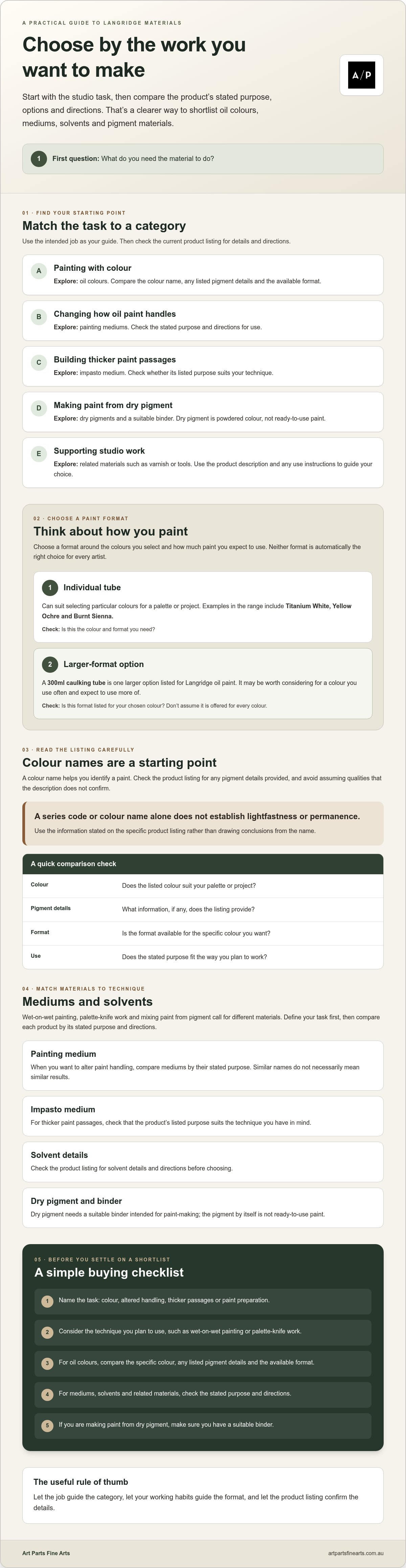
Langridge collection highlights and a confident buying checklist
A useful shortlist starts with the studio task, then narrows to the product format and its listed details. These Langridge examples can help you find a starting point, but check the current listing to confirm each product’s name, size, variant and intended use.
A practical Langridge shortlist by studio need
- Choosing colours: Langridge Oil Paints 40ml Individual Tubes let you select colours individually. Confirm the available colour variants on each listing.
- Using a larger format: Langridge Oil Paints 300ml Caulking is a larger-format option. Don’t assume every colour is available in this format; check the specific listing.
- Preparing paint: Artist Dry Ground Pigment Sets contain powdered pigments for paint-making. Pigment needs a suitable binder to form paint, so check what else your process requires.
- Finishing or making paint: Langridge Gloss Varnish is a varnish option, while the Glass Muller is a paint-making tool. Review the listing for the product’s stated purpose and directions.
Choose the task, compare the format, then check the product details. That sequence keeps your shortlist focused on what you’ll use, rather than on names or sizes alone.
Check these details before you add a product to your basket
Before ordering, pause for a final check. Product details can differ, so rely on the current listing rather than assuming a size or variant applies across the range.
- Does the product suit your intended use?
- Have you confirmed the product name, size and colour or other variant?
- For pigments, have you identified a suitable binder for your paint-making process?
- Have you read the product directions and checked any product-specific delivery or collection information?
For broader oil-paint selection context, look for the related guide, artist grade oil paints online. Then browse the Langridge collection and compare the current listings against your checklist.
Choose materials that fit the way you paint
A clear studio task makes it easier to narrow down the Langridge range. Start with the result you want, whether that means selecting oil colour, changing paint handling or preparing paint from dry pigment. Then compare formats and check the product listing for its stated use, directions and available variants.
Art Parts Fine Arts supplies Langridge oil paints and related studio materials, with collection listings covering paints, mediums, solvents, pigments, varnish and paint-making tools. Check the details for the specific item you’re considering, including any product-specific delivery or collection information. That final check helps you choose materials that suit your process rather than relying on assumptions.
You don’t need to have every technical detail worked out before you begin. Use your intended technique as a guide, compare the options and build a shortlist that feels right for your practice.
Frequently Asked Questions
What should I buy first from the Langridge range?
Start with the material that matches the work you want to make. For traditional oil painting, begin by choosing oil colours for your palette, then consider whether a medium or another studio material is needed for your technique. You don’t need to buy every category at once. Check current listings for colour options, formats and product directions so your first choices fit your practice.
What is the difference between Langridge oil paint and painting medium?
Oil paint provides the colour, while a painting medium is used to change aspects of how the paint handles or appears. For example, the supplied product information describes refined linseed oil as increasing gloss and transparency, and impasto medium as adding body to oil colour. The products have different stated purposes, so check each listing and its instructions before deciding whether a medium suits your technique.
Can I use Langridge dry ground pigments to make paint?
Yes, dry ground pigments can be used to make paint, but pigment on its own is powdered colour, not ready-to-use oil paint. You’ll need a suitable binder to bring the pigment together as paint. Before starting, check that the binder is intended for your process and read the relevant product directions. If you’re comparing pigment sets, check the current listing for the set details.
Which Langridge medium is suitable for adding body to oil paint?
Impasto medium is the listed option for adding body to oil colour. It may be a suitable product to investigate if your technique involves thicker paint passages, including palette-knife work. Check the current listing for its stated purpose and instructions before use. Other mediums may be intended for different handling changes, so don’t treat them as interchangeable based on their names alone.
What does the Langridge refined linseed oil do?
The supplied product information describes refined linseed oil as increasing gloss and transparency. Compare it if those are qualities you want to explore in your oil painting. It isn’t the same as an oil colour or a medium listed for adding body. Check the product listing for directions and consider whether its stated effect suits the way you work.
How do I choose between Langridge solvent products?
Compare the product information for Distilled Gum Turpentine, Low Toxic Solvent and Solvent 75 rather than assuming they have the same use or handling. The right choice depends on your process and the directions provided for each product. Read the current label and listing before use, including any studio instructions. If you’re unsure which option fits your technique, pause and confirm its intended use first.

Article by
Art Parts Fine Arts
Art Parts Fine Arts is an Australian art-supplies store based in Albury, shipping Australia-wide. Hand-picked by artists, our range covers paints, canvas, brushes, paper, printmaking and more, for everyone from students to professionals. We share practical guides and tips to help you get the most out of your materials.
Disclaimer
This article is general information to help you choose and use art materials. It is not professional, health or safety advice. Always follow the manufacturer's instructions and safety guidance for any product, and take care when using solvents, varnishes and other materials. Product availability, specifications and pricing may change, so please check the current product page for details.