

Matisse Acrylic Paint Structure Heavy Body: The Professional Buyer’s Guide
If your impasto marks disappear into a flat surface as the water evaporates, you aren't actually using a professional heavy body paint. Most artists have felt the frustration of investing hours into a textured piece only…If your impasto marks disappear into a flat surface as the water evaporates, you aren't actually using a professional heavy body paint. Most artists have felt the frustration of investing hours into a textured piece only to find the peaks have slumped overnight, which is why many switch to Matisse acrylic paint structure heavy body for its reliable viscosity. It is a common struggle when using paints that rely on fillers rather than high pigment loads to create bulk.
This guide will show you why this range remains the premier choice for Australian creators who need their brushstrokes to stay exactly where they are placed. You will discover how to achieve rich, sculptural textures while ensuring your work meets the archival standards required by galleries and collectors.
We will break down the technical benefits of this Australian-made range, clarify the confusion around series pricing, and help you select the best colours for your specific style. Whether you are moving up from student brands or looking for a reliable local alternative to imported paints, this overview provides the practical details you need to choose with confidence.
Key Takeaways
- Learn why the high viscosity of Matisse Structure allows for sculptural impasto techniques that hold their shape and height as they dry.
- Understand the pigment-based Series 1 to 7 pricing system to help you build a professional palette of Matisse acrylic paint structure heavy body within your budget.
- Discover the best tools for the job, from stiff-bristled brushes to palette knives, to make the most of the thick, buttery consistency.
- Ensure your artwork is gallery-ready by using a formula designed for archival permanence and a flexible, non-cracking finish.
- Gain insight into how this Australian-made paint integrates with professional mediums and canvases for a complete studio workflow.
What is Matisse Acrylic Paint Structure Heavy Body?
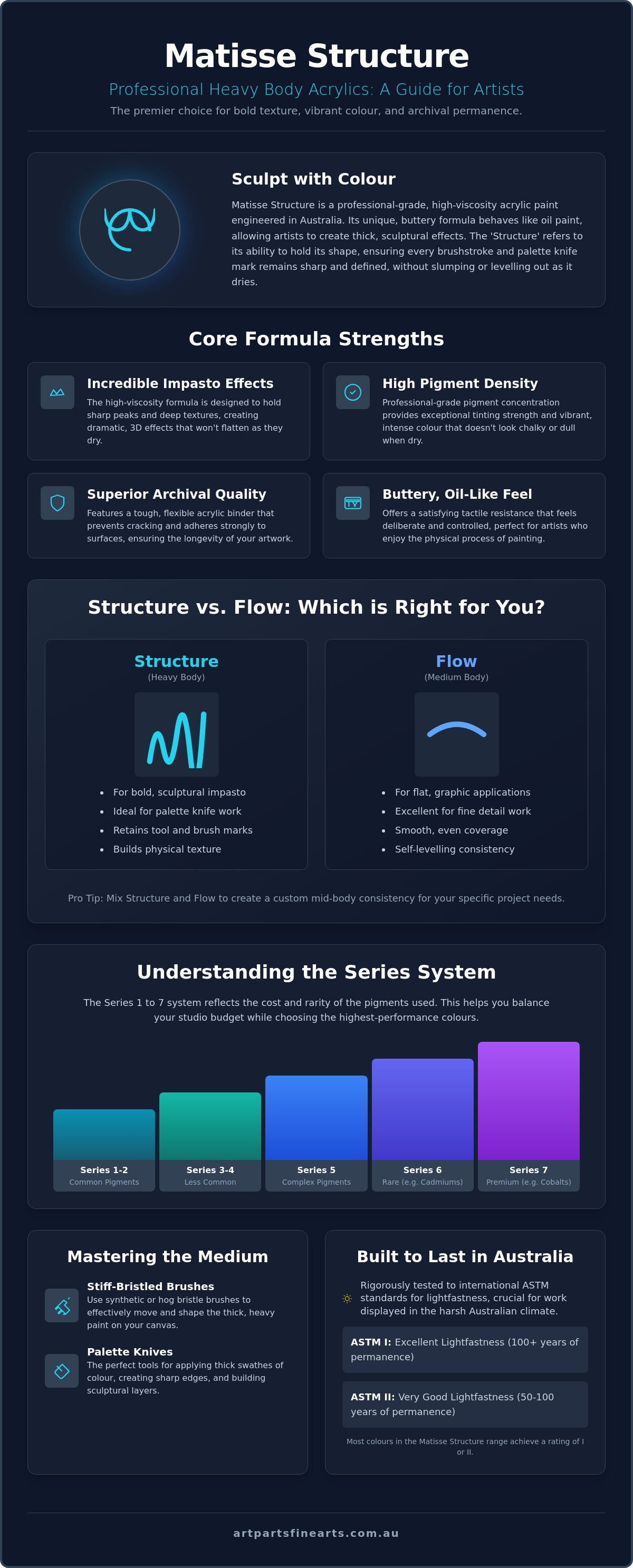
Matisse Structure is the heavy-hitter of the range. It is a high-viscosity acrylic paint designed specifically for those who want their work to have physical depth and texture. Developed right here in Australia by Derivan, this formula has been a studio staple for professional artists since 1964. It is built for impasto techniques, where the paint is applied thick enough to stand out from the surface and hold its shape.
The name 'Structure' describes the rheology of the paint, which is a technical way of talking about how it flows and holds its peaks. Unlike cheaper student paints that might feel thick in the tube but level out as they dry, Matisse acrylic paint structure heavy body retains every ridge from your brush or palette knife. This professional-grade concentration ensures that even if you choose to thin it slightly with mediums, the colour remains vibrant and saturated.
Heavy Body vs. Flow: Which is right for you?
Choosing between these two depends on your technique. Use Structure for bold, sculptural marks and palette knife work. It mimics the feel of traditional oil paint but dries much faster. Flow is better suited for flat areas of colour or fine detail. Most of us keep both on the trolley. You can use Flow for your initial underpainting and then switch to Matisse acrylic paint structure heavy body for the final, expressive highlights that give a painting its life.
The importance of lightfastness in Australia
In the harsh Australian light, permanence is non-negotiable for professional work. Matisse paints are tested to ASTM standards to ensure they won't fade over time. Most colours in the range carry a rating of I (Excellent) or II (Very Good). This means when you sell a piece, you can be certain it will look just as vibrant in twenty years as it does the day it leaves your studio. It is the difference between a hobbyist's sketch and a gallery-quality investment.
Key Features of the Matisse Structure Formula
Matisse acrylic paint structure heavy body is defined by its rich, buttery consistency. It mimics the feel of traditional oil paint under the brush, allowing for a tactile experience without the long wait times or harsh solvents. The high-quality acrylic binder used in this formula ensures the paint remains flexible once dry. This is vital for preventing the cracking that can occur in thick applications when a canvas moves or expands with temperature changes.
Because it is water-based and non-toxic, it is a much safer option for those of us spending long hours in the studio. You won't have to worry about the fumes often associated with traditional oil painting solvents. It is also fully compatible with the broader range of Matisse mediums, which lets you tweak the gloss level or extend the drying time to suit your specific workflow.
Archival quality and pigment density
The vibrancy of this paint comes from its professional-grade pigment concentration. When you mix colours, they stay bright rather than turning "muddy" because there aren't unnecessary fillers diluting the strength of the hue. Archival quality is defined by a paint's ability to resist chemical and physical change over time, specifically meeting ASTM standards for lightfastness and permanence. Understanding the long-term care of acrylics is essential for any professional artist looking to preserve their legacy and ensure their work survives in gallery collections.
The Impasto effect: Holding the stroke
One of the biggest advantages of this formula is its "short" rheology. This means the paint has a high resistance to levelling out as it dries. Your brush marks and palette knife ridges stay sharp and defined, creating a true 3D effect on the canvas. If you want to push these sculptural peaks even further, you can mix the paint with an impasto medium. This maintains the peak height while extending your paint further. Since these heavy applications can be quite weighty, many artists find it more economical to work on a full carton of canvas to ensure they always have a sturdy surface ready for their next big project.
Selecting Your Palette: Series, Sizes, and Colours
Building a professional palette shouldn't be a guessing game. Matisse acrylic paint structure heavy body is available in over 120 colours, giving you a massive range of mixing possibilities. When you are standing in front of the paint rack, you will notice that prices vary significantly between tubes. This is not because some colours are "better" than others; it is a direct reflection of the cost of the raw pigments used in each formula.
The Series system explained
Matisse uses a Series 1 to 7 system to categorise their colours. Series 1 contains the most affordable pigments, such as natural earths, ochres, and siennas. These are abundant in nature and easier to process. As you move up to Series 7, you are paying for rare or semi-precious minerals like genuine Cadmiums and Cobalts. These higher series colours offer incredible opacity and tinting strength that cheaper alternatives simply cannot match.
If you are working on a budget, we recommend starting with a strong foundation of Series 1 and 2 colours. You can then add "star" colours from the higher series for specific highlights. One local favourite is Australian Ghost Gum, a unique, cool-toned white that captures the subtle hues of the Australian landscape far better than a standard Titanium White.
Choosing the right container size
Selecting the right size depends on how much surface area you usually cover. Matisse Structure comes in several formats to suit different studio needs:
- 75ml and 150ml tubes: Best for detail work, trying out new pigments, or keeping your kit portable.
- 250ml and 500ml jars: The sweet spot for high-use colours like whites, blacks, and your primary mixing hues.
- 1 Litre and 10 Litre pots: Ideal for muralists, art centres, or artists working on large-scale bulk canvases.
To prevent the paint from "skinning" in larger jars, always keep the rims clean. A quick mist of water over the surface before sealing the lid can also help keep the paint fresh for your next session.
Mastering the Medium: Tools for Heavy Body Acrylics
To get the most out of Matisse acrylic paint structure heavy body, you need tools that can handle its density. Soft brushes designed for watercolour will simply bend under the weight of this paint. You need stiff-bristled brushes, typically hog hair or high-quality synthetic equivalents, to move the paint effectively across the surface without losing the definition of your stroke.
Surface preparation is equally important for heavy applications. A lightweight canvas will sag or ripple under the weight of thick impasto layers. We recommend using professional-grade surfaces like CreateART or Wright & Co canvases. These typically feature weights between 380 and 500gsm and are built on kiln-dried pine or hardwood bars to ensure they remain taut for decades.
Brushes vs. Palette Knives
Palette knives are the essential tool for sculpting the paint. They allow you to 'butter' the canvas, creating the sharp, clean peaks that define impasto work. Brushes are better suited for textured blending where you want to see individual bristle marks within the stroke. Because heavy body painting involves significant physical pressure, working on stable professional art easels is a practical necessity to prevent your work from shifting or wobbling as you apply the paint.
For artists who want to combine these bold textures with sharp linework, integrating high-quality marker sets can be a great solution. You can find a wide range of professional options at PoscART to help you achieve intricate touches that are difficult to master with a brush alone.
Shop professional canvases for impasto painting
Extending and modifying the paint
You can easily adjust the finish of your work using Matisse Gloss or Matt Mediums. These additions change the light reflection of the surface without compromising the thick consistency of the paint. During the Australian summer, the heat can cause acrylics to dry faster than you might like. Adding a small amount of Retarder Medium will extend your blending time, making it easier to work on larger areas before the paint skins over.
Many professional artists use the 'Z' technique to build visual complexity. This involves creating a highly textured base layer with Matisse acrylic paint structure heavy body and then applying transparent glazes once it is dry. The glaze settles into the valleys of the texture, creating a depth of colour that flat painting cannot achieve. Always ensure your tools are cleaned immediately after use with water and mild soap. High-viscosity acrylics are notoriously difficult to remove once they have cured in the bristles or the ferrule of your brush.
Why Buy Matisse Structure from Art Parts Fine Arts?
Choosing where to buy your supplies is as important as the materials themselves. At Art Parts Fine Arts, we are an independently owned business operated by local artists. We don't just stock Matisse acrylic paint structure heavy body because it is a popular brand; we stock it because we use it in our own professional practices. This first-hand experience allows us to offer mentor-level advice on everything from pigment transparency to medium compatibility.
Our Albury-based warehouse is perfectly positioned to ship professional-grade supplies Australia-wide. We understand the needs of high-volume users like schools and art centres, offering bulk savings on full cartons of CreateART and Wright & Co stretched canvas. Every purchase you make supports the broader creative community, helping us fund our local initiatives and foster artistic growth across the region. For larger-scale community festivals and art showcases, professional management from amaeventmanagement.com.au can help bring these creative visions to a wider audience.
A quality-first mindset for every artist
We believe that using professional-grade materials from the start leads to better long-term results and less frustration. Our curated selection focuses on the best Australian-made supplies, including Matisse and Langridge oil paints. If you want to take your practice further, you can join our creative community through our hands-on art workshops held in our dedicated studio space.
The Art Parts difference: More than just a shop
We pride ourselves on being a partner in your creative journey rather than just a supplier. Beyond acrylics, we carry a comprehensive range of specialised tools, from PanPastel assorted colours to professional printmaking inks. This ensures you can find everything you need in one place, supported by staff who actually know how to use the equipment. We invite you to browse our full collection and organise your studio with the best tools available.
Elevate Your Studio Practice with Professional Texture
Choosing Matisse acrylic paint structure heavy body ensures that your creative vision isn't limited by your materials. You now have the technical knowledge to navigate the pigment series system and select the right containers for your specific studio workflow. By focusing on high pigment loads and archival permanence, you can produce work that stands the test of time in both colour and physical structure.
Shop the full range of Matisse Acrylic Paint Structure at Art Parts Fine Arts
As an independently owned retailer run by local artists, we take pride in our specialised professional-grade inventory. If you have a technical question or need help building your first professional palette, reach out to our team for mentor-level support. We offer national shipping across Australia from our Albury location to help you get started on your next sculptural masterpiece.
Frequently Asked Questions
What is the difference between Matisse Structure and Matisse Flow?
Matisse Structure is a high-viscosity paint designed for impasto and texture, while Matisse Flow has a thinner consistency for flat areas and fine detail. Both contain the same professional pigment loads. You can use them together in the same painting to create varied surface tension and depth.
Can I mix Matisse Structure with other brands of acrylic paint?
You can mix Matisse acrylic paint structure heavy body with other brands of professional acrylic paint. Since most artist-grade acrylics use similar polymer binders, they are chemically compatible. Keep in mind that mixing a heavy body paint with a thinner brand will alter the consistency and may reduce the ability to hold sharp peaks.
How long does it take for a thick layer of Matisse Structure to dry?
A thick layer will usually be touch-dry within a few hours, but a full cure for heavy impasto marks can take several days or even weeks. Drying time depends heavily on the thickness of the application, the local humidity, and the temperature in your studio. Avoid varnishing your work until the thickest areas are completely firm and cured.
Do I need to prime my canvas before using heavy body acrylics?
Most professional canvases, such as those from CreateART or Wright & Co, come triple-primed with acrylic gesso. Gesso is a primer that provides "tooth", which is a slightly rough surface that helps the paint grip the canvas. If you are working on raw fabric or timber, applying two to three coats of gesso is essential for adhesion and durability.
Why are some colours in the Matisse range more expensive than others?
Pricing is determined by the cost of the raw pigments, which is why the range is divided into Series 1 to 7. Earth colours like Yellow Oxide are easier to source and fall into Series 1. Rare pigments like Cobalt or Cadmium are far more expensive to mine and process, placing them in the higher series categories.
Is Matisse Structure acrylic paint lightfast for professional work?
Yes, Matisse Structure is highly lightfast and suitable for professional, gallery-quality work. Most colours in the range carry an ASTM I or II rating, indicating excellent resistance to fading when exposed to light. This ensures your artwork maintains its original vibrancy for decades rather than losing its impact over time.
Can I use Matisse Structure for outdoor murals or sculptures?
Matisse Structure is an excellent choice for outdoor murals because of its weather resistance and film flexibility. The high pigment concentration helps the colours withstand UV exposure better than student-grade alternatives. For the best results, ensure the surface is properly prepared and apply a final coat of exterior-grade varnish once the paint has fully cured.
How do I clean palette knives and brushes after using heavy body paint?
Clean your palette knives and brushes with cool water and mild soap immediately after your session. Because this is a high-viscosity paint, it can quickly clog the ferrule, which is the metal part holding the bristles, if left to dry. If the paint has already started to cure, you may need a specialised acrylic brush cleaner to restore the bristles.

Article by
Art Parts Fine Arts
Art Parts Fine Arts is an Australian art-supplies store based in Albury, shipping Australia-wide. Hand-picked by artists, our range covers paints, canvas, brushes, paper, printmaking and more, for everyone from students to professionals. We share practical guides and tips to help you get the most out of your materials.
Disclaimer
This article is general information to help you choose and use art materials. It is not professional, health or safety advice. Always follow the manufacturer's instructions and safety guidance for any product, and take care when using solvents, varnishes and other materials. Product availability, specifications and pricing may change, so please check the current product page for details.