

Organising Art Supplies in a Small Space: A Professional Studio Checklist
A cluttered floor plan is often the biggest hurdle to a productive painting session. When you're stepping over bulk canvas orders or digging through deep bins to find a specific tube of Matisse Structure acrylic, your cr…A cluttered floor plan is often the biggest hurdle to a productive painting session. When you're stepping over bulk canvas orders or digging through deep bins to find a specific tube of Matisse Structure acrylic, your creative momentum stalls. Many artists believe they need a larger room to be more prolific, but the reality is that a well-ordered small space often outperforms a disorganised warehouse.
Mastering the art of organising art supplies in a small space is about moving beyond basic tidy-up habits and adopting professional studio systems. By treating your workspace as a functional machine, you can ensure that every centimetre of your studio serves a purpose. This article provides a practical checklist to help you maximise your output without sacrificing the safety of your high-quality materials.
You'll learn how to implement vertical storage for your CreateART and Wright & Co canvases to prevent warping and surface damage. We also explore medium-specific zones that give you instant access to your Langridge oils and professional tools. These strategies focus on creating a layout that feels open and inviting, regardless of the actual dimensions of your room.
Key Takeaways
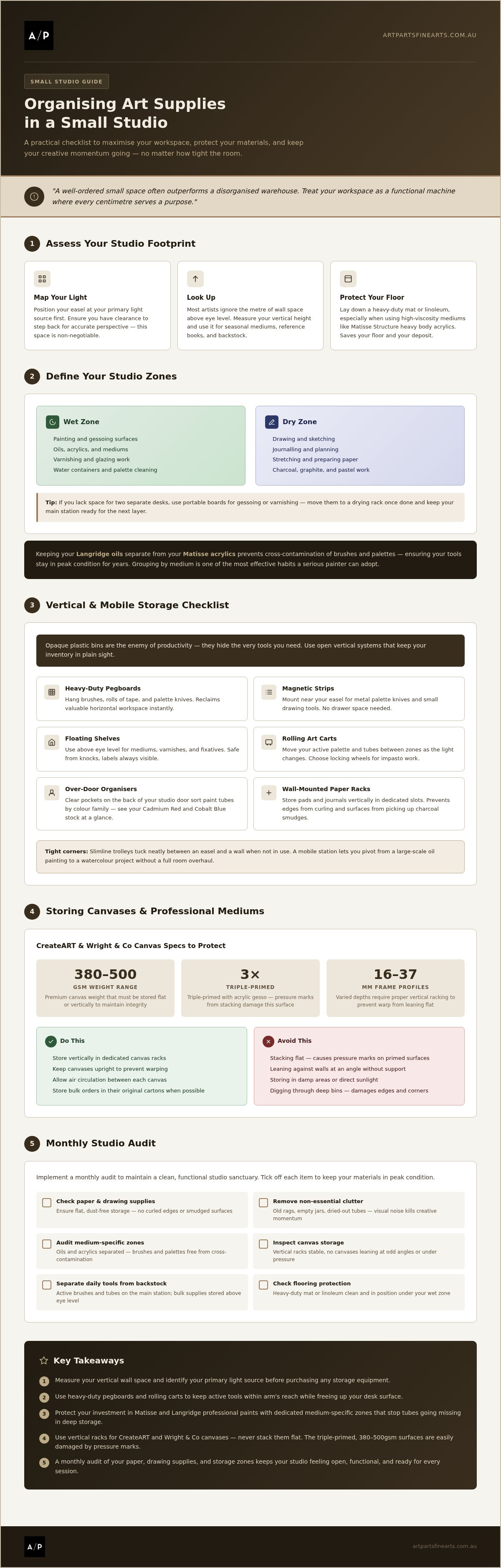
- Measure your vertical wall space and identify primary light sources to establish a studio footprint that supports your specific creative workflow.
- Master organising art supplies in a small space by using heavy-duty pegboards and rolling carts to keep active tools within reach while freeing up desk surfaces.
- Protect your investment in professional paints like Matisse and Langridge by creating medium-specific zones that prevent tubes from getting lost in deep storage.
- Use vertical racks for bulk orders of CreateART and Wright & Co canvases to avoid pressure marks and ensure the 380 to 500gsm surfaces remain pristine.
- Implement a monthly audit of your paper and drawing supplies to maintain a flat, dust-free environment in your studio sanctuary.
Assessing Your Studio Footprint and Workflow
Successful studio management starts with a tape measure and a clear understanding of how you move. When you're organising art supplies in a small space, you have to be intentional about every square centimetre. Before buying storage bins, identify your primary light source. Position your easel where the light falls best, ensuring you have enough clearance to step back and view your work from a distance. Even in tight quarters, this viewing space is vital for accurate perspective.
Look up. Most artists ignore the metre of wall space between eye level and the ceiling. Measuring your vertical height allows you to install shelving for items you don't need every day, such as seasonal mediums or reference books. While you're at it, audit your inventory. Separate your daily-use brushes and tubes from your bulk backstock to keep your immediate work surface clear and functional.
Consider your flooring, too. If you're working with high-viscosity mediums like Matisse acrylic paint structure heavy body, a single spill on carpet or porous wood can be difficult to manage. Laying down a heavy-duty mat or a piece of linoleum protects your bond and makes post-session clean-ups much faster. It's a simple step that saves your floor and your deposit.
Defining Multi-Functional Zones
When organising art supplies in a small space, you can't afford to let different mediums mingle. Establish a wet zone specifically for painting and a dry zone for drawing, journaling, or stretching paper. If you lack the room for two desks, use portable boards for tasks like gessoing or varnishing. These can be moved to a drying rack once the work is done, keeping your main station ready for the next layer without delay.
The Artist Mindset: Decluttering for Creativity
Visual noise is a real distraction that can stall your creative process. Removing non-essential items like old rags or empty jars instantly makes a small room feel larger and more professional. It's also a good practice to group supplies by medium. Keeping your oils separate from your acrylics prevents cross-contamination of brushes and palettes, ensuring your tools stay in peak condition for years of use.
Vertical and Mobile Storage Solutions Checklist
Visibility is the key to maintaining a flow state. When you're organising art supplies in a small space, opaque plastic bins are often the enemy of productivity because they hide the very tools you need. Instead, focus on open vertical systems that keep your inventory in plain sight and your surfaces clear.
- Heavy-duty pegboards: These are ideal for hanging frequently used brushes, rolls of tape, and palette knives. By keeping these off your desk, you reclaim valuable horizontal workspace.
- Magnetic strips: Mount these near your easel to hold metal palette knives and small drawing tools securely without taking up drawer space.
- Floating shelves: Use these for jars of mediums, varnishes, and fixatives. Placing them above eye level keeps them safe from accidental knocks while keeping the labels visible.
- Rolling art carts: These allow you to move your active palette and tubes between different zones as the light changes throughout the day.
Maximising Wall and Door Space
Don't overlook the back of your studio door. Over-the-door organisers with clear pockets are effective for sorting paint tubes by colour family. This system allows you to see exactly how much Cadmium Red or Cobalt Blue you have left at a glance. For paper pads and journals, wall-mounted racks are a superior choice to stacking. Storing them vertically or in dedicated slots prevents the edges from curling and keeps the surfaces free from accidental charcoal or graphite smudges.
Mobile Solutions for Tight Corners
Slimline trolleys are a lifesaver in studios where every centimetre counts. These can tuck neatly between an easel and a wall when you aren't painting. If you practise vigorous impasto techniques, choose carts with locking wheels to ensure your supplies don't roll away mid-stroke. You can explore our range of studio accessories to find specific tools that help maintain this level of order. Having a mobile station means you can easily pivot from a large-scale oil painting to a smaller watercolour project without a total room overhaul. If you're planning a series of large works, consider how these mobile units might sit alongside a bulk canvas order to keep your workflow seamless.
Storing Professional Mediums and Bulk Canvases
Preservation is as important as accessibility when you are organising art supplies in a small space. High-quality materials like heavy-body acrylics and professional oils require specific conditions to maintain their archival integrity. Leaning canvases against a wall might seem like a space-saver, but it often leads to warping or permanent pressure marks on the cotton surface. Stretched canvases should always be stored vertically on a slightly raised platform to keep them off the floor and away from potential dampness.
If you use CreateART and Wright & Co canvas, keep your bulk cartons in a dry, shaded area. Label the outer spine of the carton with the dimensions and frame profile, such as 37mm deep edge. This simple habit saves you from unboxing a heavy stack just to check a size. Professional oil paints like Langridge also deserve extra care. Organising these by pigment weight or colour family prevents separation and makes your palette setup more efficient.
Effective systems for organising art supplies in a small space must include a plan for your backstock. In a small studio, every minute spent searching for a specific tube is a minute lost to your creative process. By grouping your paints and labelling your cartons, you maintain a professional environment that respects both your time and your tools.
Managing Full Carton Canvas Inventory
Building a basic "slat" rack from timber offcuts is an excellent project for a small studio. These vertical dividers allow you to slide individual canvases in and out like books on a shelf. This system protects the 380 to 500gsm triple-primed surfaces from rubbing against each other. For more advice on scaling your studio, see our guide on investing in high-quality art supplies.
Preserving Paints and Mediums
Store your paint tubes cap-side up in shallow drawers or trays. This orientation allows you to see the labels or hand-painted swatches immediately. Always wipe the threads of your medium and varnish jars with a clean rag before sealing them. This prevents the lids from bonding to the glass, ensuring your supplies are always ready for use. It's a small step that prevents wasted materials and frustration.
Browse our full carton canvas range for studio savings
Maintaining Your Small Studio Sanctuary
A functional studio isn't a one-time setup; it's a living environment that requires consistent care. When you're organising art supplies in a small space, a few weeks of neglect can quickly lead to a workspace that feels cramped and uninspiring. Schedule a monthly audit of your paper and drawing supplies. Check that your Arches or Hahnemühle sheets remain flat and free from humidity, as even minor curling can interfere with your next wash or pencil stroke.
Cleanliness is about more than aesthetics; it's about protecting your health and your materials. Wipe down your shelves and pegboards regularly to prevent the buildup of pigment dust or dried acrylic flakes. If you've just finished a major commission or a high-volume project using bulk canvas, schedule a deep clean. Clearing the decks allows you to reset your mind and ensures your studio accessories are ready for the next creative challenge.
Practise inventory rotation by moving older tubes of paint to the front of your drawers. Whether you're using Matisse Structure or Langridge oils, using your stock in the order it arrived prevents tubes from becoming buried and forgotten. This "first-in, first-out" approach ensures your mediums stay fresh and your investment doesn't go to waste.
The End-of-Session Routine
Develop a ten-minute routine to close each day. Return all brushes to their vertical holders or drying racks immediately after cleaning to maintain the shape of the bristles and prevent water from damaging the ferrules. Clear your main desk of everything not required for tomorrow's session. Leaving a clean surface makes it much easier to start work the next morning without the mental weight of yesterday's clutter.
Expanding Your Skills in Small Spaces
Learning how other artists handle their logistics can provide fresh perspective for your own room. You might consider attending one of our creative workshops to see firsthand how a professional setup operates. Additionally, try using a sketchbook to plan your larger compositions. By working out your values and colour schemes on paper first, you can commit to a large canvas with confidence, reducing the need for multiple bulky easels or drying racks in a limited room.
Building a Productive Creative Environment
A functional studio layout is within reach, regardless of the square metreage of your room. By prioritising vertical storage for your CreateART canvases and establishing a consistent end-of-session routine, you protect your investment and clear the way for more ambitious projects. These systems ensure that your professional paints and tools are always exactly where you need them.
Mastering the art of organising art supplies in a small space allows you to focus on the work rather than the clutter. At Art Parts Fine Arts, we are independently owned and operated by local artists who understand the logistical challenges of a busy studio. We take pride in supplying premium brands like Matisse and Langridge while providing expert advice for every stage of your creative journey.
Explore our range of professional art supplies and storage accessories
We look forward to helping you build a workspace that inspires your best work. If you have questions about specific storage solutions or need advice on coordinating a bulk canvas order, please get in touch with our team.
Frequently Asked Questions
How do I store large stretched canvases in a tiny apartment?
Storing large stretched canvases vertically on a timber rack is the best way to save space while preventing the fabric from sagging. Avoid leaning them directly against external walls, as temperature fluctuations can cause the wooden frames to warp or the cotton to lose tension. By using a slightly raised platform or a dedicated slat rack, you also protect the 380 to 500gsm surfaces from floor-level dust and potential moisture.
Is it better to store paint tubes vertically or horizontally?
Storing paint tubes horizontally in shallow drawers is often preferred for visibility, but vertical storage with the cap facing up is a superior method for organising art supplies in a small space. This orientation allows you to see the colour swatches or labels on the base of the tube instantly. It also ensures that any pigment separation occurs away from the nozzle, making the paint easier to dispense when you start your next session.
How can I prevent my art supplies from smelling in a small room?
Switch to low-odour alternatives and keep all lids tightly sealed to manage scents in a confined studio. Professional ranges like Langridge offer high-quality solvents and mediums designed to minimise the strong chemical smells traditionally associated with oil painting. Regularly wiping the threads of your jars ensures a perfect seal, while an air purifier with a carbon filter can help maintain a fresh environment without needing constant cross-ventilation.
Are plastic bins safe for long-term storage of professional oil paints?
Plastic bins are generally safe for storing tubes of professional oil paints, provided they are kept in a cool, dark location away from direct sunlight. However, avoid using deep, opaque bins where tubes become buried, as the weight of a large inventory can lead to punctures or leaking caps. Clear, shallow trays are a better choice for organising art supplies in a small space because they allow you to monitor your stock levels without unboxing every container.
How do I keep my brushes from getting damaged in a crowded studio?
Store your brushes vertically with the heads facing upwards in a stable jar or a wall-mounted pegboard system. This prevents the bristles from being crushed and allows for proper airflow after cleaning, which is essential for the longevity of the ferrules. In a crowded studio, avoid keeping brushes loose in drawers where they can be bent by heavier palette knives or tubes. A dedicated brush roll is an excellent secondary option for protecting delicate natural hair or synthetic fibres when they aren't in active use.

Article by
Art Parts Fine Arts
Art Parts Fine Arts is an Australian art-supplies store based in Albury, shipping Australia-wide. Hand-picked by artists, our range covers paints, canvas, brushes, paper, printmaking and more, for everyone from students to professionals. We share practical guides and tips to help you get the most out of your materials.
Disclaimer
This article is general information to help you choose and use art materials. It is not professional, health or safety advice. Always follow the manufacturer's instructions and safety guidance for any product, and take care when using solvents, varnishes and other materials. Product availability, specifications and pricing may change, so please check the current product page for details.