

Professional Artist Canvas: A Premium Selection Guide
A professional canvas for artists needs suitable fabric, a well-prepared surface and a stable frame to support the way you work. Whether you’re painting a commission or stocking a busy studio, these details can help you …A professional canvas for artists needs suitable fabric, a well-prepared surface and a stable frame to support the way you work. Whether you’re painting a commission or stocking a busy studio, these details can help you choose with confidence.
This guide explains how to compare canvas materials, weight, priming and stretcher-bar profiles, then apply those checks when sourcing a canvas for an individual work or regular studio use.
Key Takeaways
- Choose a professional canvas for artists by comparing fabric weight, surface texture and priming with your medium and painting style.
- Use 380gsm cotton canvas as a substantial starting point, and consider when a heavier surface may better suit your work.
- Compare stretcher-bar materials and slim or gallery-depth profiles to match the canvas to the work’s size and display plans.
- For regular studio or class use, explore full carton canvas options when sourcing stretched canvas in bulk.
Selecting a Professional Canvas for Artists: Materials and Grounds
A professional canvas for artists needs to suit both your painting process and how the finished work will be displayed. The fabric provides the support, while the ground, the prepared surface applied over it, affects how paint behaves and adheres. Weight and priming matter, but so do the weave and the stability of the stretcher bars.
Canvas has been made from different fibres over time, with cotton and linen among the materials used for painting surfaces. For an overview of its materials and development, see this history of artist's canvas. In practice, choose according to the surface you want and the demands of your medium rather than assuming one fibre suits every technique.
Cotton Duck, Linen and Poly-Cotton
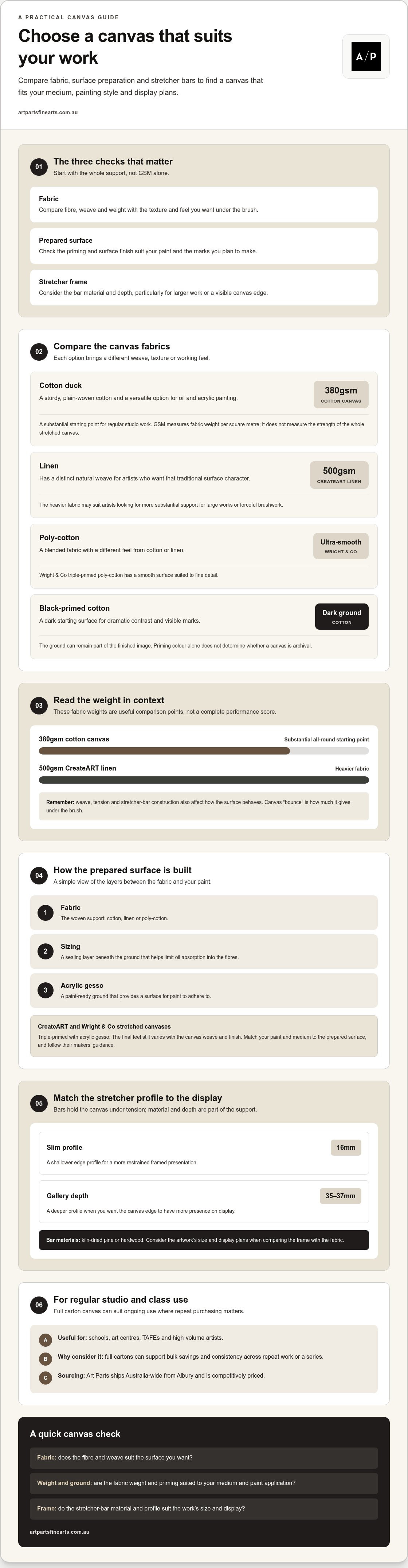
Cotton duck is a sturdy, plain-woven cotton canvas. It’s a versatile option for oil and acrylic painting, and 380gsm cotton canvas offers a substantial surface for regular studio work. Linen has a distinct natural weave and is valued by artists seeking a traditional surface. Available CreateART linen canvas is 500gsm. Poly-cotton blends have a different feel: Wright & Co’s triple-primed poly-cotton canvas has an ultra-smooth surface suited to fine detail.
Texture can guide your choice of technique. A more pronounced weave gives brushwork and heavy impasto a noticeable surface, while a smoother tooth, meaning the feel and grip of the canvas, can suit controlled marks and detailed work. If you’re choosing between a slim, framed presentation and a deeper canvas with visible edges, consider the artwork’s display before selecting a stretcher profile. Artists seeking inspiration on how contemporary painters navigate texture and presentation can learn more through online platforms like Artgal.Online.
Why Triple Priming Matters
Gesso is a paint-ready ground applied to the fabric. Sizing, a sealing layer beneath the ground, helps limit oil absorption into the fibres. The gesso then provides a surface for paint to adhere to. A well-prepared ground can also help reduce the risk of support-induced discolouration, where the canvas support affects the appearance of an acrylic painting. It doesn’t remove the need to choose materials suited to your medium.
CreateART and Wright & Co stretched canvases are triple-primed with acrylic gesso. The three coats provide a consistent prepared surface, although the final feel still varies with the canvas weave and finish. For schools, art centres, TAFEs and busy studios, full carton canvas options can help with repeat purchasing and consistency across a series.
Understanding Canvas Weight and Priming Specifications
GSM means grams per square metre. It measures the weight of the canvas fabric, not the strength of the whole stretched canvas. Weave, tension and stretcher-bar construction also affect how the surface performs. When choosing a professional canvas for artists, use GSM as a comparison point, then consider your paint application and the size of the work.
GSM and Technical Performance
380gsm cotton canvas is a substantial all-round starting point for stretched work in acrylic or oil. It can suit a range of studio techniques, including heavier applications of heavy-bodied acrylic paint. A 500gsm surface, such as the available CreateART linen canvas, offers heavier fabric for artists who want more substantial support for large works or forceful brushwork.
Weight alone doesn’t prevent sagging or tearing. Canvas tension, weave and the strength of the stretcher bars matter too, particularly as the work gets larger. The surface’s “bounce”, or how much it gives under the brush, depends on these factors together. If you build up impasto, test how the canvas responds to your pressure and paint load rather than relying on GSM alone.
Sizing, Gesso and Surface Colour
Sizing seals the fabric before the ground is applied, helping limit oil from soaking into natural fibres. Gesso is the primer that provides a paint-ready surface. CreateART and Wright & Co stretched canvases are triple-primed with acrylic gesso, but that specification alone isn’t a guarantee against cracking over time. Follow the paint and medium makers’ guidance, and use products intended to work together.
White priming gives a light base that can keep colours appearing bright. Black-primed cotton offers a dark starting point for dramatic contrast, visible marks and compositions where the ground can remain part of the finished image. Neither colour is automatically more archival. The suitability of the whole surface depends on its materials and preparation.
If you work with oil or acrylic, check that your chosen medium is suitable for the canvas’s prepared surface. You can browse professional painting mediums alongside your paint. For studios buying regularly, full carton canvas is another option to consider.
Structural Integrity and Stretcher Bar Profiles
The stretcher bars hold a stretched canvas under tension, so their material, depth and construction affect how the surface performs over time. When choosing a professional canvas for artists, check these details alongside the fabric weight, especially for larger works where a stable support matters.
Selecting the Right Profile Depth
Profile depth describes the thickness of the stretcher frame from the wall to the front of the canvas. A slim 16mm profile is lighter and often suits smaller studies or work that will be placed in a traditional frame. Gallery-depth profiles of 35 to 37mm give a painting more presence on the wall and can be displayed without a frame, with the canvas edges available to continue the composition.
A deeper profile also holds the fabric further from the wall. This can help reduce “ghosting”, the visible impression of stretcher bars showing through the canvas surface. Rounded front edges are another useful detail to look for. They spread the canvas over a softer curve rather than a sharp corner, helping limit pressure marks and wear on the weave.
Timber Quality and Kiln-Drying
Timber can respond to changes in moisture, which may affect a stretcher frame’s shape and the canvas tension. Kiln-drying reduces the wood’s moisture before the bars are made, supporting a more stable frame. It isn’t a guarantee against movement, so for oversized commissions check the stretcher construction and intended use, not just the timber name.
Pine is used for stretched canvas and can provide a practical, lighter support. Hardwood, where specified, may offer added rigidity, but compare the actual bar dimensions and construction with the canvas size you need. Timber types can vary between ranges, so check the product details before ordering.
Some stretcher frames use corner keys, small wedges fitted into the corners. They can be tapped carefully to adjust canvas tension if it loosens, but don’t assume every frame includes them or needs adjustment. Check the canvas edges too: bars with rounded front edges help avoid a sharp contact point beneath the fabric.
Sourcing Professional Canvas for High-Volume Studios
For schools, art centres, TAFEs and busy studios, buying canvas by the carton can make restocking easier and help maintain a consistent surface across a group of works. Art Parts Fine Arts offers full cartons of CreateART and Wright & Co canvases.
Planning Full Carton Purchases
Before ordering, estimate your regular use and check that the carton’s canvas type, weight and profile suit the planned work. For an exhibition series, matching these specifications can help keep surfaces consistent. A carton doesn’t, by itself, guarantee every canvas comes from one production batch, so check product details if batch matching matters to your project.
Bulk buying also needs a storage plan. Canvas takes up space and should be kept somewhere clean and dry, with cartons arranged so the canvases aren’t crushed or bent. In a small studio, measure the storage area first and consider how you’ll access the canvases without shifting other materials. Schools and art centres can make stock easier to manage by recording each canvas type, size and quantity as cartons arrive, then setting aside stock for upcoming classes or projects.
Review the available full carton canvas options before planning a bulk stretched canvas order. Check current product details and delivery information when organising a restock.
Check the Canvas Before Starting
Before beginning a major commission or class project, inspect a canvas from the order and confirm it suits the work. A quick check can help catch mismatches early:
- Confirm the fabric, weight and profile match your intended technique and display.
- Look over the gesso surface for an even finish and check for visible damage.
- Check that the stretcher bars appear straight and the canvas is held evenly in place.
- Compare several canvases if consistency across a series matters.
These checks won’t replace reviewing the product specifications, but they can help you spot a problem before paint is on the surface. For a studio sourcing professional canvas for artists regularly, a clear ordering and storage routine makes repeat purchases easier to manage.
Choose a Canvas That Supports Your Practice
Choosing a professional canvas for artists comes down to matching the fabric and surface to your technique, then checking that the stretcher frame suits the work’s size and display. Weight, triple-primed acrylic gesso and kiln-dried timber are useful specifications to compare when selecting a surface for studio work or a commission.
CreateART and Wright & Co canvases include options from 380 to 500gsm, with triple-primed surfaces and kiln-dried timber frames. Browse the available canvases to compare their specifications and plan for upcoming projects.
Frequently Asked Questions
What is the difference between 380gsm and 500gsm canvas?
GSM measures the weight of canvas fabric per square metre, so 500gsm canvas is heavier than 380gsm canvas. A 380gsm cotton canvas is a versatile option for regular oil or acrylic painting, while heavier 500gsm fabric may suit artists wanting a more substantial surface for large works or vigorous techniques. Weight is only one factor: weave, tension and stretcher-bar construction also affect how a canvas performs.
Why is kiln-dried timber important for artist canvas frames?
Kiln-drying reduces moisture in timber before it’s made into stretcher bars, which helps support a stable frame. Wood can respond to changes in moisture, so a well-constructed frame matters for keeping the canvas properly supported over time. Kiln-dried timber isn’t a guarantee against movement. For a large canvas or commission, also check the bar profile, frame construction and whether the bars remain straight.
Can I use oil paints on a triple-primed acrylic gesso canvas?
Yes, oil paint can be used on a canvas triple-primed with acrylic gesso, provided the canvas is specified as suitable for oil painting. Gesso is the primer that creates a prepared surface for paint, while sizing beneath it helps seal the fabric. CreateART and Wright & Co canvases are triple-primed with acrylic gesso. Check the details for your chosen canvas and follow the paint maker’s guidance.
What is the benefit of a gallery-depth 37mm profile?
A 37mm gallery-depth profile gives the canvas a deeper edge, adding presence when the artwork is displayed without a frame. It also holds the fabric further from the wall than a slim profile. This depth can help reduce the impression of stretcher bars showing through the surface, although fabric tension and frame construction matter too. Consider the artwork’s size and how you plan to display it before choosing.
Is cotton duck canvas suitable for professional portraiture?
Yes, cotton duck can be suitable for professional portraiture in oil or acrylic. Its plain weave offers a versatile painting surface, and the texture can provide a visible tooth for brushwork. For fine facial details, consider whether you prefer a smoother surface, such as the ultra-smooth Wright & Co poly-cotton canvas. Compare the weave and priming, then choose a surface that suits your technique and preferred finish.
How should I store bulk canvas cartons to prevent damage?
Keep canvas cartons in a clean, dry storage area and protect them from being crushed, bent or knocked. Before ordering, measure the space and plan how you’ll access the canvases without shifting or leaning heavy items against them. Store cartons so their contents stay supported, and check canvases for damage when unpacking. For a studio, school or art centre, recording sizes and quantities as cartons arrive also helps keep stock organised.
Compare the available canvas specifications and choose the surface that suits your next project. Explore full carton canvas at Art Parts Fine Arts.

Article by
Art Parts Fine Arts
Art Parts Fine Arts is an Australian art-supplies store based in Albury, shipping Australia-wide. Hand-picked by artists, our range covers paints, canvas, brushes, paper, printmaking and more, for everyone from students to professionals. We share practical guides and tips to help you get the most out of your materials.
Disclaimer
This article is general information to help you choose and use art materials. It is not professional, health or safety advice. Always follow the manufacturer's instructions and safety guidance for any product, and take care when using solvents, varnishes and other materials. Product availability, specifications and pricing may change, so please check the current product page for details.