

Rough Watercolour Paper 300gsm: How to Choose the Right Sheet
Rough watercolour paper 300gsm combines a pronounced surface texture with a substantial paper weight. If you’re choosing paper for washes, expressive brushwork or detailed painting, understanding how these features affec…Rough watercolour paper 300gsm combines a pronounced surface texture with a substantial paper weight. If you’re choosing paper for washes, expressive brushwork or detailed painting, understanding how these features affect handling can help you find a sheet that suits your technique.
Weight alone doesn’t guarantee that paper will stay flat when wet, and texture won’t make every mark for you. Compare the surface and listed materials, then test a small study with the brushes and paints you normally use.
Key Takeaways
- Rough watercolour paper 300gsm pairs a pronounced texture with a substantial paper weight, but neither feature guarantees a buckle-free painting.
- Compare rough, cold-pressed and hot-pressed surfaces by the marks and level of detail you want, rather than treating one as right for every artist.
- Match the paper’s surface to your techniques, such as textured washes, fine lines or detailed illustration.
- Check the listed fibre and sizing as well as the weight; sizing affects how quickly water and paint soak into the sheet.
- Use 300gsm as one part of your choice, alongside the paper’s surface, materials and intended use.
What does rough watercolour paper 300gsm mean for your painting?
300gsm describes paper weight; rough describes surface texture. They’re separate details, and neither tells you everything about how a sheet will behave or whether it suits your painting style.
In rough watercolour paper 300gsm, “gsm” means grams per square metre. It measures the paper’s weight, not its quality. A 300gsm sheet generally feels more substantial than a lighter one and is less prone to buckling when wet, but it isn’t guaranteed to stay flat. The amount of water you apply and how you prepare the sheet also affect the result.
What does 300gsm tell you about watercolour paper?
Think of weight as one clue about handling, not a promise of performance. Two sheets with the same gsm can differ in fibre, sizing and surface. Sizing is a treatment that affects how readily water is absorbed by the paper. These details, together with your technique, influence how washes behave and how easily you can work back into colour. Compare the listed specifications rather than using weight alone to judge a sheet.
How does a rough surface change watercolour marks?
Rough paper has a pronounced, uneven texture, with raised areas and dips that affect where the brush touches. A lightly loaded, dry brush can catch on the high points and leave broken marks. In a wash, the texture may show through, giving colour a varied appearance. The result still depends on your brush pressure, paint and water, so the surface won’t make every mark for you.
If you enjoy expressive marks or visible texture, rough paper may suit your process. If you prefer smoother, more even strokes or very fine lines, a smoother surface may feel easier to control. For a broader overview of paper surfaces and materials, see Watercolor paper. You can also compare surface and weight descriptions in the watercolour paper range.
Rough, cold-pressed or hot-pressed: which watercolour surface suits you?
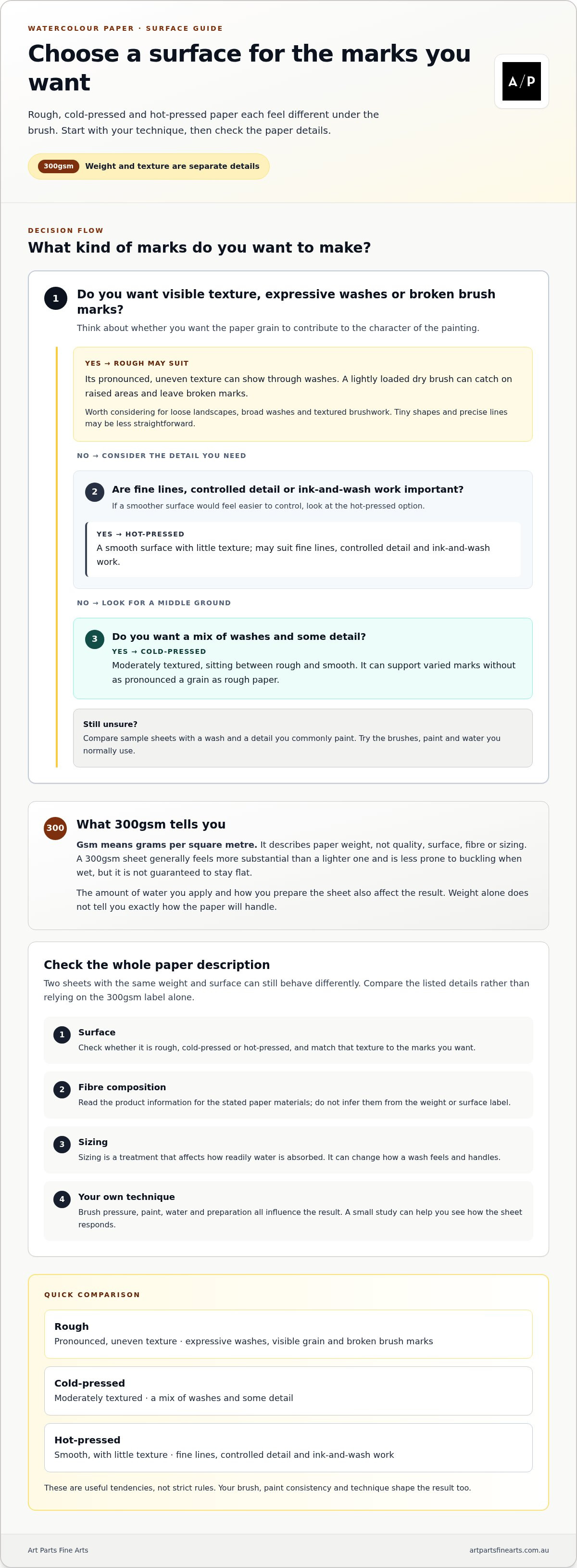
Choose a surface according to the marks you want and how the paper feels under your brush. Rough paper has a pronounced grain, cold-pressed paper sits between rough and smooth, and hot-pressed paper has a smoother finish. Each can work well, depending on your subject and approach.
| Surface | Feel | May suit |
|---|---|---|
| Rough | Pronounced, uneven texture | Expressive washes, visible texture and broken brush marks |
| Cold-pressed | Moderately textured | A mix of washes and some detail |
| Hot-pressed | Smooth, with little texture | Fine lines, controlled detail and ink-and-wash work |
When might rough paper suit your watercolour technique?
Choose rough paper if you want the grain to contribute to the painting’s character. It can suit loose landscapes, broad washes and brushwork where you welcome an uneven, textured finish. That same texture may make tiny shapes or precise lines less straightforward. Before choosing rough watercolour paper 300gsm, consider how much fine detail your subject needs and whether you want the paper to remain visible in the finished work.
How do cold-pressed and hot-pressed surfaces differ?
Cold-pressed paper offers a middle ground. Its texture supports varied marks without being as pronounced as rough paper. Hot-pressed paper is smoother, which some artists prefer for botanical details, line work or carefully controlled washes. These are tendencies, not strict rules: your brush, paint consistency and technique all shape the result.
If you can, compare sample sheets by painting a wash and a detail you commonly use. Product descriptions can help you identify the surface, and choosing a paper surface also depends on how you want paint to sit and move across the sheet. Compare the options in the paper range.
Explore the watercolour paper range
How to choose rough 300gsm watercolour paper for your technique
Start with the marks you want to make, then check the paper details rather than relying on weight alone. This helps you decide whether rough paper supports your process or whether another surface may feel more manageable. A short test can also show how the paper responds to your usual combination of brush, paint and water.
Match paper texture to the way you paint
Use this short decision process:
- Identify your main technique. Loose washes and textured brushwork may suit a pronounced grain, while fine lines and controlled detail may call for a smoother surface.
- Think about the marks you want. Rough paper can interrupt brush contact across its raised areas, giving a wash or dry-brush stroke a more varied appearance.
- Consider how you like to work. If you’re unsure, make a small study with the brushes, paint and water you normally use before starting a larger piece.
- Read the paper description. Check the stated surface, fibre composition and sizing when those details are provided.
Sizing is a treatment applied to paper that affects how readily water moves into its fibres. It can change how a wash feels and handles, so don’t assume two sheets will behave alike just because both are rough and 300gsm. For more on how paper texture affects paint, compare the surface descriptions with the effects you want to achieve.
Read paper descriptions beyond the 300gsm label
Gsm tells you the paper’s weight per square metre. It doesn’t identify the fibre, explain the sizing or tell you exactly how absorbent the sheet will feel in practice. Look for those details in the product information, and avoid inferring them from a brand name or surface label. Fibre and sizing can influence handling, while your water use and technique also shape the result.
As you compare watercolour paper options, use the listed details to narrow your choices. Art Parts Fine Arts’ paper range includes Arches and Hahnemühle, alongside other paper options. The right sheet is the one whose surface, materials and handling suit the way you paint, not simply the one with a particular weight.
Browse the watercolour paper range
Buying rough watercolour paper 300gsm with confidence
Choose a sheet by considering the whole combination: surface, weight, listed materials and the way you plan to paint. Rough watercolour paper 300gsm may suit expressive washes and textured brushwork, but 300gsm alone can’t tell you whether the paper will feel right for your technique or suit every project.
What to check before choosing a sheet or pad
- Surface: Check that the description says rough, then consider whether its pronounced texture suits the marks you want to make.
- Weight: Use the stated gsm to compare paper weight, while remembering that it doesn’t guarantee the sheet will stay flat when wet.
- Fibre and sizing: Read the available details rather than assuming these from the weight, texture or brand name. Sizing is a treatment that affects how water interacts with the paper.
- Format and purpose: Think about whether you’re choosing paper for practice studies, a finished painting or another specific project. Choose a sheet or pad that suits how you plan to work.
Build a paper choice around your own practice
A small painting test can tell you more than a label alone. Try a wash, a dry-brush stroke and a detail mark using your usual brush and amount of water. Notice how the water moves, how the texture shows through the colour and whether the surface feels comfortable to control. This gives you a practical comparison before you begin a larger piece.
If you’re new to watercolour, start with the surface that feels easiest to manage. Explore the paper range and compare the details provided for each option. Let your preferred marks guide the choice, then use fibre and sizing information to make a more informed comparison.
There’s no single paper choice for every artist. Treat 300gsm as one useful part of the decision, alongside surface, materials and intended technique. A sheet that suits your process is a more practical starting point than relying on weight alone.
Choose paper that supports your way of painting
Choose rough watercolour paper 300gsm for the combination of its weight and pronounced texture, not because the number alone promises a particular result. Surface affects the marks you make, while fibre and sizing also influence how the sheet handles water. Check the product details and, where you can, test a small study before committing to a larger work.
Art Parts Fine Arts supplies art materials across Australia, including paper from brands such as Arches and Hahnemühle. Browse the paper options at your own pace and use the listed details to find a surface that suits your techniques and projects.
Browse the watercolour paper range to compare the available options and find a sheet for your next study or finished painting.
Frequently Asked Questions
Is 300gsm watercolour paper heavy enough for wet-on-wet painting?
Yes, 300gsm watercolour paper can be used for wet-on-wet painting, but its weight doesn’t guarantee a flat sheet. The result depends on the paper’s construction, how much water you apply and any preparation you use. Check the individual paper details and follow its handling guidance. Before starting a finished painting, test your usual wet-on-wet method on a small area or spare sheet to see how it responds.
What is the difference between rough and cold-pressed watercolour paper?
Rough paper has a more pronounced, uneven texture, while cold-pressed paper generally has a less pronounced, intermediate surface. On rough paper, the grain can show through washes and affect where the brush touches, creating more broken or varied marks. Cold-pressed paper may feel more even under the brush. Neither surface is a quality ranking; choose according to the marks, level of control and texture you prefer for your subject.
Can you use rough watercolour paper for detailed painting?
Yes, you can paint details on rough paper, though its pronounced texture may affect fine lines and small forms. Brush contact can feel less even than it does on a smoother sheet, so consider the finish you want. Try a few of your usual detail marks on a small test first. If an even working surface is your priority, cold-pressed or hot-pressed paper may feel more comfortable to use.
How do you stop 300gsm watercolour paper from buckling?
There’s no guarantee that 300gsm paper will stay flat with every painting method. Buckling can depend on the paper’s construction, how much water you use and how you work. Follow the paper maker’s handling guidance, and test your approach on a small study before beginning a finished piece. This lets you see how the sheet responds to your washes and preparation without assuming one method will prevent buckling.
Is rough watercolour paper suitable for beginners?
Yes, beginners can use rough paper, especially if they enjoy visible texture and expressive marks. Its grain may feel less predictable for fine detail or carefully controlled washes, but that doesn’t make it unsuitable for learning. Try a small study with a simple wash and a few brush marks. Notice what you enjoy and find manageable, then choose based on your preferred way of painting rather than your experience level.
What should I check when buying 300gsm rough watercolour paper?
Check the stated surface and weight, plus fibre and sizing details where they’re provided. The phrase rough watercolour paper 300gsm describes texture and weight, but doesn’t tell you everything about how the sheet will handle water or paint. Match the available details to your planned techniques, such as loose washes or fine brushwork. If practical, test a sheet or small area with your usual materials before starting a larger painting.

Article by
Art Parts Fine Arts
Art Parts Fine Arts is an Australian art-supplies store based in Albury, shipping Australia-wide. Hand-picked by artists, our range covers paints, canvas, brushes, paper, printmaking and more, for everyone from students to professionals. We share practical guides and tips to help you get the most out of your materials.
Disclaimer
This article is general information to help you choose and use art materials. It is not professional, health or safety advice. Always follow the manufacturer's instructions and safety guidance for any product, and take care when using solvents, varnishes and other materials. Product availability, specifications and pricing may change, so please check the current product page for details.