

Watercolour Paper Explained: How to Choose the Right Surface
Watercolour paper is made to handle water-based paint and repeated brushwork differently from ordinary drawing paper. If you’re new to watercolour or comparing surfaces for a particular technique, watercolour paper expla…Watercolour paper is made to handle water-based paint and repeated brushwork differently from ordinary drawing paper. If you’re new to watercolour or comparing surfaces for a particular technique, watercolour paper explained in plain language can help you understand labels such as gsm, cold-pressed, cotton and sizing. This guide shows how those qualities affect paint behaviour and helps you choose and prepare a surface with confidence.
Key Takeaways
- Paper labels are most useful when you compare them with the techniques and effects you want to achieve.
- Start with the surface: choose smooth, lightly textured or more textured paper according to your preferred brushwork and level of detail.
- Pick a format that fits how you work, whether that’s individual sheets, pads, blocks or journals.
- Test a small piece with your usual washes, layers and lifting methods before starting a larger painting.
- Use a simple selection order: technique first, then surface, fibre, weight and format.
Watercolour paper explained: what it is and why it matters
Watercolour paper is designed to manage water, pigment and repeated brushwork. The way a sheet responds when wet can affect how colour absorbs, whether an edge stays soft or sharp, and how much texture shows through a wash.
Think of the paper as part of the painting, not just a support beneath it. The same wash can spread differently across two surfaces, while texture can show through a dry-brush stroke or affect fine detail. This Watercolour paper overview provides further background on paper surfaces and how they’re made.
How watercolour paper differs from ordinary drawing paper
Paper made for watercolour is intended for wet techniques, so it may hold water and pigment differently from paper designed mainly for dry drawing. On ordinary drawing paper, a wash may spread unevenly or sink in quickly, making colour harder to control. Drawing paper can still suit light washes, quick studies and practice.
With heavier washes or repeated layers, ordinary paper may buckle as it absorbs water, or its surface may wear under brushing and lifting. The result depends on the paper and how much water you use. Watercolour paper is made with wet painting in mind, but different papers still respond in different ways.
What watercolour paper labels tell you
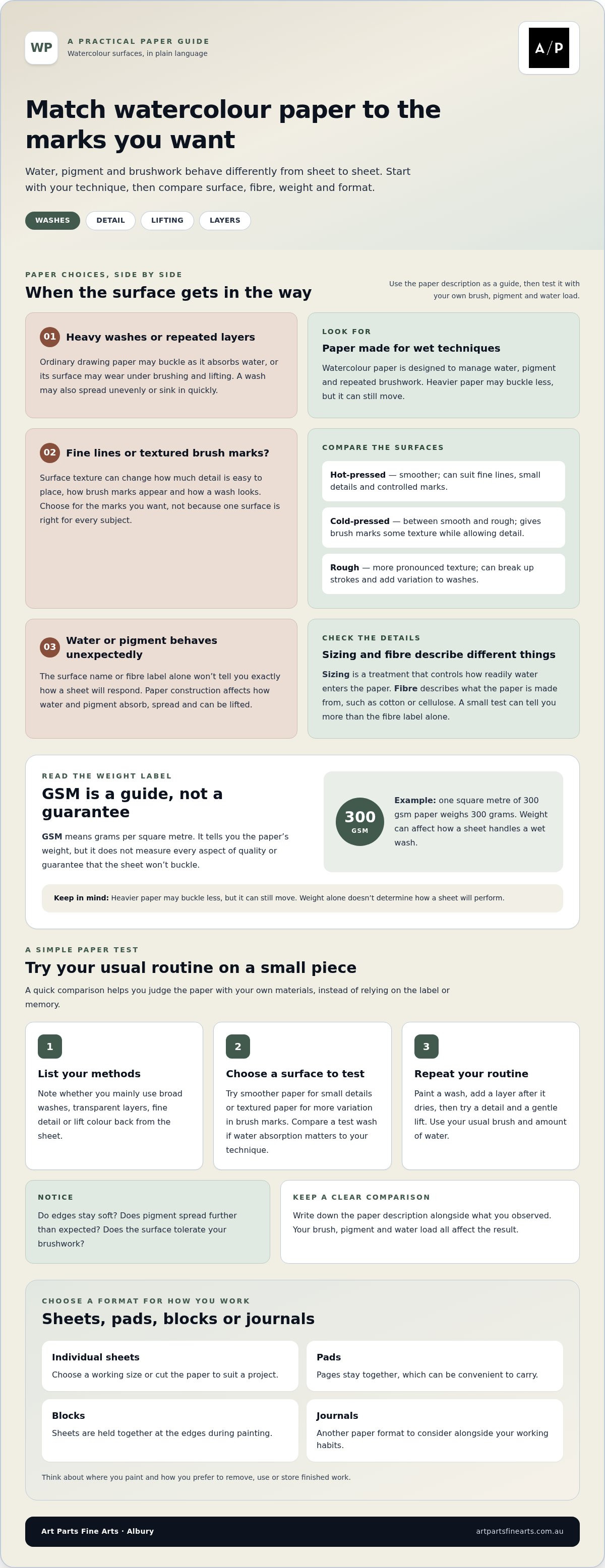
Read paper labels together rather than choosing by one detail. GSM means grams per square metre and indicates paper weight. It helps you compare sheets, but it doesn’t measure every aspect of quality or guarantee that paper won’t buckle. Texture labels describe the surface, while fibre details tell you what the paper is made from.
Format matters too: a sheet, pad, block or journal can suit a different way of working and storing paintings. Compare the full description and, where possible, test the paper with your usual technique. Browse watercolour paper and paper formats to explore options from brands including Arches and Hahnemühle.
Watercolour paper qualities: weight, texture, fibre and sizing
Each label describes a different paper quality, and each can change how a painting develops. Use this comparison as a starting point, then consider how the qualities work together.
| Quality | What it tells you | What it can affect |
|---|---|---|
| Weight | Paper mass in grams per square metre (gsm) | Handling during wet washes and how readily the sheet may buckle |
| Texture | How smooth or visibly textured the surface is | Brush marks, edges, fine detail and the look of washes |
| Fibre | The material used to make the paper, such as cotton or cellulose | How the sheet feels and responds to water and brushwork |
| Sizing | A treatment that controls how readily water enters the paper | How water and pigment absorb, spread and can be lifted |
What gsm means for watercolour paper
GSM means grams per square metre, a measure of paper weight. For example, 300 gsm means a square metre of that paper weighs 300 grams. Weight can affect how a sheet handles a wet wash. Heavier paper may buckle less, but it can still move, and weight alone doesn’t determine how a sheet will perform.
Cold-pressed, hot-pressed and rough paper surfaces
Surface names describe texture, although the feel can vary between makers. Hot-pressed paper is smoother and can suit fine lines, small details and controlled marks. Cold-pressed paper sits between smooth and rough, giving brush marks some texture while still allowing detail. Rough paper has a more pronounced texture that can break up strokes and add variation to washes. Choose according to the marks you want, rather than assuming one surface is right for every subject.
Cotton, cellulose and sizing in plain language
Cotton and cellulose describe the fibres used to make paper. Cellulose usually refers to plant-based fibres such as wood pulp, but the label alone doesn’t tell you exactly how a sheet will perform. Sizing is separate from fibre: sizing is a treatment that slows or controls water absorption, shaping how water and pigment move across the paper. Its effect depends on the paper’s construction, so a small test can tell you more than the fibre label alone.
These qualities make watercolour paper easier to compare before you start painting. If you also work with acrylics or oils, full carton stretched canvas is a separate surface to explore.
How to choose and prepare watercolour paper for your technique
Start with the way you paint, then narrow your choice by surface and format. Paper that suits a broad wash may feel less convenient for tiny details. Your brush, pigment and water load also affect the result, so test the paper using the materials and methods you normally use.
Match the paper to washes, detail and mixed techniques
- List your usual methods. Note whether you mainly paint broad washes, build transparent layers, add fine detail or lift colour back from the sheet.
- Choose a surface to test. A smoother surface can make fine lines and small details easier to place. A textured surface may leave more variation in brush marks. If you want water to absorb more readily, compare papers in a test wash. Sizing and paper construction affect that response, so the surface name alone won’t tell you everything.
- Try your usual routine. On a small piece, paint a wash, add a layer after it dries, then test a detail and a gentle lift. Use your usual brush and amount of water so the result reflects how you actually work.
Notice whether edges stay soft, pigment spreads further than expected or the surface tolerates your brushwork. Keep notes on the paper description alongside your observations so you can compare options accurately instead of relying on memory.
Choose a format and prepare the surface
Individual sheets let you choose a working size or cut the paper to suit a project. Pads keep pages together and can be convenient to carry, while blocks hold sheets together at the edges during painting. Consider where you paint and how you prefer to remove, use or store finished work.
Whether to stretch or tape paper depends on its weight, how much water you use and how you like to work. Heavier paper may buckle less, but it can still move. Try your usual washes on a small piece to see whether you need extra preparation, rather than assuming every sheet needs the same treatment.
Test a small sample before committing to a larger painting, especially when trying a new texture or a paper that feels more absorbent. Browse the watercolour paper range to compare paper options and formats.
Watercolour paper explained: make a confident choice for your next painting
A good choice starts with what you want the painting to do, not with one label or a familiar brand. Think in this order: technique, surface, fibre, weight, then format. This approach turns watercolour paper explained into a practical set of decisions rather than a list of unfamiliar terms.
A quick checklist before starting a painting
- Consider the effects. Will your painting use broad washes, fine detail, visible texture, lifting, layered colour or a mix?
- Compare the descriptions. Check the surface, fibre, weight in gsm and format. These details help you compare options, but don’t guarantee exactly how a sheet will behave.
- Test your usual methods. On a small piece, try a wash, a detail stroke and a second layer. If lifting is part of your process, test that gently too.
- Write down what you notice. Record how quickly water and colour spread, how the edges look and whether the surface suits your brushwork. A few notes make comparisons more useful than relying on memory.
Use the same paints, brush and approach across the papers you’re comparing. Water, pigment and brushwork all affect the result, so your own routine is the most useful guide.
Find paper supplies and explore other painting surfaces
Sheets, pads, blocks and journals offer different ways to carry, use and store paper. Choose a format that suits your workflow, then test a small piece before beginning a larger painting. The paper range includes brands such as Arches and Hahnemühle, with different formats to explore.
Browse watercolour paper supplies when you’re ready to compare options. Stretched canvas is a separate surface, not a substitute for watercolour paper. If you’re also planning a painting in a medium suited to canvas, you can explore the full carton stretched canvas range as an optional next step.
Choose a surface that suits your next painting
With watercolour paper explained in practical terms, choosing becomes less about decoding labels and more about matching a surface to your technique. Start with the marks you want to make, then compare texture, fibre, weight and format. A small test using your usual methods can help you decide what suits your next painting.
Art Parts Fine Arts offers paper, pads, blocks and journals, including paper from Arches and Hahnemühle. Browse the paper range to compare formats. Art Parts Fine Arts ships Australia-wide and offers competitive pricing.
Watercolour paper and stretched canvas suit different painting needs. If canvas is also on your materials list, explore it as a separate option.
Explore full-carton stretched canvas
For your next watercolour project, browse the paper range and choose a surface to test.
Frequently Asked Questions
What is watercolour paper made from?
Watercolour paper is commonly made from cotton fibres, cellulose fibres such as wood pulp, or a blend. Fibre is only one part of the paper: surface texture, weight and sizing also affect how it responds to water and pigment. A label helps you compare materials, but it won’t predict every painting result. Test a small piece with your usual washes and brushwork to get a practical feel for the paper.
What gsm is best for watercolour paper?
There isn’t one gsm that suits every watercolour technique. GSM means grams per square metre, so it describes paper weight rather than overall quality. Heavier paper may buckle less during wet washes, but water use, sheet format and preparation also affect movement. Consider how wet you paint and test a sample with your usual approach instead of choosing by weight alone.
Is cold-pressed or hot-pressed watercolour paper better?
Neither surface suits every painting. Hot-pressed paper is smoother and can suit fine lines and controlled detail. Cold-pressed paper has a moderate texture that can show through brush marks while still allowing detail. The exact feel varies between makers, so try a small wash and a few detail strokes to see which surface works for you.
Can you use ordinary paper for watercolour painting?
Yes, ordinary drawing paper can work for light washes, quick studies or practice, but it may respond differently from paper made for watercolour. Wet paint can spread unpredictably or absorb quickly, and repeated brushwork may buckle or wear the surface. The result depends on the paper and your technique. Test a small area first, especially if you plan to use layered paint or broad washes.
Do you need to stretch watercolour paper before painting?
No, stretching isn’t necessary for every painting. Whether to stretch or tape a sheet depends on its weight, how much water you use and how you prefer to work. Heavier paper may buckle less, but it can still move during wet washes. Test your usual technique on a small piece before starting a larger work to decide whether the sheet needs extra preparation.
What does sizing mean in watercolour paper?
Sizing is a treatment added to paper to control how readily water enters its fibres. It influences how water and pigment absorb and move across the surface, which can affect washes, edges and lifting colour. Paper construction and sizing vary, so two sheets may behave differently even if their labels look similar. Testing with your usual brush and paint is a straightforward way to learn how a particular paper responds.

Article by
Art Parts Fine Arts
Art Parts Fine Arts is an Australian art-supplies store based in Albury, shipping Australia-wide. Hand-picked by artists, our range covers paints, canvas, brushes, paper, printmaking and more, for everyone from students to professionals. We share practical guides and tips to help you get the most out of your materials.
Disclaimer
This article is general information to help you choose and use art materials. It is not professional, health or safety advice. Always follow the manufacturer's instructions and safety guidance for any product, and take care when using solvents, varnishes and other materials. Product availability, specifications and pricing may change, so please check the current product page for details.