

Why Choose Gallery Depth Canvas for Professional Art
A thin canvas profile is often the hidden culprit behind a warped painting that no longer sits flush against the gallery wall. You've likely spent weeks perfecting a piece only to worry about the high cost of custom fram…A thin canvas profile is often the hidden culprit behind a warped painting that no longer sits flush against the gallery wall. You've likely spent weeks perfecting a piece only to worry about the high cost of custom framing or whether the wooden stretcher bars will twist as the seasons change. Selecting a professional gallery depth canvas is a structural choice that ensures your work remains stable and presentation-ready for years.
We understand the frustration of seeing a beautiful work on 380gsm cotton canvas lose its tension because the frame wasn't up to the task. This guide explains the technical benefits of 35mm and 37mm kiln-dried pine bars found in the CreateART and Wright & Co ranges. You'll learn how to choose between different weights and priming levels to suit your specific professional practice. We also look at how high-volume artists and art centres can use bulk carton savings to maintain quality while managing costs.
Key Takeaways
- Understand the structural difference between a standard studio profile and a gallery depth canvas, which typically measures between 35mm and 37mm for a professional finish.
- Learn why kiln-dried pine or hardwood stretcher bars are essential for preventing warping and maintaining fabric tension in Australian climate conditions.
- Discover how deeper profiles allow for a contemporary, frameless presentation while providing the physical stability needed for large-scale works exceeding one metre.
- Identify how canvas weight, measured in gsm, and triple-priming with acrylic gesso affect paint absorption and the long-term durability of your work.
- Explore the financial benefits of purchasing full cartons to secure consistent quality and significant savings for schools, TAFEs, and high-volume studios.
What is Gallery Depth Canvas? Understanding the 35mm Profile
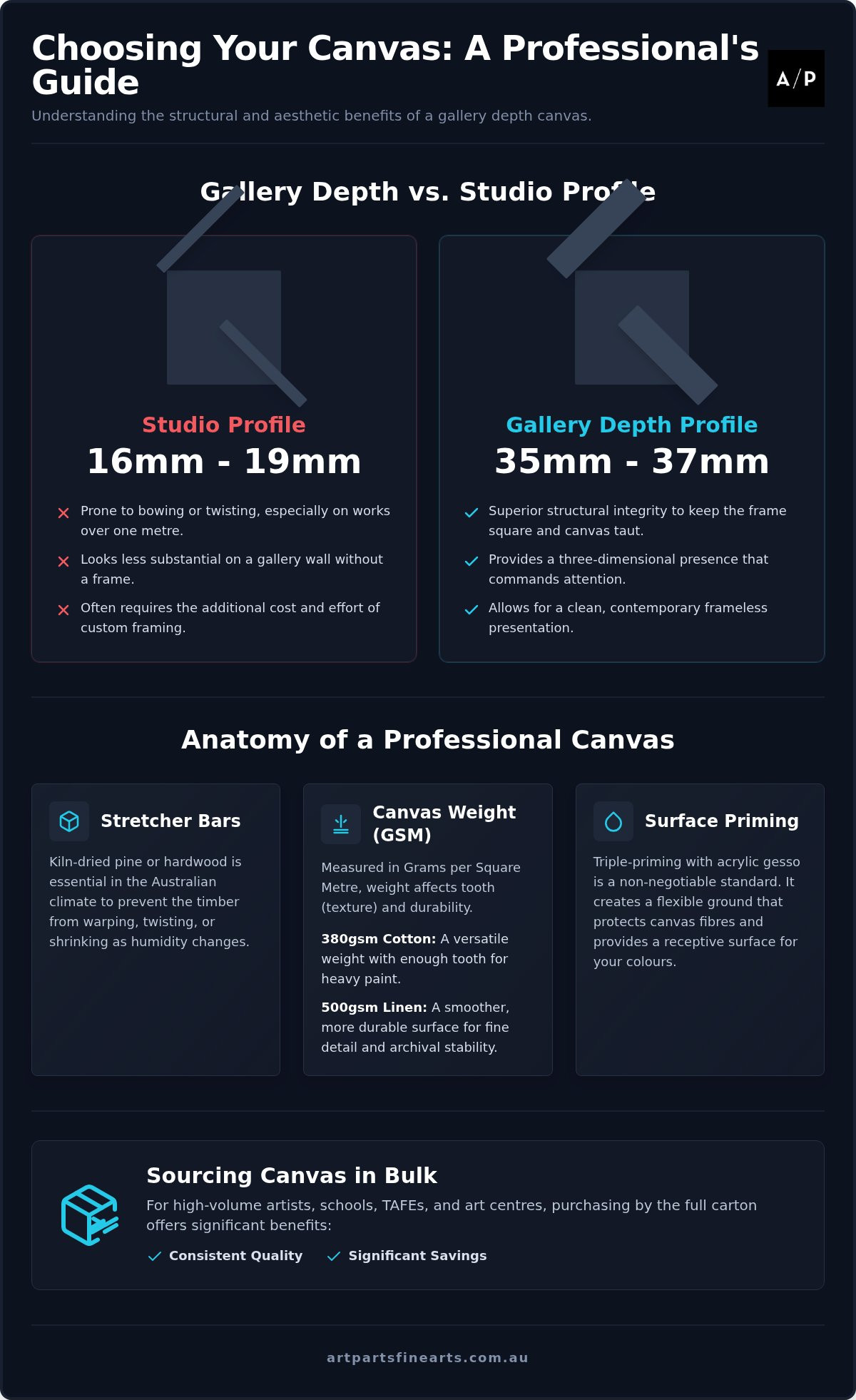
A gallery depth canvas refers to the thickness of the timber stretcher bars used to support the fabric. While a standard studio profile usually measures between 16mm and 19mm, a professional gallery profile is significantly deeper, typically ranging from 35mm to 37mm. This choice is about more than just how far the painting sits off the wall. It's a structural decision that affects how your work is displayed, perceived, and preserved over its lifetime.
The term is closely linked to the concept of What is Gallery Wrap?, which describes a method where the canvas is stretched over the edges and secured at the back. This ensures no staples or tacks are visible on the sides of the frame. For modern exhibition standards, this clean finish is the expected norm. It allows the artwork to be hung immediately without the need for an external decorative frame, saving you significant costs in the long run.
Gallery Depth vs Studio Profiles
The most immediate difference between the two is the visual weight on a wall. A slim 16mm canvas can look somewhat lost in a large room, often appearing more like a poster than a substantial piece of fine art. To give a studio profile a professional finish, you often have to invest in custom framing. When you use a gallery depth canvas, the work feels complete the moment it leaves your easel.
Structural integrity is another vital factor for professional artists. As paintings get larger, especially those approaching one metre or more, thinner 16mm bars are more prone to bowing or twisting under the tension of the fabric. The robust 35mm to 37mm bars found in quality gallery depth canvases provide the necessary mass to keep the frame square and the surface taut, even in varying Australian humidity.
The Aesthetic Impact of a 37mm Edge
Choosing a deeper edge gives your work a three-dimensional presence that commands attention in a gallery space. It turns the painting into a physical object rather than just a flat image. This depth is particularly effective when using heavy-bodied acrylics or other impasto paints. The thick, sculptural peaks of impasto techniques are visually supported by the physical depth of the canvas itself.
Artists often use this extra space to continue their composition around the sides. This creates an immersive effect where the viewer can see parts of the painting from different angles as they move through a room. Alternatively, leaving the edges a clean, solid colour or a crisp white provides a sharp, contemporary border that frames the work naturally without any extra timber required.
Technical Anatomy of a Professional Stretched Canvas
The foundation of any high-quality painting is the timber hidden beneath the fabric. We use kiln-dried pine or hardwood for our stretcher bars because these materials have had their moisture content reduced in a controlled environment. This process is vital in the Australian climate, as it prevents the timber from warping, twisting, or shrinking when the humidity shifts between seasons.
A gallery depth canvas offers a significant mechanical advantage over slimmer profiles. The 35mm to 37mm depth provides a wider surface area for the canvas to grip, which helps maintain consistent tension over years of display. While a 16mm bar might bow under the pressure of a tight stretch, the thicker profile remains rigid, ensuring your work stays flat and professional.
Canvas Weight and Texture
The weight of the fabric is measured in gsm, or grams per square metre. A 380gsm cotton canvas is a versatile choice for most professional practices, offering enough tooth to hold heavy paint while remaining responsive to the brush. Tooth refers to the physical texture of the weave; a coarser tooth is excellent for landscapes, while a finer weave is better for detail.
For those working on portraits or highly detailed realism, a 500gsm linen from the Wright & Co range provides a smoother, more stable surface. Linen fibres are longer and more durable than cotton, which makes them less likely to expand or contract with temperature changes. This archival stability is a key reason many career artists choose linen for their primary works.
Priming and Surface Preparation
Raw canvas is naturally acidic and will eventually rot if it comes into direct contact with oil-based binders. This is why triple-priming with a high-quality acrylic gesso is a non-negotiable standard for our CreateART and Wright & Co ranges. The gesso acts as a flexible, non-porous ground that protects the fibres while providing a bright, receptive surface for your colours.
If you're using artist grade oil paints, a well-primed surface ensures the oil doesn't sink into the fabric, which can cause dull spots or sinking in. We also offer black-primed options for artists who want to start from a dark tonal base, allowing for dramatic contrast and vibrant highlights. If you're planning a large series, you can find these professional specs in our full carton canvas range to ensure consistency across every piece.
Aesthetic and Practical Benefits of Deeper Profiles
Choosing a gallery depth canvas is often the most cost-effective way to achieve a professional exhibition finish. While the initial price of a deeper profile is higher than a studio alternative, it removes the immediate need for a custom float frame. For many artists preparing for a solo show, this significantly reduces the overhead costs per piece. Commercial galleries and collectors increasingly prefer this frameless look because it suits modern interior design and keeps the focus entirely on the artwork.
A 37mm profile also signals a high level of craftsmanship to your buyers. It shows you've selected materials that are built to last. This durability ensures the painting remains a legacy item that won't require expensive restoration or restretching five years down the line. It's a practical investment in your professional reputation.
Durability for Large Scale Works
When your work exceeds one metre in any direction, the physical stress on the frame increases significantly. A gallery depth canvas using 35mm or 37mm bars provides the necessary rigidity to handle this tension. These professional frames often include internal cross-bracing, which keeps the corners perfectly square and prevents the timber from bowing inward over time. This is a common failure point for cheaper, thinner frames.
Slim 16mm bars are generally unsuitable for oversized canvases because they lack the depth to resist the pull of the fabric. Without the mass of a deeper bar, the frame can develop a "propeller" twist, where one corner lifts away from the wall. By using the heavier kiln-dried pine found in the CreateART range, you ensure your large-scale compositions remain structurally sound from the studio to the gallery wall.
Framing and Presentation
The "clean look" of a gallery wrap is a staple of contemporary art spaces. Because the staples are hidden on the back, the sides are left smooth and ready for paint. This allows the composition to wrap around the edge, creating a more immersive experience for the viewer. It's a simple way to add value to your work without the added weight or complexity of external timber frames.
To ensure your deep-profile canvas sits flush against the wall, we recommend installing your D-rings and wire about one-third of the way down the back of the frame. This prevents the top of the painting from leaning out too far. Because the timber in our professional ranges is robust, it holds screws securely without the risk of splitting, even when supporting heavy, large-scale works.
Sourcing Gallery Depth Canvas in Bulk: Full Carton Savings
Purchasing gallery depth canvas in full cartons is a strategic move for any high-volume artist or educational institution. It significantly reduces the per-unit cost compared to buying individual pieces; this is a practical way to manage a professional budget. For art centres, TAFEs, and schools, buying by the carton ensures every student works on the same professional-grade surface. Consistency is vital when you're teaching specific techniques or preparing a cohesive body of work for a commercial show.
Using a professional gallery depth canvas for a large series ensures that every piece has the same three-dimensional presence on the gallery wall. We offer bulk options for both the CreateART 380gsm cotton range and the premium Wright & Co 500gsm linen. Having a steady supply in your studio means you're always ready to start a new piece without delay. It also ensures the tooth and priming level remain identical across your entire series. This uniformity is highly valued by collectors and galleries who look for a consistent standard of materials in a professional practice.
Bulk Buying for Professionals and Institutions
For artists working toward a solo exhibition, the financial benefits of full cartons are clear. Reducing the per-unit cost allows you to allocate more of your budget toward high-quality pigments or larger formats. Art centres and schools also benefit from the durability of these professional frames. Because the CreateART range uses kiln-dried pine, these canvases can be stored in bulk without the risk of the timber warping before they are used. This reliability is essential for institutions that need to manage inventory over a full academic year or exhibition season.
Ordering and Delivery in Australia
Art Parts Fine Arts facilitates national delivery for all our bulk products from our warehouse facility. We have extensive experience shipping bulky goods across the country, ensuring your canvases arrive in pristine condition. Because these items are large, we use reliable freight partners to reach artists in every state. We aim to keep shipping costs fair and transparent, allowing you to focus on your creative output rather than logistics.
To keep your canvases in top condition, store full cartons upright rather than flat. This prevents the weight of the stack from causing the bottom canvases to lose tension or develop indentations. Keep them in a dry, temperate area to protect the kiln-dried pine bars from moisture and ensure the triple-primed gesso stays clean and receptive. If you're ready to stock your studio or classroom, you can browse our professional options online.
Building a Lasting Professional Legacy
Selecting high-quality materials is a vital step in your journey as an artist. A professional gallery depth canvas provides more than just a contemporary, frameless look; it offers the structural stability required for large-scale works and the archival protection of triple-primed acrylic gesso. By choosing kiln-dried pine or hardwood bars, you're ensuring your paintings remain taut and square long after they leave your studio. These technical choices protect your reputation and provide peace of mind for collectors.
Whether you're preparing for a solo exhibition or managing supplies for a busy art centre, the CreateART and Wright & Co ranges offer the durability needed for Australian conditions. Moving to full carton purchases is a practical way to maintain this high standard while achieving significant savings on every piece. Our team in Albury is always ready to help you select the right profile and weight for your specific technique.
We're excited to support your creative practice with tools that are built to last. Don't hesitate to reach out if you need advice on sourcing the best surfaces for your next big project.
Frequently Asked Questions
What is the standard depth for a gallery wrapped canvas in Australia?
A professional gallery depth canvas in Australia typically measures between 35mm and 37mm. This is significantly thicker than the 16mm or 19mm found on standard studio profiles. Choosing this deeper edge provides the physical presence required for modern galleries and ensures the frame remains rigid over time. It allows you to display your work without an external frame, creating a clean, professional finish that sits proud of the wall.
Can I use oil paints on a triple-primed acrylic gesso canvas?
Yes, you can safely use oil paints on surfaces triple-primed with acrylic gesso. The gesso acts as a protective barrier that prevents the oil binders from reaching the natural cotton or linen fibres. This is essential for archival longevity, as raw fabric will rot if it comes into contact with oil. Our CreateART and Wright & Co ranges are specifically prepared with this professional ground to suit both oil and acrylic mediums.
Is a 380gsm cotton canvas suitable for professional exhibition work?
A 380gsm cotton gallery depth canvas is a versatile and widely accepted standard for professional exhibition work. It provides a reliable balance of weight and surface texture, known as tooth, which handles various painting techniques from thin glazes to moderate impasto. While some artists prefer the heavier 500gsm linen for specific archival properties, the 380gsm cotton duck remains a staple in professional practices across Australia due to its durability and receptive surface.
Why do large canvases require a 35mm or 37mm profile?
Large-scale works require a 35mm or 37mm profile to provide the necessary structural mass to resist the tension of the stretched fabric. As the surface area increases, the pull on the timber bars becomes much stronger. A slim 16mm bar is likely to bow or develop a propeller twist, where the corners no longer sit flat. The deeper gallery profile ensures the frame stays square and the canvas remains taut over wide spans.
Does a gallery depth canvas need to be framed for a competition?
Most modern art competitions and commercial galleries accept a gallery depth canvas as a finished presentation without an external frame. The gallery wrap method ensures staples are hidden on the back, leaving the sides clean for a professional look. While some traditional prizes might have specific rules, the 37mm profile is designed to stand alone. This saves you the high cost of custom framing while providing a contemporary aesthetic that collectors value.
How many canvases are typically included in a full carton?
The number of units in a full carton depends on the physical dimensions of the canvas. Smaller sizes, such as 6x6 inch or 8x10 inch, are often packed in cartons of twenty. Medium sizes typically come in cartons of ten, while very large formats might be sold in cartons of four or six. Purchasing in these quantities provides significant bulk savings for high-volume artists, schools, and TAFEs while ensuring a consistent supply of professional surfaces.

Article by
Art Parts Fine Arts
Art Parts Fine Arts is an Australian art-supplies store based in Albury, shipping Australia-wide. Hand-picked by artists, our range covers paints, canvas, brushes, paper, printmaking and more, for everyone from students to professionals. We share practical guides and tips to help you get the most out of your materials.
Disclaimer
This article is general information to help you choose and use art materials. It is not professional, health or safety advice. Always follow the manufacturer's instructions and safety guidance for any product, and take care when using solvents, varnishes and other materials. Product availability, specifications and pricing may change, so please check the current product page for details.