

Best Acrylic Brushes: Professional Australian Buying Guide
The most expensive brush in your studio isn't always the one that produces the best results. It's frustrating to invest in tools only to watch them lose their snap or shed bristles into a fresh layer of colour after just…The most expensive brush in your studio isn't always the one that produces the best results. It's frustrating to invest in tools only to watch them lose their snap or shed bristles into a fresh layer of colour after just a few sessions. We understand that finding the best brushes for acrylic painting often feels like a gamble between high-priced natural hairs and a confusing sea of synthetic options. You want a tool that responds to your hand and holds its shape against the weight of heavy-bodied paint.
This guide simplifies that choice by focusing on professional-grade tools designed to handle the unique chemistry of acrylic resins. You'll learn how to select durable brushes that complement heavy structure paints and maintain their archival quality through years of studio practice. We'll also break down which specific shapes produce the marks you need and how to establish a maintenance routine that protects your investment. From understanding Taklon, a durable man-made fibre designed to mimic natural hair, to choosing the right handle length, you'll gain the confidence to build a kit that works as hard as you do.
Key Takeaways
- Understand why high-performance synthetic filaments are more durable than natural hair when working with the alkaline nature of acrylic resins.
- Learn how to select the best brushes for acrylic painting by matching bristle tension to the viscosity of heavy-bodied paints for better control.
- Identify the specific marks produced by essential shapes, from the soft blending of a filbert to the precise flick of a bright.
- Master simple cleaning and storage techniques that prevent paint from drying in the ferrule and protect the archival quality of your tools.
Synthetic vs Natural Bristles: Why Material Matters for Acrylics
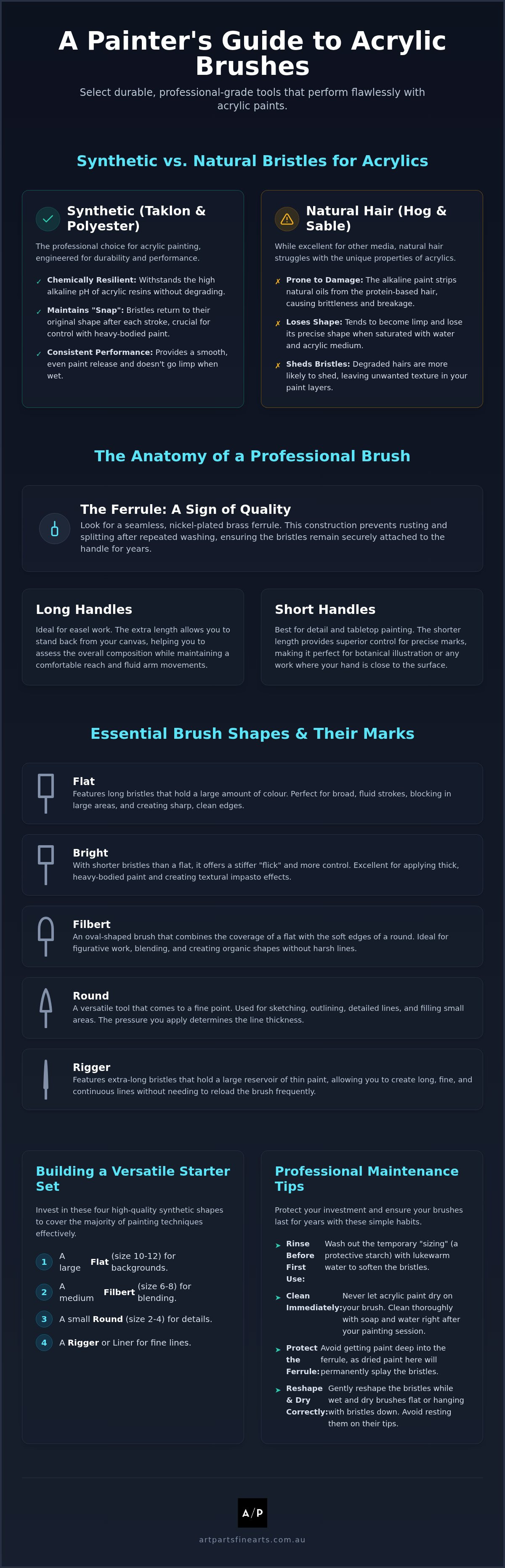
Choosing the best brushes for acrylic painting starts with understanding the chemistry on your palette. Natural hair like hog or sable is protein-based, which makes it unsuitable for the high pH levels of acrylic emulsion. The alkaline nature of the paint eventually strips the natural oils from the hair, leading to shedding and breakage. Modern Taklon and polyester filaments are far more resilient, providing a consistent paint release that doesn't degrade over time.
Professional painters value "snap," which is a brush's ability to return to its original shape immediately after a stroke. This resistance is vital when applying heavy-bodied paint to textured surfaces like 500gsm triple-primed canvas. Synthetic fibres are engineered to maintain this tension even when saturated with water, whereas natural hairs often go limp and lose their precision.
The Anatomy of a Professional Brush
Longevity depends heavily on the ferrule, the metal sleeve connecting the bristles to the handle. We recommend seamless nickel-plated brass because it won't rust or split after repeated cleaning. When you buy a new brush, it will often feel stiff due to "sizing." This is a temporary starch used to protect the shape during shipping. Simply rinse it out in lukewarm water before your first use. For a deeper look at these components, you might find this comprehensive guide to paintbrushes useful.
Handle Ergonomics: Long vs Short
Your choice of handle depends on your painting style and studio setup. Long handles are ideal for easel work, as they allow you to stand back and judge the whole composition while maintaining your reach. Short handles provide better control for detailed horizontal work or botanical illustration where your hand is closer to the surface. Selecting the best brushes for acrylic painting means matching the handle to your physical movement at the bench or easel.
Essential Brush Shapes for Every Acrylic Painting Style
Understanding how a brush carries paint is just as important as the stroke it leaves behind. When looking for the best brushes for acrylic painting, you'll encounter two primary rectangular shapes: the Flat and the Bright. A Flat has longer bristles that hold a significant amount of colour, making it perfect for long, fluid strokes. In contrast, a Bright has shorter bristles that offer a stiffer "flick," which is better for controlled, heavy applications. Because the properties of acrylic paint allow for rapid layering, having both allows you to switch between broad coverage and textured impasto work effortlessly.
The Filbert is often the professional's secret weapon. Its rounded, oval shape combines the coverage of a flat with the soft edges of a round. This makes it ideal for figurative work or soft blending where you want to avoid the harsh "staircase" marks that square-edged brushes can leave. For fine lines, a Rigger or a small Round is essential. A Rigger has extra-long bristles designed to hold enough paint to pull a single, consistent line without stopping to reload.
Matching Shape to Technique
Using a stiff Flat allows you to "cut in" sharp edges against a horizon or block in large colour fields quickly. If you're working on a larger scale, you might find that practising these strokes on bulk stretched canvas provides the space needed to master your wrist movements without worrying about the cost of materials.
Building a Versatile Starter Set
You don't need a hundred tools to get professional results. A foundational kit of four high-quality brushes will cover most of your requirements:
- A large Flat (size 10 to 12) for backgrounds and blocking.
- A medium Filbert (size 6 to 8) for blending and organic shapes.
- A small Round (size 2 to 4) for detail and sketching.
- A Rigger or Liner for fine, continuous lines.
Investing in these four shapes in a professional synthetic range is far more cost-effective than buying cheap multipacks that shed or splay. High-quality filaments maintain their point and snap, ensuring your tools remain reliable for years of studio use.
Selecting Brushes for Heavy Body and Impasto Work
Moving thick, buttery paint across a surface requires a brush with significant backbone. If you've ever tried to move heavy-bodied paint with a soft watercolour brush, you'll know it simply bends without shifting the pigment. The best brushes for acrylic painting for this style are those with high-tension filaments that can push through the viscosity of Matisse Acrylic Paint Structure. These brushes need to withstand the "tooth" or texture of professional surfaces, such as 500gsm triple-primed linen, without fraying or losing their snap.
To preserve your tools during heavy impasto sessions, we recommend using a palette knife to lay down the bulk of your paint first. This prevents the ferrule from becoming clogged with thick medium, which is difficult to clean and can ruin the brush's shape permanently. Once the structure is established on the canvas, use your stiff synthetic brushes to sculpt the texture or refine the specific marks of your composition.
Brushes for Texture and Structure
Look for brushes featuring interlocking bristles. These are designed with a natural inward curve that helps the head maintain its shape even when pushing against heavy resistance. If you find your paint is too thick to move easily, you can use acrylic mediums to extend the working time and improve flow without sacrificing the definition of your brush marks. This ensures your tools last longer while maintaining the archival quality of your work.
Detailing Over Texture
Adding fine details over a dried impasto layer is a common technical challenge for many artists. You need a detail brush with enough stiffness to navigate the peaks and valleys of the texture without "fish-tailing," which is when the bristles splay out under pressure. A high-quality synthetic round with a sharp point is the best choice here, as it provides the precision needed to highlight the top edges of textured strokes without the bristles collapsing.
Professional Maintenance: How to Make Your Brushes Last Years
Establishing a consistent cleaning routine is the simplest way to protect your investment. After every session, rinse your brushes thoroughly in tepid water. Avoid hot water, as it can melt the glue inside the ferrule, the metal sleeve holding the bristles, and cause shedding. Use a dedicated professional brush soap to lift the pigment without stripping the synthetic filaments of their flexibility.
The most critical area to monitor is the base of the ferrule. If paint accumulates here, it hardens and forces the bristles to splay outwards. Gently massage the soap into the "heel" of the brush where the hair meets the metal, being careful not to use excessive force. For more advanced techniques on restoring older tools, refer to our guide on cleaning and caring for paint brushes.
Reshaping and Drying
Maintaining the best brushes for acrylic painting requires more than just a quick rinse. Once your brushes are clean, use a tiny amount of soap to smooth the bristles back into their original shape. This acts as a light starch that "sets" the head as it dries. Always dry your brushes flat on a towel or hanging head-down. Drying them head-up allows water to seep into the handle, which eventually rots the wood. In many Australian studios, high humidity can encourage bristle warping, so ensure your storage area has good airflow to prevent mould or moth damage.
Elevate Your Studio Practice with Professional Tools
Selecting the right tools ensures your creative vision translates perfectly to the surface without the frustration of shedding bristles or lost shape. By choosing high-performance synthetics, you avoid the degradation caused by acrylic chemistry and maintain the snap needed for heavy-bodied work. Our selection is curated by professional painters who understand the specific demands of Matisse Structure and archival reliability.
We've discussed why modern Taklon filaments are the best brushes for acrylic painting and how to build a versatile foundational kit that handles most of your studio needs. Mastering these technical choices allows you to focus entirely on your craft while ensuring your tools last for years. We offer national shipping across Australia to deliver these professional supplies directly to your studio door.
Whether you're blocking in large colour fields or adding fine details over dried impasto, the right brush makes every stroke more intentional. We look forward to supporting your creative journey with tools that work as hard as you do. Enjoy the confidence that comes with using equipment designed for professional results.
Frequently Asked Questions
Should I choose synthetic or natural hair brushes for acrylic painting?
Synthetic filaments are the superior choice because the alkaline nature of acrylic emulsion quickly degrades natural hair. While natural bristles like hog hair are popular for oils, they often become waterlogged and lose their shape in acrylics. High-quality synthetic fibres are specifically engineered to provide the best brushes for acrylic painting, offering consistent paint release and a durable snap that withstands the heavy resin.
What are the four most essential brush shapes for a beginner artist?
A versatile foundational kit should include a large Flat for coverage, a medium Filbert for soft blending, a small Round for detail, and a Rigger for fine lines. These four shapes allow you to handle approximately 90 per cent of painting tasks without over-investing in specialty tools. Selecting these in a professional synthetic range ensures your tools remain reliable as you develop your technical skills on stretched canvas or paper.
How do I stop my acrylic brushes from getting stiff and ruined?
The primary cause of ruined brushes is dried paint acting as a plastic cement within the bristles. Always rinse your tools immediately after use and clean them with a professional brush soap to remove pigment from the ferrule. Avoid leaving brushes submerged in water for long periods, as this can rot the wooden handle. Instead, reshape the head and dry them flat on a clean towel to preserve their quality.
Is it worth buying expensive professional brushes for acrylics?
Investing in professional-grade tools is more cost-effective over time because they maintain their shape and snap through years of studio practice. Cheaper alternatives often shed bristles into your paint film or splay after just a few sessions, which compromises your work. Professional synthetics are designed to handle heavy-bodied paints like Matisse Structure, ensuring you get the best brushes for acrylic painting that don't need frequent replacement.
Can I use the same brushes for both acrylic and oil painting?
While high-quality synthetic brushes can technically handle both mediums, it's best to maintain separate sets for each. Residual oils can interfere with the adhesion of acrylic paint, while water from acrylic cleaning can damage oil-based layers. Dedicating specific tools to each medium prevents cross-contamination and ensures your brushes last longer. If you must switch, ensure a thorough deep clean with professional soap between uses to remove all residue.

Article by
Art Parts Fine Arts
Art Parts Fine Arts is an Australian art-supplies store based in Albury, shipping Australia-wide. Hand-picked by artists, our range covers paints, canvas, brushes, paper, printmaking and more, for everyone from students to professionals. We share practical guides and tips to help you get the most out of your materials.
Disclaimer
This article is general information to help you choose and use art materials. It is not professional, health or safety advice. Always follow the manufacturer's instructions and safety guidance for any product, and take care when using solvents, varnishes and other materials. Product availability, specifications and pricing may change, so please check the current product page for details.