

Choosing a Beginner Printmaking Kit in Australia: A Practical Guide
Your first professional-looking print doesn't require a heavy mechanical press or years of technical training. It's completely normal to feel a bit hesitant when staring at a wall of sharp gouges, which are the metal too…Your first professional-looking print doesn't require a heavy mechanical press or years of technical training. It's completely normal to feel a bit hesitant when staring at a wall of sharp gouges, which are the metal tools used for carving, or trying to decipher the chemical differences between oil and water-based inks. Setting up a home studio often feels daunting when you're worried about making the wrong investment or a painful mistake with your equipment. Finding the right beginner printmaking kit in Australia is about more than just buying a box of supplies; it's about choosing gear that grows with your skills.
This guide simplifies your entry into relief printing, which is the process of carving away a surface to leave a raised design, by focusing on tools that balance safety with quality. We'll identify the carving blocks that are most forgiving for new hands and explain how to select inks that offer rich pigments without a difficult cleanup. You'll gain the confidence to start your first block with a clear understanding of which surfaces will produce the most consistent results for your specific creative vision.
Key Takeaways
- Identify the essential components of a beginner printmaking kit australia, focusing on the role of a quality brayer in achieving an even layer of colour.
- Learn why water-based inks are often the best choice for home studios due to their easier cleanup and faster drying times compared to oil-based alternatives.
- Understand how surface texture, known as tooth, and sizing treatments influence how paper or canvas absorbs ink for a professional finish.
- Gain the knowledge to move beyond basic sets by selecting professional brayers and exploring traditional techniques through local creative workshops.
Essential Components of a Beginner Printmaking Kit in Australia
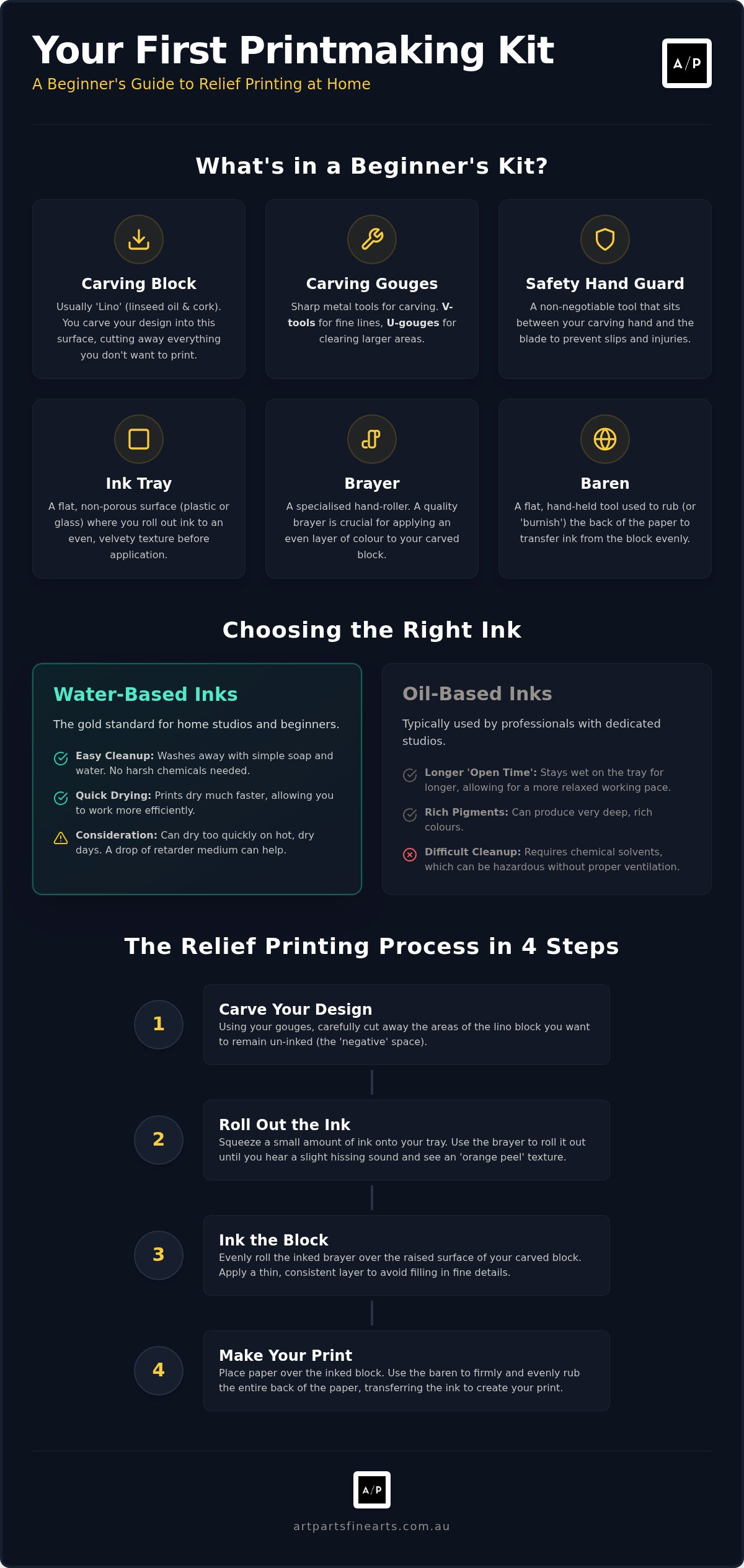
A relief printmaking kit is a curated set of tools used to carve a design into a block and ink the remaining raised surface. When you're looking for a beginner printmaking kit australia, it's helpful to start by understanding printmaking techniques like linocut, where the image is formed by cutting away everything you don't want to print. The traditional 'Lino' block is a classic choice, made from a sustainable mix of linseed oil and cork. It offers a firm yet smooth carving experience that allows for crisp, detailed results.
Achieving a professional result at home depends heavily on your brayer, which is a specialised hand-roller used to apply ink. You can find high-quality rollers and other accessories to help you achieve an even 'charge' of colour across your block without clogging fine details. Since most beginners don't have access to a heavy mechanical press, a baren is an essential inclusion. This flat, hand-held tool is used to burnish, or rub, the back of your paper to transfer the ink from the block with consistent pressure.
Safety Tools and Carving Gouges
Safety is a priority when working with sharp metal gouges. A safety hand guard is a simple but non-negotiable tool that sits between your hand and the blade, preventing slips from causing injury. Most kits include interchangeable nibs for different effects. V-tools are designed for delicate, fine lines, while wide U-gouges are used for clearing away large areas of the block quickly.
The Role of the Ink Tray
When selecting a beginner printmaking kit australia, ensure it includes a flat, non-porous surface like a plastic or glass ink tray. This is where you 'roll out' your ink until it reaches a velvety texture, ensuring proper distribution before it touches your block. Keeping your tray and brayer in a designated 'inky zone' helps prevent accidental fingerprints on your clean paper, keeping your final prints professional and smudge-free.
Selecting Inks and Carving Tools for Home Studios
Choosing the right ink for your beginner printmaking kit australia is a balance of performance and practicality. Water-based inks are the gold standard for home studios because they dry quickly and wash up with simple soap and water. Unlike standard acrylic paint, professional printmaking inks have a high 'tack', which is the stickiness required to adhere to the block, and a longer 'open time'. This open time is the period before the ink dries on the tray, allowing you to work at a relaxed pace without the medium seizing up on your roller.
In Australia, local humidity plays a significant role in how your materials behave. On dry, hot days in inland regions, water-based inks can dry prematurely. You may need to add a drop of retarder to keep the ink workable. Conversely, in humid coastal areas, drying times will naturally increase. Investing in a lino handle with interchangeable aluminium ferrules rather than plastic ones ensures your tools won't crack or loosen under these varying environmental stresses. You can find more details on essential printmaking materials and studio safety through state educational resources.
Maintaining Your Carving Tools
Before you start carving, test your gouges on a scrap piece of lino. If the blade drags or leaves ragged edges, it needs attention. Using a honing strop regularly keeps your edges keen, removing the need for professional regrinding. This simple maintenance ensures your beginner printmaking kit australia remains a reliable investment for years.
Ink Consistency and Troubleshooting
Look for an 'orange peel' texture on your roller; this indicates a perfect ink charge. Over-inking is a common mistake that fills in fine carved lines, ruining the detail of your work. If you're ready to produce a larger series of prints, consider exploring our bulk canvas cartons for a cost-effective surface. Learning these nuances of application is a key step in mastering printmaking without a press and achieving professional results at home.
Choosing the Best Surfaces for Your Relief Prints
Select a surface for your beginner printmaking kit australia carefully to ensure your ink applies cleanly. You need to consider the 'tooth', which is the surface texture that helps the ink catch and hold. Sizing is also vital; this is a treatment applied to fibres during manufacturing to stop ink from soaking in too deeply or bleeding. For high-pressure relief printing, we recommend heavy-weight surfaces up to 500gsm to prevent the material from buckling as you burnish. While paper is a traditional starting point, many artists transition to stretched canvas for a gallery-ready finish that doesn't require framing behind glass.
Printing on Stretched Canvas
When expanding your beginner printmaking kit australia, moving from paper to canvas provides a more durable foundation for your work. Cotton canvas is a reliable, cost-effective choice for most, while professional linen offers a finer weave and superior archival properties. If you use a pre-primed canvas, a light sanding with fine-grit sandpaper can improve the tooth to help the printmaking ink bond. For those ready to produce a consistent series, exploring full carton canvas options is a practical way to secure matching surfaces for every print in your edition.
Archival Quality and Longevity
Using acid-free materials ensures your prints won't yellow or become brittle over time, which is essential if you plan to sell your work. Look for surfaces that are triple-primed with acrylic gesso. This professional priming protects the underlying cotton or linen fibres from environmental damage, ensuring your art remains vibrant for decades. Choosing quality surfaces from the start means your creative efforts are preserved with the respect they deserve.
Advancing Your Skills with Workshops and Professional Supplies
Once you've mastered the basics of your beginner printmaking kit australia, you may feel ready to scale your practice. Attending a White Line Printmaking workshop is an excellent way to learn traditional multi-colour techniques. This method allows you to produce vibrant, painterly prints from a single block, effectively bridging the gap between carving and painting. Learning from an experienced mentor helps you refine your unique carving style and troubleshoot complex registration issues.
Moving from a basic set to a professional studio setup involves investing in dedicated brayers with specific rubber densities and larger blocks for ambitious compositions. High-volume studios maintain efficiency by organising supplies in bulk. This approach reduces the cost per piece, making it easier to experiment without worrying about the price of individual materials. Transitioning to professional-grade tools ensures your equipment can withstand the demands of producing larger editions.
Building a Professional Series
For schools and independent studios, the financial benefits of purchasing bulk stretched canvas are significant when tackling large-scale projects. In the Australian market, consistency is key to building a professional reputation. Always sign your prints in pencil and use a standard numbering system, such as 1/20, to indicate the print's place in a limited edition series. This transparency is expected by collectors and galleries alike.
Next Steps for Your Creative Journey
You can expand your technical range by exploring mediums and varnishes that complement your prints. These additions can alter the sheen or durability of your finished work, providing a professional seal for gallery display. Our team at Art Parts Fine Arts is always ready to assist. Our staff are practising printmakers who can provide personalised advice to help you select the right tools for your beginner printmaking kit australia as your studio evolves. Don't hesitate to reach out for a chat.
Preparing for Your First Studio Print
Building your first home studio is a rewarding step that transitions your creative ideas into tangible works of art. By selecting a beginner printmaking kit australia that prioritises quality brayers and safe carving gouges, you're setting a foundation for consistent, professional results. Our staff are practising painters and printmakers who understand the value of professional-grade archival supplies, from water-based inks to high-quality surfaces. We stock CreateART and Wright & Co products specifically because they provide the durability and archival quality that serious artists require.
Investing in the right materials from the start prevents the frustration of inconsistent ink pickup or paper buckling. Whether you're experimenting with traditional lino or moving towards more complex multi-colour techniques, having reliable tools makes every session more productive. We're here to help you find the right balance of tools and surfaces to suit your specific artistic goals.
It's a rewarding journey, and we look forward to seeing what you create in your new studio space.
Frequently Asked Questions
Do I need a printing press to start printmaking at home?
You don't need a heavy mechanical press to begin relief printing in your home studio. Hand-burnishing with a baren or a sturdy wooden spoon provides enough pressure to transfer ink from a carved block to paper. This manual approach is actually preferred by many artists for the control it offers. It allows you to feel the contact between surfaces, which is helpful when you're just starting out with a beginner printmaking kit australia.
What is the difference between lino and soft-cut carving blocks?
Traditional linoleum is made from a natural mix of cork and linseed oil, providing a firm surface that holds crisp, fine details. Soft-cut or 'easy-carve' blocks are synthetic alternatives that feel much softer under the blade. While soft-cut materials are less physically demanding to carve, traditional lino is often the favourite for those wanting a more durable block that resists crumbling during a long print run of fifty or more impressions.
How do I clean up printmaking ink without using harsh chemicals?
Cleaning up your workspace depends on the type of ink you choose for your beginner printmaking kit australia. Most water-based inks require only mild soap and warm water to remove from rollers and trays. If you prefer the finish of oil-based inks, you can avoid harsh solvents by using ordinary vegetable oil to break down the pigment. Simply wipe the tools with oil first, then follow up with a standard dishwashing liquid.
Can I use regular acrylic paint for lino printing?
Standard acrylic paint is generally unsuitable for lino printing because it lacks the necessary 'tack' or stickiness to adhere properly to the block. It also dries much faster than specialised printmaking ink, which can clog your finely carved lines before you even reach the paper. Professional inks are formulated to stay 'open' or wet on the tray for longer, giving you the time needed to achieve a consistent, even layer of colour.
Is printmaking a safe hobby for beginners to practise alone?
Printmaking is a safe activity provided you follow basic workshop safety protocols. Always carve away from your body and keep your non-dominant hand behind the blade or protected by a safety hand guard. If your tools are kept sharp with a honing strop, they'll glide through the material without the need for excessive force. Sharp tools are actually safer than blunt ones because they are less likely to slip or catch unexpectedly.

Article by
Art Parts Fine Arts
Art Parts Fine Arts is an Australian art-supplies store based in Albury, shipping Australia-wide. Hand-picked by artists, our range covers paints, canvas, brushes, paper, printmaking and more, for everyone from students to professionals. We share practical guides and tips to help you get the most out of your materials.
Disclaimer
This article is general information to help you choose and use art materials. It is not professional, health or safety advice. Always follow the manufacturer's instructions and safety guidance for any product, and take care when using solvents, varnishes and other materials. Product availability, specifications and pricing may change, so please check the current product page for details.