

Professional Bulk Canvas for Artists: Australia Buying Guide
Buying stretched canvas one piece at a time is quietly eroding your studio margins and compromising the consistency of your work. Sourcing dependable bulk canvas for artists Australia wide gives you uniform corner bracin…Buying stretched canvas one piece at a time is quietly eroding your studio margins and compromising the consistency of your work. Sourcing dependable bulk canvas for artists Australia wide gives you uniform corner bracing, reliable tension, and archival grounds you can trust under the brush. If you have ever unpacked a single canvas only to watch flimsy timber warp during a humid week, you already know the frustration of unpredictable materials.
You shouldn't have to sacrifice structural quality just to keep your studio practice sustainable. In this guide, you will discover how buying stretched canvas in full cartons saves money while delivering archival surface consistency across your entire body of work. We will walk you through canvas weights from 380gsm cotton to 500gsm linen, compare stretcher bar profiles, and help you match the right support to your paint medium.
Key Takeaways
- Match fabric density and tooth to your painting technique, distinguishing between versatile 380gsm cotton duck and heavy 500gsm linen surfaces.
- Protect your work against warping in variable weather by choosing kiln-dried pine stretcher bars in 16mm slim or 35mm to 37mm gallery-depth profiles.
- Sourcing bulk canvas for artists Australia wide lowers unit expenses while establishing uniform sizing for consistent framing and exhibition presentation.
- Maintain taut, dent-free cotton surfaces across long production runs by implementing vertical studio storage and steady humidity control.
Understanding Canvas Weight, Weave, and Priming for Studio Production
Fabric density and preparation dictate how paint sits, drags, and cures across a surface. While modern canvas is usually made of cotton, linen, or synthetic blends, structural strength relies on weight. Selecting professional bulk canvas for artists australia wide means understanding how gsm ratings and primer absorbency affect your paint application. Natural cotton duck provides a visible tooth that holds expressive brushwork, whereas poly-cotton delivers a flatter surface for fine illustrative work.
Decoding GSM and Fabric Selection
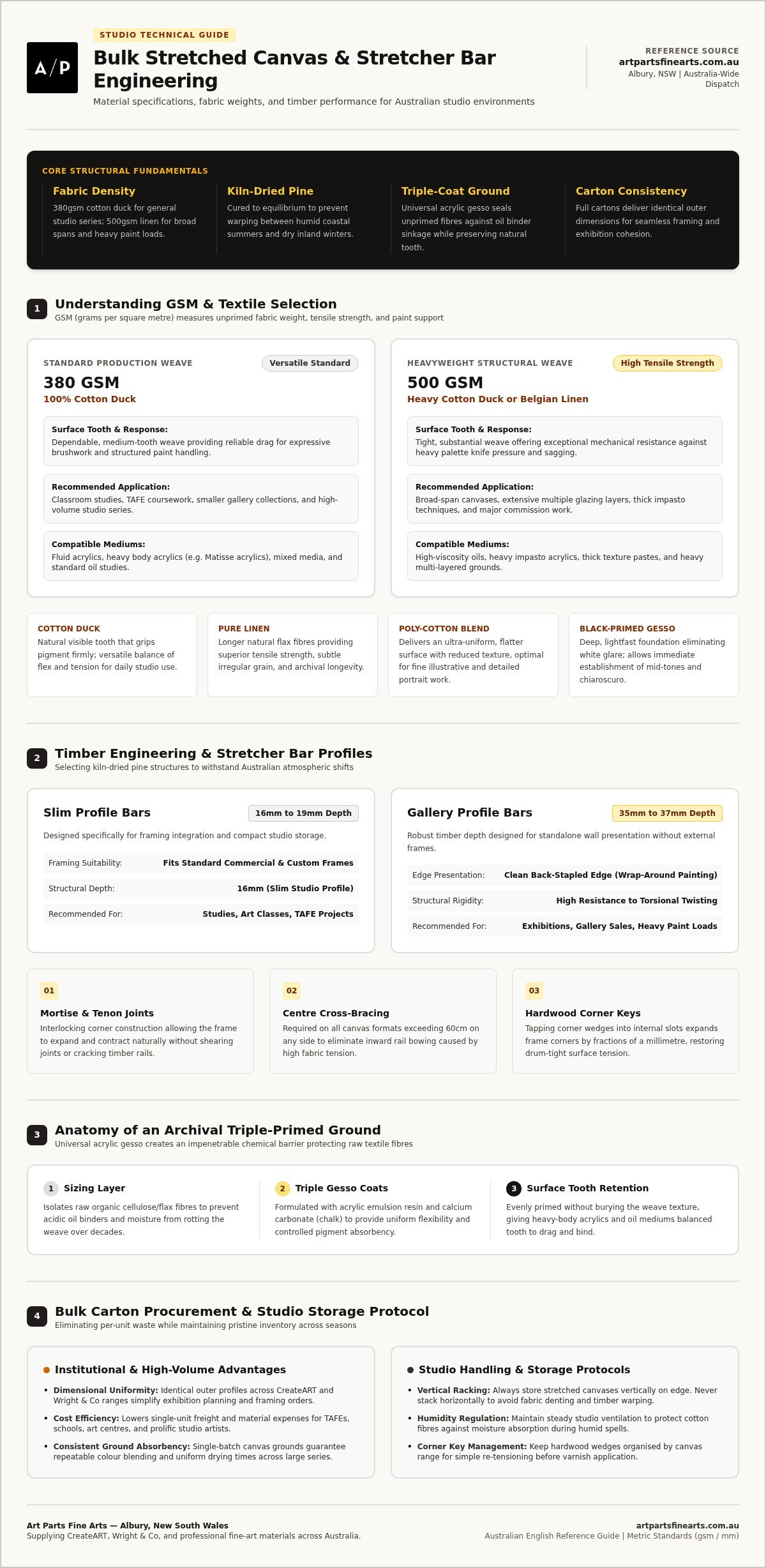
GSM stands for grams per square metre. It measures unprimed fabric weight, reflecting thread density and tensile resistance. Lighter fabrics flex easily, while heavier weaves resist stretching and sagging under structural weight.
- 380gsm cotton duck: A dependable, medium-tooth weave suited for classroom studies, smaller gallery collections, and standard studio series.
- 500gsm cotton duck or linen: A heavy, tight weave built for broad spans, extensive glazing layers, or heavy impasto palette knife applications.
When you buy bulk canvas for artists australia studios rely on, choosing 380gsm for routine production and 500gsm for large-scale commissions keeps costs balanced without sacrificing structural reliability.
The Role of Gesso Priming
Unsealed fibres absorb binders and degrade over time. Raw fabric requires universal gesso, a flexible ground formulated from acrylic resin and chalk, to seal the weave against chemical degradation. Triple-priming creates a uniform barrier that prevents oil binder sinkage while preserving the natural tooth beneath.
This barrier directly controls paint application. Surface absorbency dictates how Matisse acrylics and oil mediums hold their body or spread smoothly across the grain. Black-primed gesso variants provide a deep, lightfast foundation that eliminates white glare, allowing you to establish immediate mid-tones and dramatic chiaroscuro contrasts with fewer paint layers.
Stretcher Bar Engineering and Timber Profiles for Australian Climates
Timber frames act as the structural skeleton of any painting. Shifting humidity levels between wet coastal summers and dry inland winters force wood to swell and contract continuously. Sourcing reliable bulk canvas for artists Australia wide requires stretcher bars built from kiln-dried pine. The kiln-drying process cures the timber to a stable moisture equilibrium before assembly, drastically reducing the risk of diagonal bowing or twisting once paint dries.
Comparing Profile Depths
Profile depth dictates both the physical rigidity of the frame and how your artwork presents on a wall. Your choice between slim and deep timber bars generally comes down to your framing intentions.
- Slim profiles (16mm to 19mm): Best suited for studies, classroom projects, and artworks destined for exterior custom framing. Their shallow depth slides neatly into standard commercial frames.
- Gallery profiles (35mm to 37mm): Robust timber depth that provides greater structural stiffness against heavy paint loads. These bars offer a clean, contemporary edge that hangs securely without an external frame.
Back-stapling is standard on quality gallery-depth canvas. Securing the fabric strictly on the reverse side leaves clean edges, allowing you to wrap colour continuously around the timber for an uninterrupted presentation.
Structural Timber Stability
Canvas behaves like a living textile that expands and contracts with atmospheric changes. As highlighted in the latest research in canvas conservation, fluctuating environmental conditions place sustained mechanical stress across both the fabric and the timber support. To protect large artworks, stretcher frames exceeding 60cm on any side require mortise-and-tenon corner joints paired with sturdy centre cross-bracing to prevent the rails from curving inward.
When atmospheric humidity drops or damp conditions soften canvas tension, wooden corner keys provide an easy remedy. Tapping these small hardwood wedges into the internal corner slots expands the frame joints by fractions of a millimetre, returning the surface to drum-tight tension. Choosing full carton canvas crafted with engineered pine profiles ensures your entire inventory maintains uniform tension across every season.
Evaluating the Financial and Studio Benefits of Full Carton Canvas
Purchasing individual stretched surfaces eats into studio profit margins through accumulated retail markups and recurring delivery fees. Securing bulk canvas for artists Australia wide by the full carton reduces your cost per unit, preserving funds for premium pigments and studio overheads. Having dedicated stock on your studio racks also means you don't lose creative momentum waiting for supplies to arrive mid-series.
Cost Efficiency in Creative Practice
Consolidated freight is one of the most immediate financial advantages of full cartons. Shipping individual parcels creates unnecessary parcel fees and packaging waste, whereas shipping a packed carton spreads freight costs evenly across every unit. For production studios, schools, TAFE art departments, and community art centres, purchasing bulk stretched canvas in single batches simplifies expense tracking and keeps per-student material costs predictable throughout the teaching year.
Consistent Quality for Exhibition Series
A cohesive body of work requires structural consistency. Sourcing individual canvases from varied retail shelves often introduces subtle variations in weave texture, gesso priming absorbency, and frame squareness. Factory-inspected cartons from trusted ranges like CreateART and Wright & Co ensure that every canvas shares the exact same tooth, profile depth, and corner construction.
Uniform dimensions also streamline your post-production workflow. Standardised canvas sizes let you pre-order exhibition framing runs in batches, build custom travel crates with repeatable measurements, and maintain consistent lighting ratios during digital artwork documentation.
Explore full carton canvas collections
Studio Storage and Handling for Bulk Stretched Canvas
Managing inventory properly ensures that every surface remains taut and clean until you are ready to paint. When sourcing bulk canvas for artists Australia wide, setting up practical studio storage prevents fabric distortion and protects your investment. Take time to inspect each delivery upon arrival, checking corner squareness and surface tension across your CreateART full carton canvas batches before racking them away.
Organising and Racking Stretched Cartons
Storing stretched canvases flat is a common mistake that leads to sagging fabric. The weight of stacked frames presses into the lower canvases, causing the cotton weave to stretch and lose its drum-like tension over time. Organise your studio space to store all stretched inventory upright.
- Store vertically on edge: Stand canvases upright like books on a shelf to distribute weight evenly across the outer timber rails.
- Pair face-to-face and back-to-back: This alignment stops corner timber braces, keys, and hanging fixtures from pressing into the primed front of neighbouring canvases.
- Elevate above floor level: Keep inventory at least 5cm off bare concrete floors on timber battens or shelving to isolate raw wood from rising damp.
Surface Recovery and Maintenance
Accidental bumps during handling can create slack spots or corner dents, but you can usually fix them without re-stretching. Cotton is a natural plant fibre that reacts quickly to moisture. Lightly misting clean water onto the unprimed reverse of the affected area shrinks the cellulose fibres as the moisture evaporates, pulling minor dents smooth within minutes.
If seasonal humidity causes broader surface slackness, insert the supplied corner keys and tap them gently with a small wooden mallet. Never strike them with a metal hammer, which can easily bruise pine joints. Before you begin applying your ground or paint, sweep the primed face with a soft goat hair brush to remove airborne studio dust without abrading the gesso tooth.
Equip Your Studio with Reliable Canvas Cartons
Establishing a predictable inventory is one of the most effective ways to protect your time and maintain healthy studio margins. Selecting kiln-dried pine frames paired with triple-primed 380gsm cotton or 500gsm linen weaves prevents unexpected warping and irregular paint absorbency across your collection. Sourcing dependable bulk canvas for artists australia wide gives you total confidence that every piece in an exhibition series shares the exact same surface tooth and tension.
Our carefully selected CreateART and Wright & Co stretched canvas lines arrive packed flat and protected, supporting production studios, schools, and art centres across the country with archival materials ready for oils or acrylics.
With dependable supports organised on your studio racks, you can spend less time managing unpredictable supplies and focus entirely on creating your next body of work.
Frequently Asked Questions
What is the main difference between 380gsm and 500gsm canvas?
The primary difference lies in fabric density, structural strength, and weave texture. A 380gsm cotton duck is a medium-weight support suitable for daily studio work, studies, and smaller artworks. In contrast, 500gsm canvas uses a heavier, more tightly woven thread count. This added weight provides superior tensile strength, making it the better choice for large-format painting, heavy impasto, or vigorous palette knife techniques without risk of fabric sagging.
Why are kiln-dried timber stretcher bars essential for Australian studios?
Kiln-dried timber prevents frames from twisting, bowing, or warping when exposed to dramatic environmental shifts. Australia experiences wide swings between damp coastal humidity and harsh inland dry spells, which cause raw timber to expand and contract unevenly. Kiln drying stabilises moisture levels inside the pine before manufacture, ensuring your canvas keeps its square geometry and flat plane across every season.
Can I use oil paint directly on universal primed stretched canvas?
Yes, you can apply oil paint straight onto universal acrylic gesso without adding extra preparation. Universal primer is formulated with an acid-free acrylic resin that seals the raw textile fibres completely. This barrier stops the linseed oil binder from sinking into the fabric, which would otherwise rot the fibres over time. It creates an archival, non-absorbent ground ready for immediate oil or acrylic painting.
What is the advantage of buying full carton canvas over individual pieces?
Purchasing full cartons significantly lowers your cost per unit and ensures surface uniformity across an entire exhibition series. When sourcing bulk canvas for artists australia wide, full carton orders eliminate the slight colour, tooth, and depth differences found across mixed retail batches. Carton purchasing also cuts down individual freight expenses and keeps your studio stocked so you don't stall production mid-project.
How do corner keys work when a stretched canvas becomes loose?
Corner keys, or wedges, act as mechanical expanders that push the mitred corners outward to restore fabric tension. When seasonal humidity softens the cotton weave, slot two triangular keys into each internal corner mortise. Tapping them gently with a small wooden mallet widens the timber joint by fractions of a millimetre, stretching the fabric drum-tight again without requiring any re-stapling.
How should I store full cartons of canvas in a small studio space?
Store full cartons vertically on edge rather than laying them flat on top of one another. Horizontal stacking places heavy, continuous pressure on the centre spans of the lower frames, leading to loose fabric and indented weave. In compact studios, stand cartons upright against a secure wall, keeping them elevated slightly on timber runners to prevent damp floor contact and allow airflow around the packaging.

Article by
Art Parts Fine Arts
Art Parts Fine Arts is an Australian art-supplies store based in Albury, shipping Australia-wide. Hand-picked by artists, our range covers paints, canvas, brushes, paper, printmaking and more, for everyone from students to professionals. We share practical guides and tips to help you get the most out of your materials.
Disclaimer
This article is general information to help you choose and use art materials. It is not professional, health or safety advice. Always follow the manufacturer's instructions and safety guidance for any product, and take care when using solvents, varnishes and other materials. Product availability, specifications and pricing may change, so please check the current product page for details.