

Solvent-Free Oil Painting Supplies: Debunking Studio Myths for Australian Artists
What if you could achieve the luminous depth of traditional oil painting without the lingering scent of turpentine or the dull headache that often follows a long studio session? Many Australian artists believe that harsh…What if you could achieve the luminous depth of traditional oil painting without the lingering scent of turpentine or the dull headache that often follows a long studio session? Many Australian artists believe that harsh chemicals are a mandatory part of the craft, often putting up with respiratory irritation just to keep their brushes moving. You might worry that switching to solvent-free oil painting supplies will result in muddy colours or layers that take weeks to touch-dry, but these are simply myths that modern materials have solved.
We understand the hesitation because we're practising painters too, and we know that archival integrity is non-negotiable. You can absolutely transition to a safer, chemical-free practice without compromising the professional quality of your finished work. In this article, we'll explain how to replace traditional thinners with natural oils and specialised soaps that keep your workspace fresh. You'll learn which mediums maintain the structural balance of your paint and how to keep your brushes in top condition using non-toxic alternatives.
Key Takeaways
- Understand the science of oxidation to see why turpentine is not required for oil paint to dry or cure effectively.
- Explore the range of solvent-free oil painting supplies, such as Langridge oil paints and refined natural oils, that maintain professional archival standards.
- Master practical studio habits to manage drying times and brush cleaning without the use of volatile organic compounds or harsh chemicals.
- Learn why robustly primed surfaces are essential for solvent-free techniques to ensure your canvas remains durable and your colours stay vibrant.
Debunking the Necessity of Solvents in Oil Painting
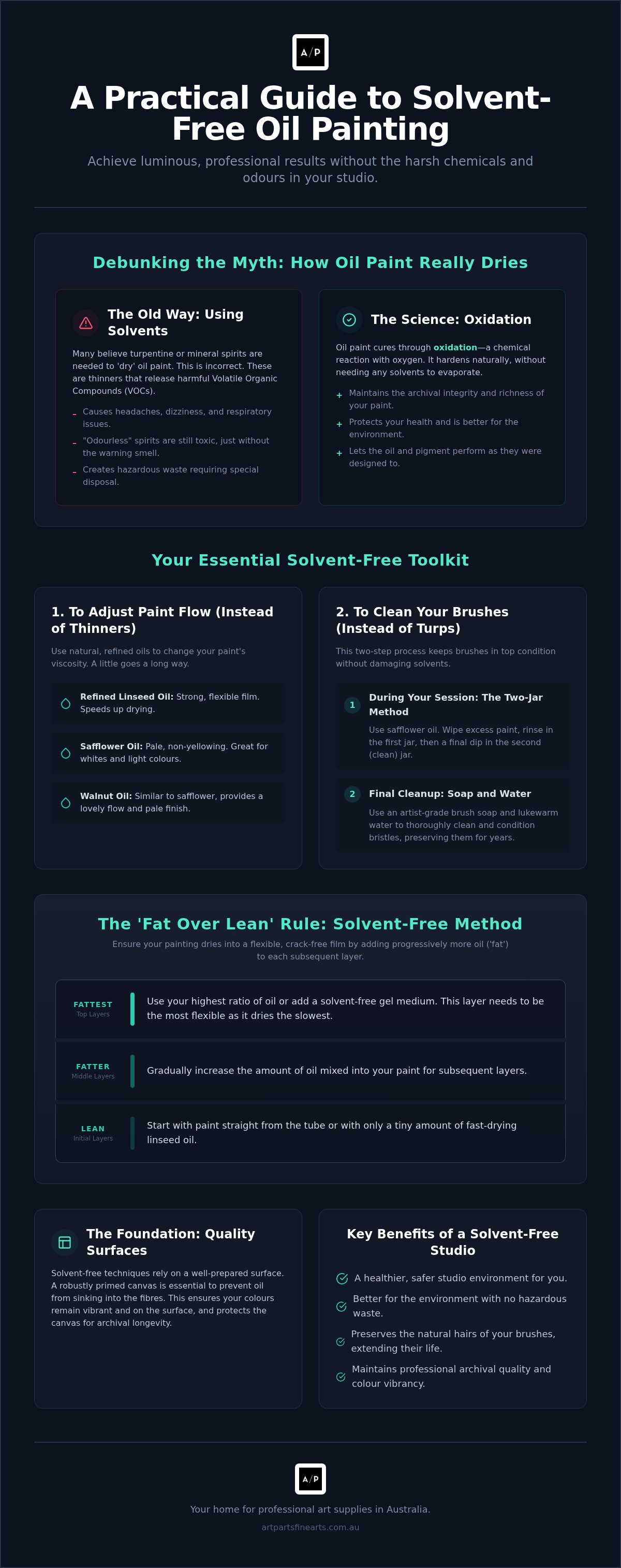
Many artists assume that oil painting and turpentine go hand-in-hand. However, "solvent-free" simply means removing volatile organic compounds (VOCs) from your process. Traditional oil paint is a mixture of pigment and drying oil; it doesn't actually need harsh thinners to cure. Unlike acrylics or watercolours that dry through evaporation, oils undergo a chemical process called oxidation. This means they harden when exposed to oxygen, regardless of whether you've added turps. You aren't losing anything by removing the chemicals, you're just letting the oil do its job naturally.
Switching to solvent-free oil painting supplies isn't a step down in quality. In fact, many professional painters find that avoiding harsh chemicals preserves the richness of their pigments and the life of their brushes. For Australian artists working in spare bedrooms or garage studios, this shift is especially beneficial. Without industrial-grade ventilation, the build-up of fumes can lead to long-term health issues. Using high-quality oil painting mediums based on natural oils ensures your work remains archival and vibrant without the toxic cloud.
The Health and Environmental Case for Solvent-Free Studios
Chronic exposure to VOCs can cause respiratory distress, dizziness, and skin sensitivity over time. Understanding the hazards of paint thinners is the first step toward a safer practice. Even products marketed as odourless mineral spirits are still chemically active and emit vapours; they simply lack the warning scent of traditional spirits. This lack of smell can be dangerous because it's easy to forget you're breathing in chemicals.
By choosing a solvent-free approach, you also reduce the amount of hazardous chemical waste that requires specialised disposal. This makes your studio more sustainable and domestic-friendly. It's a practical way to protect your health while maintaining the professional standards your art deserves. Transitioning away from chemicals doesn't mean losing control over your paint's behaviour, it just means choosing smarter, safer tools for the journey.
Essential Solvent-Free Oil Painting Supplies and Mediums
Building a kit with solvent-free oil painting supplies starts with selecting high-quality pigments. Langridge oil paints, made right here in Australia, are designed with professional archival standards in mind and pair perfectly with natural drying oils. Instead of using hydrocarbons to thin your paint, you can use refined linseed oil for strength or safflower and walnut oils for their pale, non-yellowing qualities. These oils allow you to adjust the flow of your paint while keeping the workspace odourless.
You can still follow the "fat over lean" rule by managing the viscosity of your oils. Start with paint straight from the tube or a very small amount of fast-drying linseed oil for your initial layers. As you progress, increase the oil content using solvent-free gels or liquid mediums that maintain the paint's "body" and texture. Using these solvent-free oil painting supplies ensures a flexible, durable film that won't crack as it cures. If you're working on a large scale, stocking up on full carton canvas is a practical way to ensure you always have a professional surface ready for these layered techniques.
Replacing Turpentine for Brush Cleaning
Cleaning your brushes doesn't require harsh chemicals. Use a "two-jar" method during your session; fill the first jar with safflower oil to rinse out the majority of the pigment, and use a second jar of clean oil for a final dip. This keeps your brushes supple and prevents the health risks for artists associated with inhaling solvent vapours or absorbing chemicals through the skin.
For the final cleanup, use an artist-grade brush soap and lukewarm water. These soaps contain natural conditioners that preserve the "tooth" of the bristles, which is the texture needed to hold and move paint. Unlike solvents that strip the natural oils from the hair, these conditioners ensure your brushes last for years. It's a simple, methodical way to keep your tools in top shape while enjoying a fresh, chemical-free studio.
Studio Practices for a Chemical-Free Workspace
Setting up for a session doesn't require a complex ventilation system if you use the right solvent-free oil painting supplies. Start with a glass palette; it's non-porous and allows you to scrape off dried paint with a razor blade rather than soaking the surface in thinners. Arrange your paints around the perimeter and keep a small dipper of refined linseed or safflower oil nearby. Instead of using chemical driers, manage your drying times by ensuring your studio has consistent airflow and natural warmth. Australia's dry climate is often enough to keep your work moving at a steady pace.
Achieving archival stability without "lean" solvent layers requires a shift in how you think about layering. Start your first pass with paint straight from the tube, as it has the lowest oil-to-pigment ratio. For subsequent layers, add a few drops of oil to increase the "fat" content. This method follows the same structural principles as traditional methods but uses the natural properties of the oil to ensure flexibility. Following university safety guidelines helps ensure your studio remains a healthy environment while you produce professional-grade work.
A critical part of this process is "sizing," which is the application of a barrier to seal the canvas fibres. Because solvent-free techniques often involve more oil, sizing prevents the oil from soaking into the fabric and causing it to rot over time. Professional canvases are usually pre-sized and primed, giving you a reliable foundation from the start.
Mastering the Solvent-Free Palette
Using solvent-free oil painting supplies effectively means adding only enough oil to achieve a smooth, buttery flow. Adding too much oil too quickly can make the paint runny and difficult to control on the vertical surface of an easel. A glass palette is your best friend here; you can wipe away excess oil easily with a lint-free rag, keeping your mixing area clean without needing to reach for a bottle of turps.
The Foundation: Why Quality Surfaces Matter for Solvent-Free Work
Solvent-free techniques often involve more oil than traditional methods, so the quality of your substrate is paramount. Because you aren't using thinners to "lean out" the paint, the mixture usually has a higher oil content. If your surface isn't properly sealed, this oil can seep into the fabric fibres, causing the canvas to become brittle and eventually rot over time. A robust barrier is the only way to ensure the longevity of your work.
Using a high-quality full carton canvas that features triple-primed acrylic gesso is essential for this practice. Gesso acts as a non-porous shield, ensuring your solvent-free oil painting supplies perform exactly as intended. By keeping the oil on the surface, the primer allows the paint to cure into a durable, lustrous film rather than being sucked into the weave. This also preserves the vibrancy of your colours, as the pigment stays where you put it.
Structural stability is another factor to consider, especially if you enjoy thick impasto applications. Solvent-free layers can be heavy, so you need a frame that won't warp or bow under the tension. Frames made from kiln-dried pine or professional hardwood provide the necessary support for these heavier paint loads. For artists producing a high volume of work, investing in bulk cartons is a practical way to maintain a consistent, professional standard across an entire series.
Selecting the Right Canvas Weight for Oil Painting
Weight matters when you're working without solvents. A heavier canvas, typically between 450gsm and 500gsm, offers the structural integrity needed for oil-rich layers. Cotton duck is a versatile, cost-effective choice for most studio work, while linen provides a tighter weave and superior archival longevity for professional commissions. Once you've selected your surface, choosing the right pigments is the next step in building your palette. You can learn more about this in our guide to selecting artist grade oil paints online in 2026.
Building Your Sustainable Studio
Transitioning to a chemical-free practice is a straightforward shift that relies on understanding the chemistry of oxidation and choosing the right foundation. By replacing thinners with natural oils and maintaining a methodical cleaning routine, you protect your respiratory health while keeping your work archival. Using professional solvent-free oil painting supplies allows you to focus on the creative process without the distraction of fumes or the risk of irritation.
High-quality surfaces like CreateART and Wright & Co professional grade canvases provide the essential barrier needed for these techniques. Their triple-primed archival gesso surfaces and kiln-dried hardwood or pine frames ensure your work remains stable and vibrant for decades. This foundation allows you to paint with confidence, knowing your materials are as durable as they are safe.
We're here to support your journey toward a safer, more enjoyable painting environment. Making the switch is a rewarding investment in your long-term craft and your personal wellbeing.
Frequently Asked Questions
Is solvent-free oil painting actually archival?
Yes, solvent-free oil painting is entirely archival as long as you follow basic structural principles. Since oil paint cures through oxidation rather than evaporation, removing solvents doesn't weaken the paint film. In fact, using high-quality natural oils can create a more flexible and durable surface over time. You just need to maintain the "fat over lean" balance by increasing the oil content in your later layers.
How do I clean my brushes properly without using turpentine?
You can clean brushes effectively using a combination of natural vegetable oils and artist-grade soap. Start by wiping off excess paint with a rag, then rinse the bristles in a jar of safflower oil to remove deep-seated pigment. Finish the process at the sink with lukewarm water and a dedicated brush conditioner. This routine keeps bristles supple and prevents the damage often caused by harsh chemical strippers.
Will my oil paintings take longer to dry if I don’t use solvents?
Using solvent-free oil painting supplies doesn't necessarily slow down drying times, but it does change the curing process. Solvents speed up initial drying by evaporating quickly, whereas natural oils rely solely on oxygen exposure. You can manage this by using fast-drying linseed oil or solvent-free alkyd mediums. Ensuring good airflow and a warm studio environment also helps your layers reach a touch-dry state more efficiently.
Can I mix traditional oil paints with solvent-free mediums?
You can mix almost any professional oil paint with solvent-free mediums. Brands like Langridge are designed to be compatible with a wide range of natural oils and gels. The key is to ensure you aren't introducing solvents back into the mix through other additives or thinners. This compatibility makes it easy to transition your current palette to a safer, odourless studio setup without having to replace every tube.
Do I need a special type of gesso for solvent-free painting?
You don't need a special gesso, but you do need a high-quality, non-porous primer. A professional triple-primed acrylic gesso is ideal because it provides a strong barrier against oil absorption. Since solvent-free work often uses more oil, a cheap or thin primer might allow the oil to seep into the canvas fibres. Choosing a robust surface ensures your paint stays on top where it can cure properly and stay vibrant.

Article by
Art Parts Fine Arts
Art Parts Fine Arts is an Australian art-supplies store based in Albury, shipping Australia-wide. Hand-picked by artists, our range covers paints, canvas, brushes, paper, printmaking and more, for everyone from students to professionals. We share practical guides and tips to help you get the most out of your materials.
Disclaimer
This article is general information to help you choose and use art materials. It is not professional, health or safety advice. Always follow the manufacturer's instructions and safety guidance for any product, and take care when using solvents, varnishes and other materials. Product availability, specifications and pricing may change, so please check the current product page for details.