

Stretched Canvas Buy Australia: The Artist’s Guide to Professional Surfaces
Table of Contents Why Your Choice of Stretched Canvas Matters for Professional Results Understanding Canvas Materials: Cotton Duck, Poly-Cotton, and Linen The Anatomy of a Quality Frame: Stretcher Bars and Tensio…Why Your Choice of Stretched Canvas Matters for Professional Results
A professional painting is only as permanent as its foundation. While paint and technique are vital, the stretched Canvas you choose plays a critical role in the final appearance and longevity of your work. A poor-quality surface can lead to issues like paint cracking, delamination, or sagging, undermining the effort you invest in your art. This is especially true for Australian artists, who must consider how significant climate fluctuations can affect their materials over time.
Understanding the difference between a standard "ready-to-paint" canvas and one that is "archival-ready" is the first step. It comes down to the quality of the components: the canvas fabric, the primer, and the timber frame it is stretched over. Investing in a professional-grade surface helps ensure your artwork remains stable and presents as you intended for years to come.
The Foundation of Your Creative Work
Starting a new piece on a high-quality surface provides a distinct advantage. A well-constructed, properly primed canvas allows for better paint manipulation, whether you are creating fine details or applying thick, expressive strokes. The surface responds predictably to your brush or knife, rather than absorbing your expensive paint unevenly. This stability not only improves the technical process but also provides the psychological confidence to create your best work, knowing it is built on a solid foundation.
Student vs. Professional Grade: What is the Real Difference?
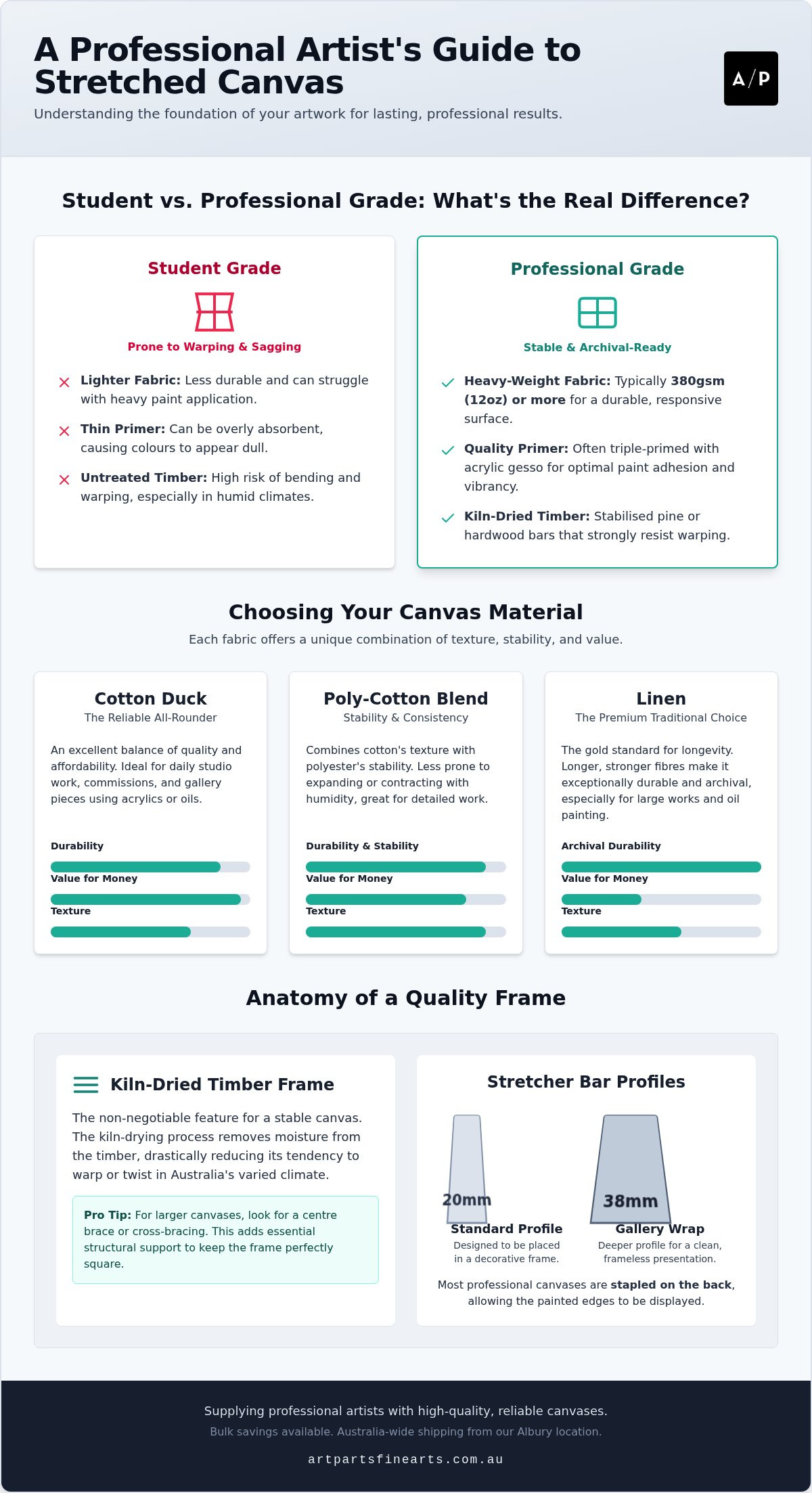
The distinction between student and professional canvases lies in the quality of the materials. Student-grade canvases often use lighter-weight fabric and are stretched over thin, untreated timber bars that are prone to warping. Their primer can be thin and overly absorbent, causing colours to appear dull and requiring extra layers of paint.
Professional-grade canvases, by contrast, typically feature heavier canvas weights, robust kiln-dried stretcher bars, and a more substantial, carefully applied primer. While the initial cost is higher, they often save money in the long run by requiring less paint and providing a stable structure that protects the artwork. In the context of fine art, "archival quality" refers to materials selected and prepared in a way that is designed to resist degradation, helping your work withstand the test of time.
Understanding Canvas Materials: Cotton Duck, Poly-Cotton, and Linen
The fabric of a canvas, known as the substrate, determines its texture, durability, and how it interacts with paint. The weight of this fabric is measured in grams per square metre (gsm) or ounces (oz). A heavier weight, such as 380gsm (12oz) or more, generally indicates a more durable, professional-quality canvas that can withstand heavy paint applications without sagging.
Cotton Duck: The Reliable All-Rounder
For most artists, cotton duck canvas is the professional standard. It offers an excellent balance of quality, durability, and affordability. A high-quality, heavy-weight cotton canvas (around 380gsm) that is triple-primed provides a superb surface for both acrylics and oils. Its consistent, slightly textured surface, often called "tooth," gives the paint something to grip, which is ideal for techniques from glazing to impasto.
Because of its versatility and value, professional cotton canvas is an excellent choice for daily studio work, commissions, and gallery pieces. For artists who work prolifically, buying in bulk is a practical option. Many suppliers offer full cartons of stretched canvas, ensuring you have a consistent, high-quality surface on hand while also providing significant cost savings.
Poly-Cotton Blends: Stability and Consistency
Poly-cotton canvases blend natural cotton with synthetic polyester fibres. This combination offers the pleasant texture of cotton while benefiting from the stability and moisture resistance of polyester. The result is a surface that is less susceptible to expanding or contracting with changes in humidity, making it a reliable choice for artists in coastal or tropical regions of Australia. The weave is often very uniform, which appeals to artists who require a smooth, consistent surface for detailed work.
Linen: The Premium Traditional Choice
Belgian and French linen have long been regarded as the premium surfaces for professional painting, particularly for oils. Linen fibres are longer and stronger than cotton, resulting in a canvas that is exceptionally durable and less prone to sagging over time, especially at very large dimensions. Linen has a unique, slightly irregular texture that adds a subtle character to the finished artwork.
While its archival properties are excellent, linen comes at a significantly higher price point. It remains a preferred choice for artists seeking a traditional surface with maximum longevity, but modern professional-grade cotton and poly-cotton canvases offer outstanding performance and stability for the vast majority of artistic applications.
The Anatomy of a Quality Frame: Stretcher Bars and Tension
The timber frame, or stretcher bars, is the skeleton of your canvas. Its quality is just as important as the fabric stretched over it. A weak or poorly constructed frame will warp, twist, or sag, ruining the artwork it is meant to support.
Preventing the Dreaded Warp with Kiln-Dried Timber
In the varied Australian climate, with its cycles of humidity and dryness, timber choice is non-negotiable. Professional canvases should be stretched on kiln-dried timber, typically pine or a hardwood. The kiln-drying process removes most of the moisture from the wood, stabilising it and drastically reducing its tendency to bend or warp. For larger canvases, look for the inclusion of a centre brace or cross-bracing, which adds essential structural support and maintains the frame's rectangular shape.
Quality joinery, with clean, tight corners, is another hallmark of a professional frame. Most pre-stretched canvases are "stapled back," meaning the canvas is folded neatly around the edges and secured on the back of the frame. This allows the artwork to be hung without a decorative frame for a clean, contemporary look.
Gallery Wrap vs. Standard Profiles
Stretcher bars come in different depths, or profiles. A standard profile is typically around 20mm deep and is designed to be placed in a frame. A "gallery wrap" profile is deeper, usually 38mm, and is intended for hanging directly on the wall. The deep edges create a substantial, three-dimensional presence and can be painted to continue the artwork, providing a professional, frameless finish.
Most quality stretched canvases also come with small wooden wedges, known as tension keys. If the canvas ever loses a little tension and begins to sag, these keys can be gently tapped into the slots in the corners of the frame to expand the join and re-tighten the surface.
Selecting the Right Surface for Your Medium and Style
The ideal canvas surface depends on your chosen paint and artistic style. The interaction between the primer, the canvas tooth, and the paint itself will influence your final result.
Acrylic Painting: Tooth and Absorbency
Acrylic paints require a surface with enough tooth for the polymer to form a strong bond. A triple-primed, medium-textured cotton or poly-cotton canvas is an excellent choice. The primer creates a stable, non-absorbent layer that prevents the paint from sinking into the fibres, keeping colours bright and vibrant. For artists using heavy-body acrylics, the robust texture of a 12oz cotton canvas provides the perfect grip for building thick, sculptural layers without sliding.
For artists interested in learning more about pairing surfaces with acrylics, our guide to the best canvas for acrylic painting offers more detailed advice.
Oil Painting: Protection and Pigment
When painting with oils, the primary role of the primer is to protect the natural canvas fibres from the acidic nature of the oil, which can cause them to degrade over time. An oil-compatible acrylic gesso primer is standard on most professional canvases and creates an effective barrier. Both linen and heavy-weight cotton are excellent for oils. A smoother, fine-grain surface can enhance the luminosity of pigments in brands like Langridge, making it ideal for portraiture or detailed realism. For more expressive, textural work, a medium-tooth canvas is often preferred.
While pre-primed canvases are ready to use, many artists choose to apply an extra layer or two of gesso. This allows you to customise the surface, sanding between coats for an ultra-smooth finish or applying it thickly for a more pronounced texture.
Sourcing Professional Stretched Canvas Across Australia
For professional artists and serious hobbyists, finding a reliable source for high-quality materials is essential. When you are buying stretched canvas in Australia, choosing a specialist supplier offers significant benefits over a general craft store.
Expert Advice from Fellow Artists
An artist-run shop like Art Parts Fine Arts provides more than just products; it offers expertise. Because we are artists ourselves, we understand the practical challenges and needs of our customers. We curate our selection based on performance and reliability, stocking only materials we would confidently use in our own studios. This "expert peer" approach means you can get practical, honest advice on which canvas is best suited to your specific project and budget, from a single large-scale linen canvas to a cost-effective carton of cotton canvases for a major series of works.
Ensuring Safe Delivery to Your Studio
Navigating national shipping for bulky items like canvases can be a concern. We specialise in carefully packing and sending art supplies of all sizes across Australia. When your order arrives, it is good practice to inspect it for any damage that may have occurred in transit. Canvases should be stored upright, preferably off the floor, in a dry room with a stable temperature to keep them in perfect condition until you are ready to paint.
Building a body of work requires consistency in your materials. By finding a reliable supplier, you can focus on your creative process with confidence. Explore our range of professional art supplies, including our popular full cartons of professional canvas that offer excellent value for studios, schools, and prolific artists.
Frequently Asked Questions (FAQs)
- How do I know if a stretched canvas is professional-grade?
- Look for key indicators: a fabric weight of at least 380gsm (12oz), kiln-dried timber stretcher bars (often 38mm deep for gallery wrap), neat back-stapling, and a substantial, even coat of primer.
- What is the best canvas for oil painting in the Australian climate?
- Both heavy-weight, triple-primed cotton and linen are excellent choices. A canvas stretched on kiln-dried timber is crucial to prevent warping in humid or fluctuating conditions. Poly-cotton blends also offer enhanced stability.
- Should I buy cotton or linen stretched canvas for acrylic painting?
- For most acrylic applications, a high-quality, heavy-weight cotton or poly-cotton canvas is ideal. It is durable, versatile, and provides excellent value. Linen is a premium option but is not essential for achieving professional results with acrylics.
- Why is my canvas sagging and how can I fix it?
- Sagging is usually caused by changes in humidity or insufficient tension. Most quality canvases come with small wooden wedges called tension keys. Gently tapping these into the slots in the frame's corners will expand the frame and re-tighten the canvas.
- What does "GSM" or "oz" mean when buying art canvas?
- GSM stands for "grams per square metre" and "oz" stands for "ounces (per square yard)." Both are units of measurement for the weight and density of the canvas fabric. A higher number indicates a heavier, more durable canvas.
- Do I need to prime a pre-stretched canvas before I start painting?
- Most professional canvases are pre-primed and ready to use. However, some artists apply one or two extra coats of gesso to achieve a specific surface texture, from ultra-smooth to heavily textured.
- How can I prevent my large canvas from warping over time?
- Choose a canvas built on a robust, kiln-dried timber frame. For dimensions over one metre, ensure the frame has a centre brace or cross-bracing for additional structural support. Storing the canvas upright in a climate-stable room also helps.
- Can I buy custom-sized stretched canvases in Australia?
- Some specialised suppliers and framers offer custom canvas stretching services. However, a wide range of standard sizes is readily available from professional art supply retailers, often providing a more economical option.

Article by
Art Parts Fine Arts
Art Parts Fine Arts is an Australian art-supplies store based in Albury, shipping Australia-wide. Hand-picked by artists, our range covers paints, canvas, brushes, paper, printmaking and more, for everyone from students to professionals. We share practical guides and tips to help you get the most out of your materials.
Disclaimer
This article is general information to help you choose and use art materials. It is not professional, health or safety advice. Always follow the manufacturer's instructions and safety guidance for any product, and take care when using solvents, varnishes and other materials. Product availability, specifications and pricing may change, so please check the current product page for details.