

100 Canvases and Bulk Buying: A Professional Guide to Stretched Canvas
The lowest price per unit on a bulk order usually hides the highest cost in lost hours and warped frames. When you're managing a busy studio or a school art department, the pressure to find savings often leads to inconsi…The lowest price per unit on a bulk order usually hides the highest cost in lost hours and warped frames. When you're managing a busy studio or a school art department, the pressure to find savings often leads to inconsistent surfaces that don't take paint as they should. You shouldn't have to choose between archival quality and a manageable budget.
Whether you're preparing for a major exhibition requiring 100 canvases or simply stocking up for the year, understanding technical specifications is the only way to ensure value. This guide helps you identify the right weight, tooth (the surface texture of the fabric), and tension for your specific medium. You'll learn how to select professional-grade surfaces that won't let you down mid-project.
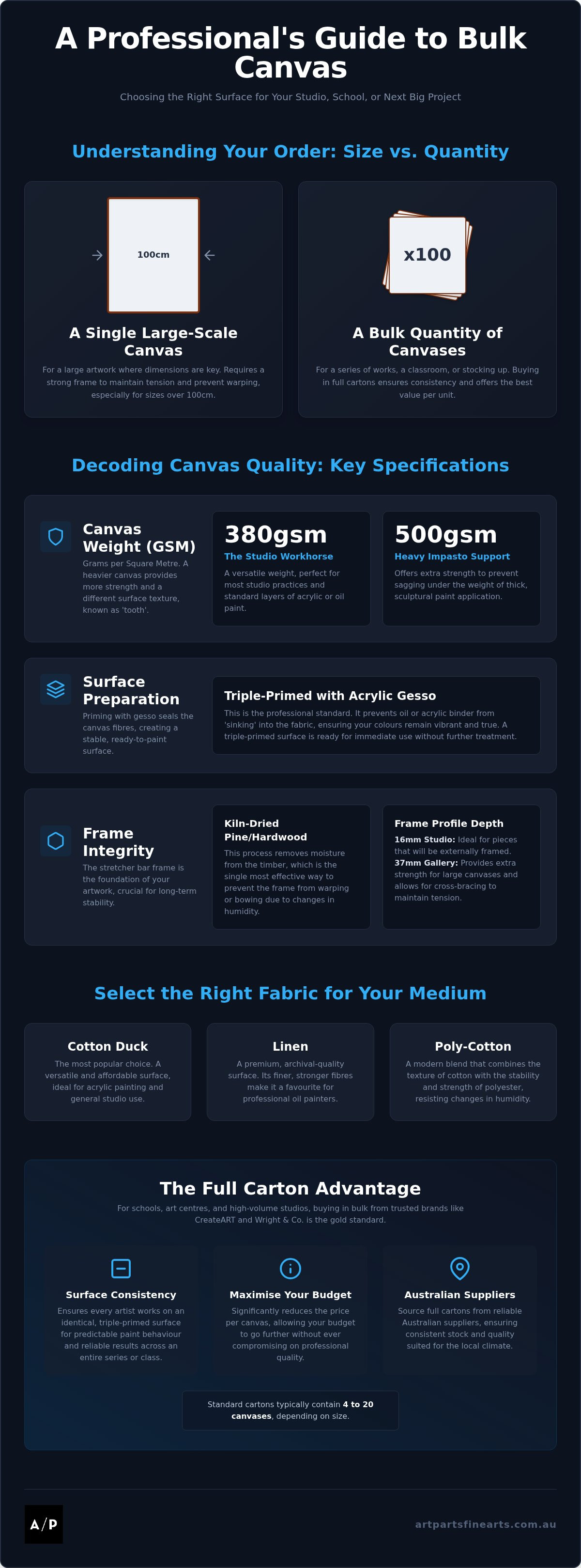
We'll break down the differences between 380gsm and 500gsm weights and explain why triple-priming with acrylic gesso, a ground layer that prepares the surface for paint, is a non-negotiable standard. We also look at the structural importance of kiln-dried pine frames and how to source full cartons from reliable Australian suppliers like CreateART and Wright & Co.
Key Takeaways
- Distinguish between 100cm dimensions and unit quantities of 100 canvases to ensure you order the correct supplies for your studio or classroom.
- Learn why a weight of 380gsm to 500gsm and triple-priming with acrylic gesso are vital for achieving a professional tooth and reliable surface tension.
- Understand the importance of kiln-dried pine or hardwood frames in preventing warping and maintaining structural integrity over time.
- Select the most appropriate material for your specific medium, from versatile cotton duck for acrylics to archival linen and poly-cotton blends.
- Maximise your studio budget by purchasing full cartons from trusted brands like CreateART and Wright & Co to achieve the lowest price per unit.
Understanding Canvas Dimensions and Bulk Quantities
When you search for 100 canvases, you're usually looking for one of two things: a single large-scale surface measuring 100cm on one side, or a bulk quantity of 100 units for a major project. It's a common point of confusion that we see in the shop. If you're planning a series or stocking a classroom, buying a full carton is the most efficient way to maintain a consistent painting surface while keeping your costs down.
Large-scale surfaces, particularly those exceeding 100cm, present unique challenges for tension and structural integrity. Without proper bracing and high-quality materials, a canvas of this size can easily pull the frame out of alignment. Understanding the history and properties of artist's canvas helps explain why the weight of the fabric and the quality of the timber frame work together to support your work. For high-volume creators, sourcing professional-grade materials in bulk ensures that each piece in a collection meets the same archival standard.
Sizing for Large Scale Projects
Common professional formats often include 100cm x 120cm or 100cm x 150cm. For these larger dimensions, we recommend using a 37mm gallery profile. This deeper frame provides the necessary room for cross-bracing, which prevents the timber from bowing inward under the pressure of the stretched fabric. Using kiln-dried pine is essential here. It ensures the frame stays square and doesn't warp as the humidity in your studio changes. This is particularly important for 100cm canvases, where the surface area is large enough to amplify any small movement in the timber.
The Full Carton Advantage
For schools and art centres, the full carton approach is the gold standard for supply management. Standard cartons usually contain between 4 and 20 canvases depending on the dimensions. Buying bulk stretched canvas ensures every student or artist in a workshop is working on the same triple-primed surface. This consistency is vital for teaching, as paint behaves predictably across every unit in the batch. It also significantly reduces the price per unit, allowing your budget to go further without compromising on the quality of the CreateART or Wright & Co surfaces you rely on.
Technical Specifications for Professional Results
Selecting the right technical specifications ensures your work remains stable and vibrant for decades. When you're managing a large project or stocking a studio with 100 canvases, you need to know that every surface will respond predictably to your brush. In the Australian climate, where humidity and temperature can fluctuate rapidly, the quality of the raw materials becomes even more critical to prevent sagging or cracking.
Understanding the technical makeup of your surface is essential for the conservation of paintings, as the interaction between the primer and the canvas fibres determines how well the work ages. We focus on professional-grade CreateART and Wright & Co products because they use kiln-dried pine or hardwood. This process removes moisture from the timber before it's shaped into frames, which is the best way to prevent warping in your studio.
Weight and Texture (380gsm to 500gsm)
The weight of a canvas is measured in gsm, or grams per square metre. A 380gsm canvas is a versatile workhorse for most studio practises, providing enough strength for standard layers. If you're working with heavy impasto techniques, where paint is applied in thick, sculptural layers, a 500gsm surface offers the extra support needed to prevent the fabric from stretching under the weight. This weight also dictates the tooth, which is the physical texture or "grip" of the surface. A pronounced tooth helps the paint adhere firmly, while a finer grain is better for detailed portraiture.
Priming and Surface Preparation
Triple-priming with professional acrylic gesso is a standard requirement for our professional ranges. Gesso is a ground layer that seals the fibres, preventing the "sinking" of colour where the oil or acrylic binder is absorbed into the fabric. This preparation allows you to use high-viscosity paints like Matisse Acrylic Paint Structure immediately without further treatment. For those planning high-output series, choosing bulk carton options ensures that every piece in your 100 canvases collection has an identical, reliable priming layer.
Frame profiles also play a role in the final presentation. A 16mm studio profile is excellent for works intended for external framing, while a 37mm gallery edge provides a bold, self-supporting look that doesn't require a frame. Choosing the right profile at the start saves time and money during the finishing stages of your project.
Selecting the Right Canvas for Your Medium
Choosing the right surface depends entirely on how you apply paint. If you're stocking a studio with 100 canvases for a year's work, you'll likely want a mix of textures and materials to suit different projects. Cotton duck is the most common choice for general studio practise because it's durable and takes acrylics beautifully. For artists who need more structural stability or a finer grain for detail, linen and poly-cotton blends offer a more refined surface that resists expanding and contracting with temperature changes. Ordering 100 canvases for a school department requires a different mindset than buying a single piece for a hobby, as consistency across the entire batch is paramount.
Black-primed canvases are another excellent option for those looking to skip the dark underpainting stage. These surfaces provide immediate high contrast for both oil and acrylic works. If you're using heavy body acrylic paint brands, look for a canvas with a robust tooth to hold the thick paint in place without sagging.
CreateART and Wright & Co Options
In Australia, CreateART and Wright & Co are the benchmarks for professional stretched surfaces. While standard kiln-dried pine frames are the reliable choice for most work, Wright & Co offers hardwood frames for artists who need the ultimate in stability. Hardwood is significantly heavier and less prone to movement than pine, making it ideal for high-value commissions or very large formats where frame rigidity is the top priority.
Medium Compatibility
Medium compatibility starts with the sizing. Sizing is the initial sealant applied to the raw fabric before the gesso goes on. It acts as a barrier to prevent the paint or primer from rotting the natural fibres. Oils are particularly acidic, so they require a more robustly primed surface than water-based mediums. Professional-grade canvases use multiple layers of sizing and gesso to ensure that the oil binder never reaches the cotton or linen itself. This archival preparation ensures your work lasts for generations.
Why Buying Full Cartons Makes Sense for Studios
Purchasing art supplies for a large project or an entire term requires a balance between budget and professional quality. When you order 100 canvases or more, the logistics of receiving and storing those units become just as important as the price per unit. Full cartons are designed to protect the surfaces during transit, ensuring that the triple-primed gesso stays pristine and the kiln-dried frames remain square. Consolidating your order into full cartons also reduces shipping costs and the environmental impact of multiple smaller deliveries.
Maintaining a consistent standard across a series of 100 canvases is much simpler when the units come from the same production batch. This uniformity ensures the tooth and tension are identical across every piece, which is vital for professional artists who produce cohesive bodies of work. It removes the guesswork from your process, allowing you to focus on the painting rather than adjusting your technique for a different surface texture midway through a collection.
Logistics and Studio Storage
Keeping your bulk stock in good condition requires a bit of planning. Always store your canvases upright, resting on their edges rather than flat. Stacking canvases on top of each other can cause the fabric to sag or create indentations on the surface of the bottom units. If you're storing and handling bulk canvas orders in a shared studio space, keeping them in their original carton until needed offers an extra layer of protection against dust and accidental knocks.
Institutional and School Supplies
Australian art departments often have strict requirements for archival-grade materials. We understand that schools and art centres need to justify every dollar spent while providing students with professional-grade tools. Using full carton canvas from brands like CreateART ensures that every student works on a consistent surface. This uniformity makes it much easier to teach specific techniques, as the paint will react the same way for every person in the room. If you're managing a large-scale intake, feel free to reach out to us for tailored advice on quantities and frame profiles to suit your curriculum.
Equipping Your Studio for High-Volume Production
Success in a large-scale series or a busy art department starts with a foundation you can trust. By prioritising technical specifications like professional weights from 380 to 500gsm and triple-primed acrylic gesso, you ensure your work remains stable for years to come. Kiln-dried pine frames are the essential standard for preventing warping, providing the structural integrity needed when you're working through a collection of 100 canvases or more.
Managing the costs of a professional studio doesn't have to mean compromising on archival quality. Our team of practising artists is always here to help you navigate the technical details of tooth and tension to find the best value for your specific medium. Whether you're stocking a school or preparing for an exhibition, the right bulk supply allows you to focus entirely on the creative process.
We look forward to seeing what you create on these professional surfaces and helping you find the perfect tools for your next big project.
Frequently Asked Questions
What is the benefit of buying a full carton of canvases?
Buying a full carton allows schools and studios to achieve the lowest price per unit while ensuring every surface in a batch is identical. This consistency is essential for high-volume creators managing a series of 100 canvases. It also reduces shipping costs and protects the gesso surfaces from damage during transit by keeping them in their original, reinforced packaging.
How do I choose between a 16mm and 37mm canvas profile?
Choose a 16mm studio profile if you plan to place your finished work in an external frame. The 37mm gallery profile is better suited for pieces intended to hang without a frame, as the deeper edge provides a bold, professional presence on the wall. Larger formats often require the 37mm profile to accommodate necessary cross-bracing for structural stability.
Is 380gsm canvas thick enough for oil painting?
A 380gsm canvas is thick enough for oil painting provided it has been properly sized and primed to prevent the oil from reaching the fibres. This weight is a versatile standard for most studio work and handles traditional oil layers well. For heavy impasto techniques where the paint adds significant weight to the surface, you might consider a heavier 500gsm option to prevent sagging.
What does "triple-primed" actually mean for my artwork?
Triple-primed means the fabric has received three separate coats of acrylic gesso to seal the fibres and create a reliable painting surface. This process prevents the paint binder from being absorbed into the canvas, which can cause colours to look dull or "sink". It also provides the necessary tooth, or physical texture, that helps the paint adhere firmly to the surface.
Do bulk canvases come with stretcher keys or wedges?
Most professional-grade bulk canvases from CreateART and Wright & Co include wooden wedges, also known as stretcher keys, in the packaging. These small pieces of timber are tapped into the corner slots of the frame to increase tension if the fabric becomes loose over time. It's a standard feature for kiln-dried pine and hardwood frames to ensure the surface remains tight and responsive to your brushwork.

Article by
Art Parts Fine Arts
Art Parts Fine Arts is an Australian art-supplies store based in Albury, shipping Australia-wide. Hand-picked by artists, our range covers paints, canvas, brushes, paper, printmaking and more, for everyone from students to professionals. We share practical guides and tips to help you get the most out of your materials.
Disclaimer
This article is general information to help you choose and use art materials. It is not professional, health or safety advice. Always follow the manufacturer's instructions and safety guidance for any product, and take care when using solvents, varnishes and other materials. Product availability, specifications and pricing may change, so please check the current product page for details.