

Best Lino Printing Paper: Guide for Australian Printmakers
You might spend weeks carving a masterwork into a lino block, but the success of your final edition depends almost entirely on the sheet of paper you place on top of it. Most printmakers have felt the frustration of lift…You might spend weeks carving a masterwork into a lino block, but the success of your final edition depends almost entirely on the sheet of paper you place on top of it. Most printmakers have felt the frustration of lifting a print only to find patchy ink coverage or a sheet that's buckled under the pressure of the press. It's disheartening to see your hard work look dull on standard cartridge paper or to have a delicate washi sheet tear during hand-burnishing.
Finding the best paper for lino printing is about matching the weight and texture of the fibres to your specific ink and method. We understand that choosing between a 30gsm Kozo and a 300gsm cotton rag can feel overwhelming when you're preparing for a new edition. This guide breaks down professional-grade options from heritage brands like Arches and Hahnemühle. We'll explore everything from lightweight Japanese papers for hand-printing to heavy cotton sheets for press work, ensuring your finished artwork is crisp, professional, and archival.
Key Takeaways
- Understand how GSM (grams per square metre) and internal sizing affect ink absorption and dictate your chosen printing method.
- Learn why lightweight, sustainable options like Hahnemühle Bamboo are ideal for hand-burnishing delicate details without a press.
- Identify the best paper for lino printing when using a press, specifically professional-grade 100 per cent cotton rag like Arches.
- Gain practical studio skills for tearing clean deckle edges and calculating registration margins to reduce paper waste.
Understanding GSM and Texture in Relief Printing
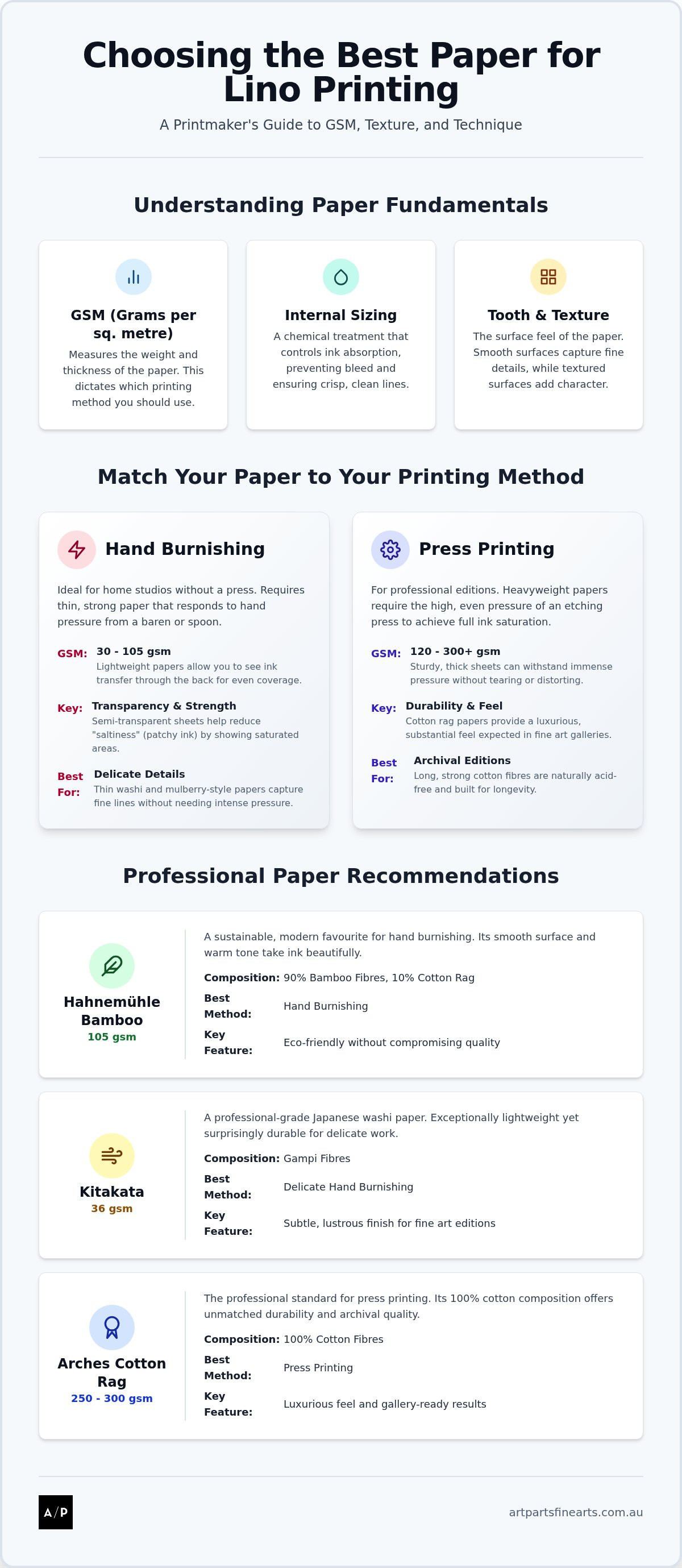
Selecting the right substrate is a technical decision that impacts every aspect of your print. The term GSM stands for grams per square metre; it measures the weight and thickness of the sheet. For relief work, this number dictates whether you'll be hand-burnishing with a baren or using a heavy etching press. Sizing is another critical factor. This refers to the chemical treatment added to the paper during manufacturing to control absorbency. Without proper sizing, your ink might bleed into the fibres, resulting in fuzzy edges rather than a crisp, professional image.
Choosing Weight Based on Your Equipment
Your printing setup is the main factor in finding the best paper for lino printing. Lightweight papers between 30 and 90gsm are ideal for hand-burnishing with a spoon or baren. These thin sheets allow you to see the ink transferring through the back of the paper, helping you spot areas that need more pressure. Heavier papers, ranging from 120 to 300gsm, are better suited for an etching press. These sturdy sheets, often made of cotton rag, can withstand high pressure without tearing or becoming overly distorted during the printing process.
Texture and Detail Retention
The tooth, or surface texture of your paper, determines how much detail your block can hold. Smooth papers are the gold standard for graphic, high-contrast lino cuts because they capture every fine line and delicate mark. If you prefer a more atmospheric or painterly look, a paper with a noticeable texture can add depth to solid areas of colour. Regardless of the texture, always look for archival and acid-free ratings. These ensure your artwork won't yellow or become brittle over time, which is vital if you're planning to sell your editions or exhibit them. You can explore our full range of printmaking paper to find the right match for your next project.
Best Lightweight Papers for Hand Burnishing
Hand printing at home doesn't require a press. It does demand a specific type of sheet. When you aren't using mechanical pressure, you need a paper that is thin enough to respond to a baren or even a wooden spoon. These lightweight options, often referred to as washi or mulberry papers, provide the necessary flexibility while remaining remarkably strong.
The Advantage of Transparency
One of the biggest hurdles in hand burnishing is "saltiness," where the ink transfers unevenly and creates a speckled effect. Using a semi-transparent paper allows you to see the ink as it makes contact with the block. You can watch the dark areas saturate through the back of the sheet. This visual feedback reduces physical strain because you only apply pressure where it's actually needed. For those working in a home studio, this technique is a core part of achieving professional results without a press.
Sustainable Options for the Modern Studio
Hahnemühle Bamboo has become a favourite for Australian printmakers looking for an eco-friendly alternative. At 105gsm, it's slightly heavier than traditional washi but remains thin enough for hand printing. It is made from 90 per cent bamboo fibres and 10 per cent cotton rag. This blend offers a warm tone and a smooth surface that takes ink beautifully. If you require something even more delicate, Kitakata is a professional-grade Japanese paper made from gampi fibres. Despite its 36gsm weight, it is incredibly durable and produces a subtle, lustrous finish that is highly prized for fine art editions.
Finding the best paper for lino printing often involves experimenting with these different weights to see how they interact with your specific ink. We stock a curated selection of professional printmaking papers to help you find the right match for your next edition.
Premium Cotton Rag Papers for Press Printing
Arches is widely considered the professional standard for 100 per cent cotton rag paper. When you move away from hand-burnishing to using an etching press, you can utilise much heavier sheets. Papers in the 250 to 300 gsm range provide a luxurious, substantial feel that is expected in fine art galleries. However, these weights require the high, even pressure of a press to force the ink into the cotton fibres. Without that mechanical force, your prints will likely appear patchy because the paper is too thick to be moulded around the lino block by hand.
The choice of ink also changes how these heavy papers behave. While traditional oil-based inks sit beautifully on cotton, modern professional water-based options offer excellent results with faster drying times. If you're transitioning to these mediums, our water-based printmaking ink guide explains how to achieve professional relief results on heavy rag.
The Durability of Cotton Fibres
Cotton fibres are naturally longer and stronger than wood pulp. This makes premium rag the best paper for lino printing when you're working on complex reduction prints. In a reduction print, the paper must withstand multiple passes through the press and several layers of ink. Cotton rag resists tearing, stretching, and surface degradation, ensuring your registration stays tight from the first colour to the last.
Arches and the Art of the Edition
This commitment to durability and archival quality is a hallmark of fine art collectors; to learn more about how these professional standards apply across different media, check out Ilkaa's Fine Art Gallery & Atelier and their collector's guide to museum-grade photography.
Professional editions require absolute consistency across every sheet. Arches provides this reliability, ensuring the first print looks identical to the fiftieth. These sheets often feature a watermark and a traditional deckle edge, which is a ragged, natural-looking border. These features are markers of quality that collectors look for in professional work. To see these details in person, you can browse our full range of professional papers.
Browse our professional printmaking paper collection
Preparing and Storing Paper in the Australian Studio
Even the best paper for lino printing requires careful handling once it arrives in your studio. Australian conditions, particularly the shifts in humidity between seasons, can significantly affect how natural fibres behave during a print run. Proper preparation and storage ensure that your expensive sheets remain flat, clean, and ready for the press.
One of the most important steps is calculating your registration margins before you begin tearing. Registration refers to the alignment of the block on the paper. Always leave at least 5cm of white space around your lino block. This extra room allows for easier handling during the printing process and provides space for numbering your edition. It also ensures a professional look when the work is eventually framed.
Precision Tearing and Sizing
For a traditional finish, avoid the clinical edge of a craft knife. Instead, use a heavy steel ruler to create a hand-torn edge that mimics a genuine deckle border. Place the ruler firmly on the sheet and pull the paper upwards and towards you against the metal edge. This method produces a soft, feathered finish that is highly valued in the printmaking community. Never use a blade for this process; a cut edge looks mechanical and lacks the heritage feel of a hand-torn professional edition.
Studio Climate Control
Humidity is a constant challenge in many Australian studios. Excess moisture can lead to foxing, which are permanent brown spots caused by fungal growth on paper fibres. To prevent this, store your paper flat in plan drawers or acid-free folders. Including silica gel packs in your storage drawers can help manage moisture during the wet season. Always let your paper acclimatise to the studio environment for at least 24 hours before a major print run. This prevents the sheets from curling or expanding while you're trying to align multiple colours. You can learn these practical handling skills in person at our creative workshops in Albury.
Elevating Your Relief Printmaking Editions
Choosing the right substrate is the final step in ensuring your carved blocks translate into professional-grade editions. Whether you're hand-burnishing delicate washi or using a press for heavy cotton rag, the interaction between ink and fibre determines the crispness of your work. By understanding the technical specs of premium brands like Arches and Hahnemühle, you can avoid the common pitfalls of uneven transfer and paper degradation.
Our staff are practising artists who use these materials in their own studios; we understand the importance of archival quality and reliable results. We take pride in selecting only the highest standard of supplies and provide national shipping across Australia to support your creative journey. Finding the best paper for lino printing is a rewarding process that transforms your technical skill into a lasting piece of fine art.
We look forward to seeing the prints you create with these professional tools and helping you find the perfect match for your next project.
Frequently Asked Questions
Can I use watercolour paper for lino printing?
You can use watercolour paper, but it presents challenges due to heavy internal sizing. Sizing is a treatment that makes paper less absorbent; in watercolour sheets, this is designed for wet washes rather than ink transfer. This often results in patchy coverage. If you do use it, choose a hot pressed variety, which has a smoother surface, and ensure you're using a press to force the ink into the fibres.
What is the best GSM for hand-printing lino blocks at home?
The best paper for lino printing by hand typically falls between 30 and 90gsm. Lightweight sheets like Kitakata or Awagami are thin enough to let you see the ink transfer through the back of the paper. This visual guide helps you apply pressure only where needed. Heavier sheets are difficult to burnish by hand and often lead to salty or uneven prints because the human hand cannot provide enough consistent pressure.
Do I need to soak my paper before relief printing?
You generally don't need to soak your paper for lino printing. Unlike etching or intaglio, where damp paper helps pull ink from deep grooves, relief printing relies on ink sitting on the surface. Printing on dry paper keeps your lines crisp and prevents the block from slipping. Some printmakers lightly damp heavy cotton rag to make it more receptive, but for most lino work, dry sheets provide the most consistent results.
Is cartridge paper suitable for professional lino prints?
Cartridge paper is excellent for practice and test proofs, but it isn't suitable for professional editions. Most cartridge paper is not acid-free or archival, meaning it will yellow and become brittle over time. It also lacks the strength of cotton rag or long-fibre washi, often buckling under the moisture of the ink. For work intended for sale or exhibition, always invest in professional-grade sheets from heritage brands like Arches or Hahnemühle.
How do I tell which side of the printmaking paper to use?
Most printmaking papers have a preferred side, which you can identify by looking at the watermark or the surface texture. If there's a watermark, the side where the text reads correctly is the front. If there's no watermark, look for the side with a slightly smoother tooth. The wire side or back often has a more mechanical, mesh-like pattern from the manufacturing process that can interfere with your finest carved details.

Article by
Art Parts Fine Arts
Art Parts Fine Arts is an Australian art-supplies store based in Albury, shipping Australia-wide. Hand-picked by artists, our range covers paints, canvas, brushes, paper, printmaking and more, for everyone from students to professionals. We share practical guides and tips to help you get the most out of your materials.
Disclaimer
This article is general information to help you choose and use art materials. It is not professional, health or safety advice. Always follow the manufacturer's instructions and safety guidance for any product, and take care when using solvents, varnishes and other materials. Product availability, specifications and pricing may change, so please check the current product page for details.