

Best Studio Easel for Small Spaces: A Buying Guide
Does a professional studio setup actually require a dedicated, cavernous room? Many artists believe they must choose between a sturdy, stable surface and a workspace they can actually move around in. It's frustrating whe…Does a professional studio setup actually require a dedicated, cavernous room? Many artists believe they must choose between a sturdy, stable surface and a workspace they can actually move around in. It's frustrating when an easel wobbles during a vigorous painting session or creates a constant tripping hazard in a tight corner. Finding the best studio easel for small spaces means looking for vertical utility and a minimal footprint rather than just a smaller frame.
We understand that your creative area might be a spare bedroom or a nook in the lounge. This guide explores how to select a professional-grade easel that provides maximum stability without crowding your compact workspace. You'll learn about the benefits of different designs, from folding A-frames to compact H-frames; we'll also show you how to prioritise ergonomic height and tilt adjustments. We will cover storage solutions that let you reclaim your room when you aren't at the canvas so you can focus on your craft; alternatively, for those who find they need a dedicated separate space, you can visit Workpod to explore their modular workspace solutions.
Key Takeaways
- Learn to distinguish between working and storage footprints to ensure your easel fits your room both during active painting and when tucked away.
- Discover why a compact H-frame design often provides the best studio easel for small spaces for those using heavy body acrylics or oils.
- Evaluate how radial and tabletop options can maximise utility in shared areas without sacrificing the ergonomic adjustments needed for long sessions.
- Understand the relationship between easel stability and canvas weight to choose a setup that supports professional-grade CreateART or Wright & Co canvases.
Evaluating Your Studio Footprint: The Foundation of Choice
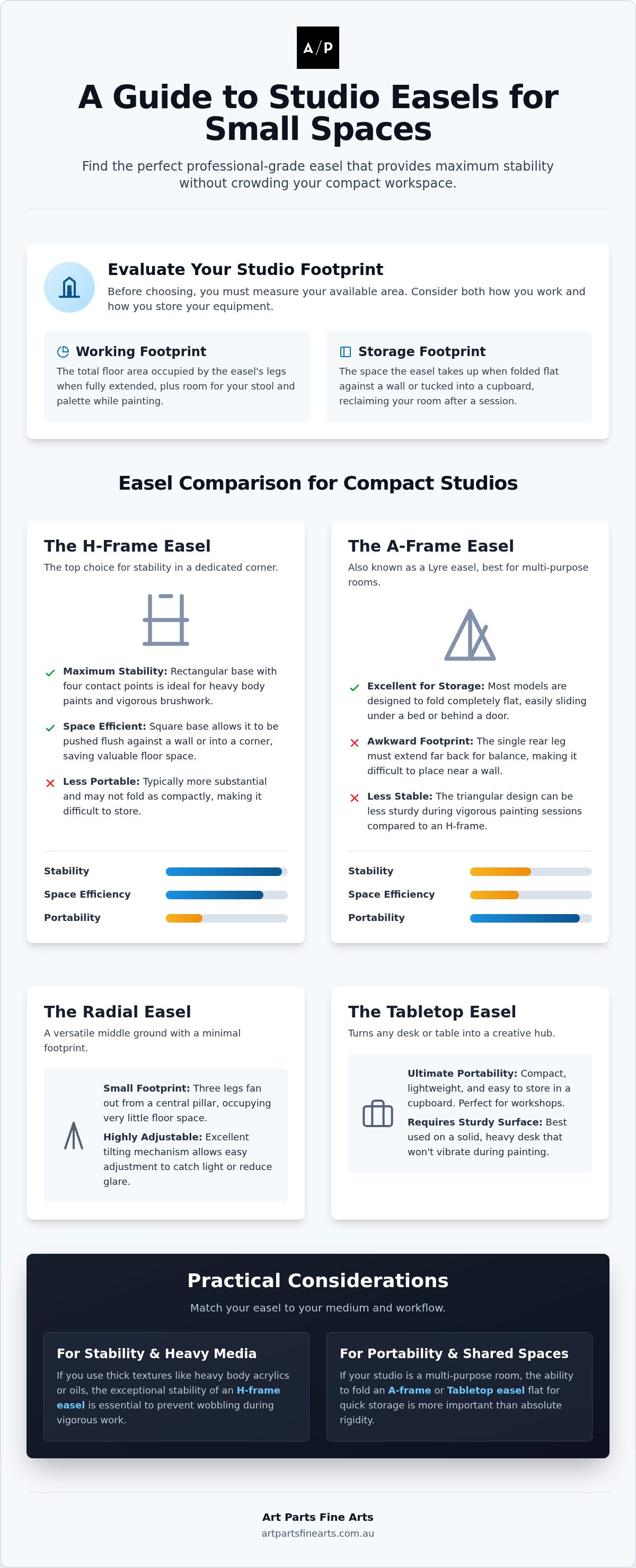
To find the best studio easel for small spaces, you first need to accurately measure your available floor area. An easel's footprint is the total floor area occupied by the legs when they are fully extended. In a compact studio, you must distinguish between the working footprint and the storage footprint. The working footprint is the space needed while you're actually painting, including room for your stool and palette; the storage footprint is how much room it takes up when folded flat against a wall or tucked into a cupboard.
While floor space is often limited, vertical height is usually abundant in most Australian homes. Many different types of easels take advantage of this by using a central mast that extends upwards. However, you must check your ceiling height before purchasing a professional-grade model. An easel that accommodates a large CreateART canvas might extend to over 240cm in height. This can easily scrape against a standard ceiling or interfere with overhead lighting when you're working on the bottom edge of a tall piece.
Static versus Portable Setups
Decide if your easel will remain a permanent fixture or if you need to reclaim the room after each session. A static H-frame provides excellent stability for vigorous work but often has a larger, non-folding footprint. If you work in a shared living area, look for a model designed to fold flat for easy transport. The weight of the timber also matters; a heavy beechwood easel stays grounded during painting but requires more effort to move than a lightweight pine alternative. Choosing the best studio easel for small spaces often involves balancing this sturdiness against the need for portability.
H-Frame versus A-Frame: Comparing Stability and Storage
Choosing between an A-frame and an H-frame design is the most significant decision for an artist in a restricted workspace. A-frame easels, often called Lyre easels, feature a triangular footprint that is wider at the base and narrows toward the top. While they look lean, the single rear leg must extend quite far back to maintain balance. This often makes them difficult to place flush against a wall, as the leg requires significant floor clearance to prevent the unit from tipping over.
H-frame easels utilise a sturdy rectangular base with four points of contact on the floor. This design is exceptionally stable, which is essential if you work with thick textures like Matisse acrylic paint structure heavy body. Because the central mast is vertical and the base is square, you can often push an H-frame right into a corner or flat against a wall. For many, this makes the H-frame the best studio easel for small spaces where every centimetre of floor area counts.
Storage is the primary advantage of the A-frame. Most models are designed to fold completely flat, allowing you to slide them under a bed or behind a wardrobe with ease. H-frames are typically more substantial and may not fold as compactly. If your studio is a multi-purpose room, the ability to disappear your equipment in seconds might outweigh the extra stability of a fixed frame.
The Radial Easel: A Versatile Middle Ground
The radial easel offers a unique central pillar design that occupies very little floor space. It features three legs that fan out from a single point, providing a smaller footprint than many traditional studio models. This style is particularly useful for its tilting mechanism, which allows you to adjust the canvas angle to catch natural light or reduce glare from overhead lamps. Once you've selected a frame that fits your room, consider stocking up on bulk stretched canvases to keep your creative momentum going.
Tabletop and Radial Options: Solutions for Compact Areas
If you lack the floor area for a standing unit, a tabletop easel is often the best studio easel for small spaces. These compact tools sit directly on your existing furniture, turning a kitchen table or a small desk into a functional creative hub. You must ensure your work centre is sturdy enough to handle the physical pressure of your brushwork. A lightweight desk will vibrate during painting, which can be distracting when you're trying to achieve fine detail or clean lines.
Many artists prefer tabletop models because they are portable and easy to store in a cupboard. If you regularly attend creative workshops, a folding tabletop unit or a box easel is a practical investment. The box easel concept combines a stable painting surface with an integrated storage drawer for your Matisse acrylics, Langridge oils, and brushes. This all-in-one design keeps your tools organised and protected while you travel between your home studio and your art class.
Selecting for Your Medium
Your choice of easel should reflect the specific techniques and mediums you use. Pastel artists often require an easel that can tilt forward beyond a vertical 90-degree angle. This allows excess pastel dust to fall away from the surface rather than settling into the paper's tooth, which is the physical texture that holds the pigment. For those using watercolours or applying thin glazes, look for an easel that can tilt to a completely horizontal position. This prevents liquid paint from running down the page and ensures your washes dry evenly across the surface. Finding the best studio easel for small spaces requires checking these specific adjustment ranges before you commit to a purchase.
Practical Considerations: Matching Your Easel to Your Medium
The physical demands of your painting style dictate the level of stability you require from your equipment. When working with heavy body acrylic paint brands, you often apply significant pressure to the canvas with palette knives or stiff brushes. A lightweight easel may slide across the floor or vibrate, which compromises your control. Always check the manufacturer's weight capacity in kg; a large CreateART linen canvas on a 37mm frame can be surprisingly heavy. The best studio easel for small spaces must be robust enough to support these professional-grade materials without buckling.
Consider the "tooth" or texture of your canvas as well. Coarser surfaces like 500gsm cotton duck require more vigorous scrubbing than smooth gessoed boards. A stable easel prevents the "trampoline effect" where the canvas bounces back against your brush. Before you buy, run through this quality checklist:
- Adjustment knobs should be made of steel or brass rather than thin plastic.
- Sliders must move smoothly without catching on the timber grain.
- The winch or ratchet system should lock firmly into place under weight.
- The base should have non-slip rubber feet to protect your floors.
Ergonomics and Artist Health
A well-organised studio is an investment in your craft, whether you're painting or playing music. Just as a musician might look to specialists like Acoustic Vibes Music for high-quality acoustic instruments that inspire their best work, an artist must choose an easel that offers the precision and stability required for professional results.
Working in a compact area often leads to cramped posture. To prevent neck and shoulder strain, ensure the centre of your canvas is at eye level. Alternating between standing and sitting during long sessions can also improve circulation and reduce back fatigue. A professional easel allows for minute height adjustments, ensuring you don't have to hunch over your work. If you're setting up your first home studio, take a moment to explore our curated range of easels and accessories online to find a setup that looks after your body as well as your art.
Maximise Your Creative Space Today
Finding the best studio easel for small spaces is a practical step toward creating a professional environment in any room of your home. By prioritising a design that balances stability with a manageable footprint, you ensure that your equipment supports your technique rather than hindering your movement. Whether you opt for a sturdy H-frame that sits flush against a wall or a versatile tabletop box easel, the right choice will protect your ergonomics and keep your materials organised.
At Art Parts Fine Arts, we take pride in offering professional-grade materials selected by artists for artists. We regularly supply schools and professional studios, ensuring our equipment meets high standards for durability and function. With national shipping across Australia, we make it easy to set up a reliable workspace regardless of your location.
We're excited to support your creative journey and help you find the tools that best suit your craft and your studio.
Frequently Asked Questions
Can I use a large studio easel in a small apartment?
You can certainly use a professional easel in a compact home if you choose an H-frame with a square base. These models are designed to sit flush against a wall, making them a more efficient choice than A-frames that require rear leg clearance. The best studio easel for small spaces often utilises vertical height instead of floor area; just ensure your ceiling is high enough to accommodate the central mast when it's fully extended.
What is the best easel for painting on heavy-duty stretched canvas?
A sturdy H-frame easel is the superior choice for supporting heavy-duty CreateART or Wright & Co canvases. These models provide four points of contact with the floor, preventing the unit from tipping under the weight of a 500gsm canvas. This stability is crucial when applying thick Matisse or Langridge paints. Unlike lighter A-frames, a solid H-frame won't bounce or shift during vigorous palette knife work or heavy brush applications.
Are tabletop easels stable enough for professional oil painting?
Tabletop easels are highly stable for professional work provided they are placed on a solid, heavy desk or work centre. A box easel is particularly useful as it combines a sturdy support with integrated storage for your brushes and paint tubes. This setup is ideal for artists who work on a smaller scale or in shared living areas. It provides a reliable surface for oils without requiring the permanent floor space of a standing unit.
How do I store my studio easel when I am not painting?
The most efficient way to store an easel is to select a model that folds completely flat. A-frame or radial easels are designed for this purpose, allowing you to slide them under a bed or behind a wardrobe in seconds. If you use a static H-frame, you can often lower the central mast and push the unit into a corner to minimise its footprint when it's not being used for an active creative session.
Do I need a special easel for working with watercolours or pastels?
You should look for an easel with specific tilting capabilities to suit these distinct mediums. For watercolours, an easel that tilts to a horizontal position is essential to prevent liquid washes from running down the paper. Pastel artists benefit from an easel that tilts slightly forward; this allows excess dust to fall away from the paper's tooth rather than settling on the work. Many versatile models offer these adjustments to support various techniques.

Article by
Art Parts Fine Arts
Art Parts Fine Arts is an Australian art-supplies store based in Albury, shipping Australia-wide. Hand-picked by artists, our range covers paints, canvas, brushes, paper, printmaking and more, for everyone from students to professionals. We share practical guides and tips to help you get the most out of your materials.
Disclaimer
This article is general information to help you choose and use art materials. It is not professional, health or safety advice. Always follow the manufacturer's instructions and safety guidance for any product, and take care when using solvents, varnishes and other materials. Product availability, specifications and pricing may change, so please check the current product page for details.