

Canvas Board vs Stretched Canvas: Guide for Aussie Artists
The surface you choose to paint on dictates more than just your budget; it determines how your work survives the variable Australian climate. Deciding between canvas board vs stretched canvas often feels like a choice be…The surface you choose to paint on dictates more than just your budget; it determines how your work survives the variable Australian climate. Deciding between canvas board vs stretched canvas often feels like a choice between price and professional longevity. You've likely experienced the frustration of a canvas sagging in high humidity or the struggle of finding enough storage space for deep gallery frames.
We believe that every artist deserves a reliable foundation, whether you're practising new techniques or preparing for a solo exhibition. This guide explores the technical and practical differences between these supports to help you choose the best surface for your next project. You'll discover which options handle heavy body acrylics best and how to identify archival quality that protects your work for years.
We'll break down the benefits of 380gsm cotton canvas and look at when a full carton canvas order might be the most resourceful choice for your studio or workshop. By comparing the responsive bounce of a stretched frame to the rigid tooth, or the surface texture that holds the paint, of a board, you can move forward with confidence in your materials.
Key Takeaways
- Understand the structural differences between fabric pulled over kiln-dried timber stretcher bars and canvas glued to a rigid backing.
- Learn why the responsive bounce of a stretched surface suits certain painting rhythms while rigid boards excel for high-pressure palette knife techniques.
- Discover how to manage studio space and transport by choosing slim boards for plein air work or gallery-depth frames for professional presentation.
- Compare the archival longevity and framing requirements of canvas board vs stretched canvas to protect your finished work in the Australian climate.
- Identify opportunities for bulk savings with full carton canvas options designed for schools, art centres, and prolific artists.
Understanding the Construction: Canvas Board vs Stretched Canvas
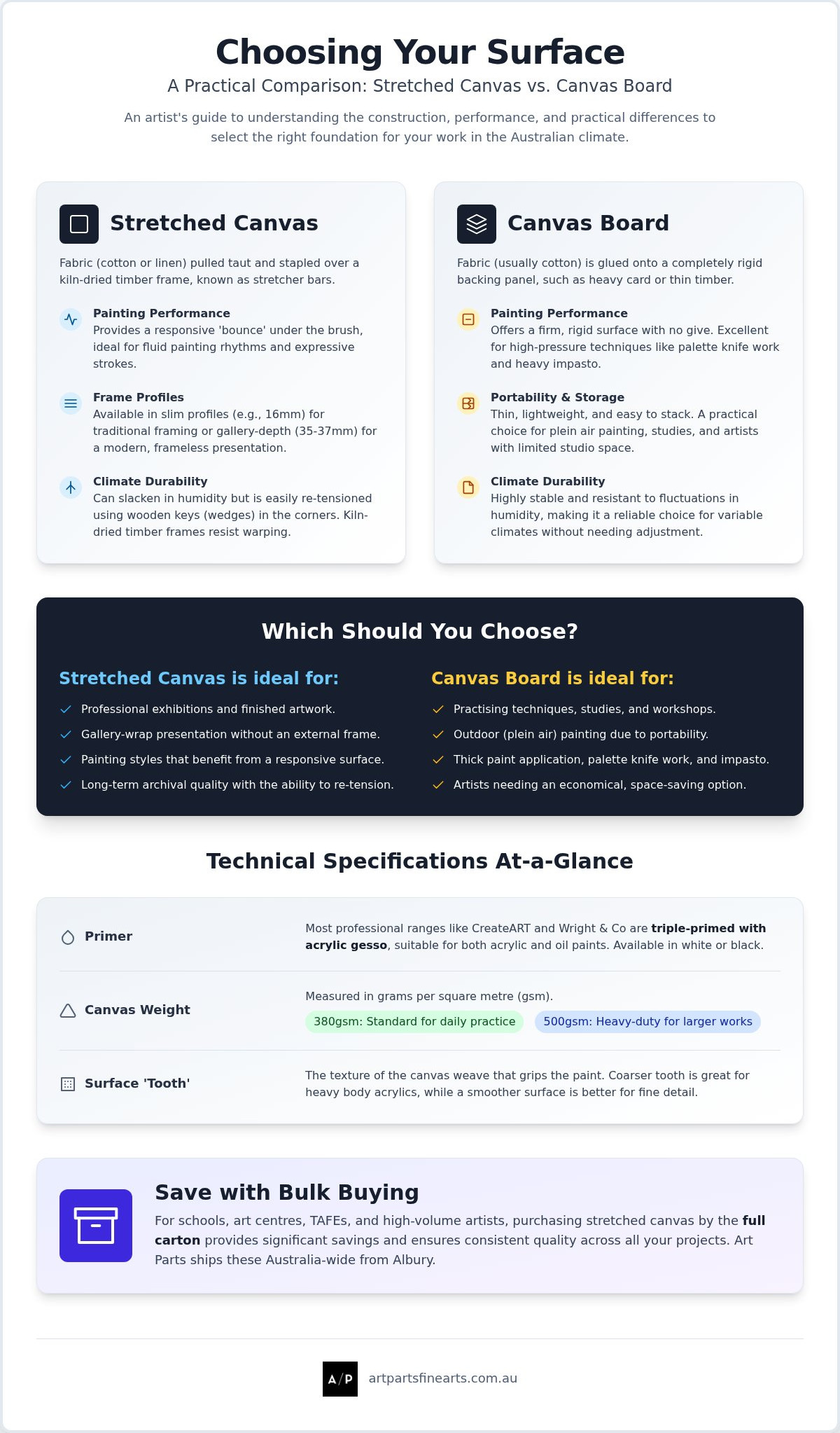
The structural differences in canvas board vs stretched canvas affect how paint behaves and how the work ages. A stretched canvas is a traditional choice where fabric is pulled tight over a timber frame, often called stretcher bars. Every artist's painting surface has unique properties that determine how it handles moisture and tension. In contrast, canvas boards consist of cotton or linen fabric glued directly onto a rigid panel made from heavy card or thin timber.
For professional results in Australia, the material of the frame is just as important as the fabric. CreateART and Wright & Co use kiln-dried pine or hardwood for their stretcher bars. This process removes moisture from the timber, which helps prevent warping or twisting when the humidity changes. When choosing between canvas board vs stretched canvas, consider the weight of the fabric, measured in grams per square metre (gsm). Standard 380gsm cotton canvas is excellent for daily practice, while heavy 500gsm options are available for high-volume work in schools or art centres through bulk carton canvas orders.
The Importance of Priming and Gesso
Gesso is a primer made from a binder mixed with chalk or pigment. It seals the fabric fibres so your paint doesn't soak into the weave and rot the material. Most professional ranges are triple-primed with acrylic gesso, meaning they're ready for immediate use. While white is standard, black-primed canvas offers a unique starting point for tonal paintings or high-contrast techniques where you want dark values to peek through the layers.
Frame Profiles and Stretcher Bars
The profile refers to the depth of the timber frame. A slim 16mm profile is ideal if you plan on traditional framing later. Gallery-depth profiles, ranging from 35mm to 37mm, allow you to paint around the edges for a finished look without an external frame. This choice also involves the "tooth" of the surface. Tooth is the texture of the canvas weave and how it affects paint grab. A coarse tooth is perfect for heavy body acrylics, while a smoother surface suits fine detail work.
Painting Performance: Tension, Texture, and the Bounce
The tactile sensation of your brush hitting the surface changes significantly when comparing canvas board vs stretched canvas. Stretched canvas provides a responsive bounce. Many artists find this springiness essential for a fluid painting rhythm. If you prefer high-pressure techniques like palette knife work or heavy impasto, a rigid board offers the solid resistance you need to apply thick layers without the surface dipping.
Matisse Acrylic Paint Structure is a heavy body paint that performs well on both surfaces. However, a board prevents the fabric from sagging under the weight of substantial paint loads. While cotton is a classic choice for its versatile weave, linen often provides a finer tooth for intricate detail work. Prolific painters often find that keeping a bulk supply of stretched canvases on hand allows them to maintain their creative momentum without worrying about running out of supports.
Acrylic vs Oil Paint Requirements
Using Matisse acrylic paint structure ensures your work adheres perfectly to triple-primed surfaces. Acrylics are flexible and bond well with the gesso ground. If you prefer working with oil paints like Langridge, a high-quality primer is even more critical. The primer acts as a barrier that prevents the oil from seeping into and eventually rotting the canvas fibres. Professional ranges from CreateART and Wright & Co come pre-primed with acrylic gesso, which is suitable for both mediums and provides a consistent base for every layer of paint you apply.
Stability and Climate Considerations
The Australian climate presents specific challenges for artists. Rapid changes in temperature and humidity can cause a stretched canvas to slacken or lose its tension over time. If your canvas starts to look wavy, you can use wooden wedges, also known as keys, to re-tension the frame. You simply tap these into the corner slots of the stretcher bars to gently push the joints apart and tighten the fabric. For artists in particularly humid regions, boards offer a more stable alternative that won't fluctuate with the weather, making them a resourceful choice for long-term durability.
Logistics in the Studio: Storage, Framing, and Bulk Buying
Managing a productive studio requires smart organisation. When weighing up canvas board vs stretched canvas, the physical footprint of your materials is a primary concern. Canvas boards are thin and lightweight. This makes them the preferred choice for plein air painting or artists working in compact home studios where every square metre of shelf space counts. You can easily stack dozens of boards in the space occupied by just a few stretched frames.
Shipping also plays a role in your selection. Because boards are rigid and flat, they are less prone to accidental punctures during transit across Australia. Stretched canvases require more careful handling to protect the tension of the fabric. We take great care during the dispatch process to ensure all professional supplies arrive in gallery-ready condition, regardless of the profile you choose.
The Economics of Full Carton Purchases
For schools, TAFEs, and prolific professional painters, buying full carton canvas is the most resourceful way to manage a studio budget. Ordering in bulk provides the lowest price per unit and ensures you always have a surface ready when inspiration strikes. It also guarantees that every canvas in a series shares the same batch quality. This consistency is vital for exhibitions where you want the texture and depth of the 380gsm cotton canvas to remain uniform across multiple pieces.
Framing and Presentation Options
The final presentation of your work often dictates the initial cost. Canvas boards almost always require a frame for professional exhibition because their thin edges aren't designed for display. This can add significant expense at the end of a project. In contrast, deep-edge stretched canvases with profiles of 35mm to 37mm are ready to hang immediately. By painting around the gallery-wrapped edges, you can achieve a modern look and potentially save on professional framing costs.
Which Should You Choose for Your Style?
The final decision between canvas board vs stretched canvas usually comes down to the intended purpose of your piece. If you're heading out for a day of plein air painting or running a community workshop, boards are the most practical choice. They're easy to transport and store in bulk. For large-scale landscapes or work intended for a traditional gallery setting, a stretched canvas provides the depth and flexible surface that many professional collectors expect.
Your choice of fabric also plays a role in the finished look. Fine linen is often preferred for portraits because its smooth texture allows for delicate brushwork and subtle transitions. Prolific landscape artists might lean towards a heavy 500gsm cotton canvas. This robust surface can support bold, expressive strokes and heavy layers of paint without losing its structural integrity.
Recommendations for Beginners
Starting your creative journey on canvas boards can significantly reduce the fear of the blank canvas. Because they're cost-effective and less intimidating than a large gallery frame, you may feel more comfortable experimenting with new techniques. We often suggest trying a mix of small and medium sizes. This helps you find a personal preference for how the brush feels against a rigid surface compared to a flexible one.
Practising on boards allows you to refine your skills without a large financial investment. Once you feel confident in your style, moving to a 380gsm cotton canvas on a 16mm slim profile is a natural next step. This allows you to experience the responsive bounce of a frame while still keeping framing options open for the future.
Professional and Exhibition Standards
When you're preparing work for sale or exhibition, archival quality is the most important factor. Professional results depend on using heavy body acrylic paint brands on high-gsm supports that won't degrade over time. Checking the gsm and ensuring the surface is triple-primed with acrylic gesso protects your reputation and the longevity of the artwork.
Choosing a 37mm gallery profile from CreateART or Wright & Co ensures your work meets professional standards for durability and presentation. These frames use kiln-dried timber to ensure the work stays flat and true in variable Australian conditions. Whether you prefer the solid feel of a panel or the responsive bounce of a frame, selecting a high-quality foundation is the first step in a successful creative project.
Set a Strong Foundation for Your Next Masterpiece
Selecting between canvas board vs stretched canvas is a personal decision that shapes your creative rhythm and the final presentation of your work. Boards offer a stable, space-saving surface for quick studies and plein air work, while stretched canvases provide the traditional bounce and gallery-ready depth many professionals prefer. By prioritising kiln-dried timber frames and triple-primed surfaces, you ensure your work remains stable and archival regardless of the variable Australian humidity.
Our team of artists is here to help you navigate these technical choices with practical, expert advice grounded in our own practice. We carefully select premium brands like CreateART and Wright & Co to ensure you have access to consistent, high-quality materials for every creative project. We ship our entire range Australia-wide, making it easier for you to focus on your creative journey while we handle the logistics of your studio supplies. Your choice of support is the first step in a successful painting, and we are proud to be part of that process.
Frequently Asked Questions
Are canvas boards as good as stretched canvas for professional art?
Canvas boards are an excellent choice for professional art when they are constructed with archival materials and high-quality priming. While stretched canvas remains the traditional standard for large-scale gallery work, boards are often preferred for smaller, detailed paintings and plein air studies. The rigid surface prevents the paint film from cracking due to movement, which is a common concern for some artists when comparing canvas board vs stretched canvas for long-term durability.
Can I use oil paint on a standard acrylic-primed canvas board?
You can certainly use oil paint on any board that has been triple-primed with acrylic gesso. This primer acts as a protective barrier that prevents the oil from soaking into the backing material and causing it to rot over time. Professional brands like CreateART provide a consistent, non-absorbent surface that is ready for immediate use with both professional oils, such as Langridge, and heavy body acrylics.
How do I tighten a stretched canvas that has gone saggy?
To tighten a slack canvas, you should use the wooden wedges, or keys, that are usually supplied with your frame. You simply insert these into the slots in the inner corners of the stretcher bars and tap them gently with a small hammer. This pushes the joints apart and increases the tension of the fabric. It is a common maintenance task for artists living in humid Australian climates where fabric can expand and contract.
Do I need to prime a canvas board before I start painting?
Most professional canvas boards are sold pre-primed and ready for use. If you are using a standard board from our range, it has already been triple-primed with acrylic gesso to ensure the surface has the right amount of tooth to grab your paint. You only need to add extra primer if you prefer an ultra-smooth surface for fine detail or if you are working with a raw, unprimed board.
What does GSM mean when I am buying canvas in Australia?
GSM stands for grams per square metre and is the standard metric measurement for the weight and density of the fabric. A higher GSM, such as 500gsm, indicates a thicker, more robust material that can support heavier applications of paint without warping. Most professional cotton canvases in Australia range from 380gsm to 500gsm, providing a reliable foundation that won't tear or sag easily under the pressure of a palette knife.

Article by
Art Parts Fine Arts
Art Parts Fine Arts is an Australian art-supplies store based in Albury, shipping Australia-wide. Hand-picked by artists, our range covers paints, canvas, brushes, paper, printmaking and more, for everyone from students to professionals. We share practical guides and tips to help you get the most out of your materials.
Disclaimer
This article is general information to help you choose and use art materials. It is not professional, health or safety advice. Always follow the manufacturer's instructions and safety guidance for any product, and take care when using solvents, varnishes and other materials. Product availability, specifications and pricing may change, so please check the current product page for details.