

Gallery Wrapped Canvas vs Studio: A Professional Australian Guide
You might assume the only difference between canvas types is the initial price tag, but picking the wrong depth often leads to a bill for custom framing that far outweighs the cost of your paints. Deciding on a gallery w…You might assume the only difference between canvas types is the initial price tag, but picking the wrong depth often leads to a bill for custom framing that far outweighs the cost of your paints. Deciding on a gallery wrapped canvas vs studio profile is a choice that affects how your work hangs, how it lasts in the Australian climate, and whether it needs an external frame to look finished. It is a common hurdle for artists who want their work to look professional without being caught out by structural issues later.
We believe every artist deserves a surface that supports their vision rather than hindering it. This guide helps you understand the structural and aesthetic differences between gallery and studio wrapped canvases so you can choose the right surface for your next painting. We will explain the practicalities of 16mm versus 37mm profiles, the importance of kiln-dried pine stretcher bars to prevent warping, and how gsm (the weight of the fabric) and gesso (the primer used to seal the canvas) affect your final result.
Key Takeaways
- Learn why a 16mm studio profile is designed for framing, while a 37mm gallery depth offers a clean, ready-to-hang finish for modern displays.
- Discover why kiln-dried pine stretcher bars and triple-priming with acrylic gesso are essential for preventing warping and ensuring paint doesn't sink into the fibres.
- Compare technical specs like weight and tooth when deciding between gallery wrapped canvas vs studio to ensure your surface matches your chosen painting technique.
- Understand how choosing weights from 380gsm to 500gsm provides the necessary tension for professional, archival-quality results.
- Identify how high-volume users like schools and art centres can achieve better value by ordering full cartons of professional stretched canvases.
Defining the Profiles: Studio Wrap vs Gallery Wrap
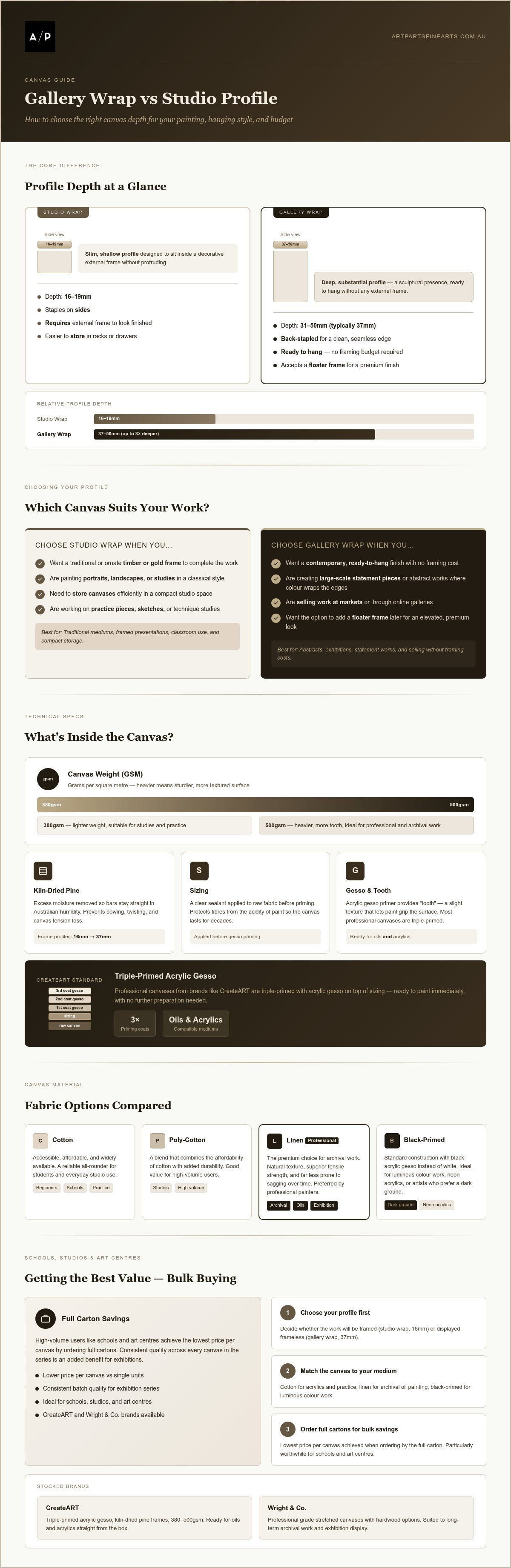
When choosing between a gallery wrapped canvas vs studio profile, the most immediate difference is the depth of the frame. In Australia, these measurements are standardised to help artists plan their final presentation. A studio wrap canvas typically features a slim profile of approximately 16mm to 19mm. This shallow depth is practical for storage and is designed specifically to fit comfortably inside a decorative external frame without protruding too far from the wall.
In contrast, a Gallery wrap utilises deeper stretcher bars, often ranging from 31mm to 37mm or even 50mm. This extra depth gives the artwork a sculptural presence. The primary structural difference lies in where the canvas is secured to the wood. Studio wraps often have staples on the sides, which can be unsightly if left exposed. Gallery wraps are back-stapled, ensuring a clean, seamless edge that allows you to continue your painting around the sides for a modern look.
The Role of Stretcher Bars
The quality of the timber inside your canvas is just as important as the fabric on top. We recommend kiln-dried pine for stretcher bars because it is remarkably stable. In the fluctuating Australian humidity, untreated wood can bow or twist, causing your canvas to lose tension. Kiln-drying removes excess moisture from the timber, ensuring the bars stay straight and true over time. This is a vital feature for professional work that needs to remain archival for decades.
Before you start your first brushstroke, the canvas must be prepared to handle the medium. This process begins with "sizing," which is a clear sealant applied to the raw fabric to protect the fibres from the acidity of the paint. Following this, layers of "gesso" are applied. Gesso is a specialised primer that provides "tooth," a slight texture that allows the paint to grip the surface. Most professional canvases from brands like CreateART are triple-primed with acrylic gesso, making them ready for use with both oils and acrylics immediately.
Presentation and Framing: Choosing Your Aesthetic
The decision between a gallery wrapped canvas vs studio profile is often a question of how the work will be finished. Your choice of depth influences the physical space your art occupies and the first impression it makes on a viewer. While the previous section covered the structural builds, the aesthetic impact is where your creative intent truly shines.
When to Choose Studio Wrap
Studio wraps are essentially the workhorse of the art world. Their slim 16mm profile is intended to be tucked away inside a decorative frame. This makes them the go-to choice for traditional oil portraits or landscape studies that require an ornate gold or timber border to feel complete. A studio wrap provides the necessary support without the bulk that would make a framed piece sit too far off the wall.
Because they are thinner, these canvases are also much easier to store in racks or drawers. If you are working in a compact area, organising art supplies in a small space becomes significantly simpler when your canvases don't take up twice the volume of a deeper frame. They are perfect for practice pieces, sketches, and studies where the focus is on the technique rather than the final hanging display.
The Appeal of the Gallery Edge
Gallery wraps offer a contemporary, ready-to-hang aesthetic that is popular for large-scale statement pieces. With a depth of 37mm, the canvas stands out from the wall, creating a natural shadow line that adds weight and importance to the piece. This profile eliminates the immediate need for a framing budget, which is a major advantage for artists selling their work at local markets or through online galleries.
You can even extend the artwork into three dimensions by painting the edges. This technique is particularly effective for abstracts where the colour wraps around the corner, leading the viewer's eye across the entire surface. To better understand the terminology used by international institutions when describing these structures, you can consult the Tate Art Terms glossary. For those seeking a high-end finish, a floater frame can be added later to a gallery-wrapped piece, providing a professional gap that makes the art appear to hover. If you're preparing for a large exhibition, exploring our range of bulk stretched canvas can help you maintain a consistent aesthetic across your entire series.
Technical Specifications: GSM, Priming, and Tooth
The technical specs of a gallery wrapped canvas vs studio surface often reveal more about the artwork’s lifespan than the depth of the frame alone. While the profile depth dictates how the work sits on the wall, the fabric and primer determine how the paint behaves. Professional artists look for specific indicators of quality to ensure their work remains archival and vibrant for decades.
Weight is a critical factor, measured in gsm (grams per square metre). Standard student canvases often sit around 280gsm, which can feel thin and prone to sagging. Professional-grade options range from 380gsm to 500gsm. This heavier weight provides superior tension across the stretcher bars, which is vital for maintaining a flat surface in the changing Australian climate. To understand the fundamental presentation differences beyond these technical specs, you might ask What is Gallery Wrap and how does it influence your choice of fabric?
The texture of the canvas, known as the "tooth," plays a significant role in paint application. A coarser tooth is excellent for gripping heavy body acrylic paint brands, allowing for thick, impasto strokes that stay exactly where you put them. If you prefer fine detail or portraiture, a smoother tooth with a tighter weave is more appropriate. While cotton is the most common choice due to its versatility, a professional linen canvas roll remains the gold standard for gallery work because of its longer fibres and natural resistance to decay.
Priming for Longevity
Triple-priming with acrylic gesso is essential for archival quality. Gesso acts as a barrier, ensuring the paint sits on top of the surface rather than sinking into the raw fibres, which can cause the fabric to rot over time. We trust brands like CreateART and Wright & Co because they use high-quality primers that provide a consistent, reliable base. This level of preparation ensures that whether you are using oils or acrylics, your colours will remain true and your surface will stay stable.
Practical Selection: Schools, Studios, and Bulk Buying
Choosing the right surface involves balancing your creative goals with practical logistics. For educational institutions and busy community studios, the decision between a gallery wrapped canvas vs studio profile is usually driven by budget and storage capacity. Studio wraps are the standard choice here because their slim profile allows dozens of canvases to be stored in the same space that would only fit a handful of gallery-depth frames. They provide an affordable entry point for students while maintaining the professional standards required for serious study.
Professional artists investing in high quality art supplies for an upcoming exhibition often prefer the 37mm gallery wrap. It provides a substantial, authoritative look on a gallery wall without the immediate need for external framing. Regardless of the profile you choose, always check that the frame is constructed from kiln-dried pine or hardwood. This ensures the structure remains square and tensioned, even when exposed to the varying humidity levels found across Australia. We recommend brands like CreateART for their reliable timber quality, which prevents the frustrating bowing often seen in cheaper alternatives.
Bulk Savings for Art Centres
High-volume users can significantly reduce their overheads by opting for full carton canvas orders. Buying by the carton is the most cost-effective way to supply a workshop or classroom, ensuring every student works on a consistent, professional-grade surface. This consistency is vital for teaching. It ensures that paint behaves predictably for every artist in the room, from the way the gesso holds the pigment to the tension of the fabric under the brush. If you are preparing for a term of classes or a solo show, buying in bulk ensures you have the same high-quality tooth and priming across every piece in your series.
Selecting Your Professional Painting Surface
Understanding the structural differences between a gallery wrapped canvas vs studio profile ensures your artwork is presented exactly as you intended. Whether you need a slim 16mm surface for a custom frame or a deep 37mm profile for a contemporary exhibition, the foundation of your work relies on quality. By selecting professional-grade materials with high gsm and triple-priming, you guarantee that your colours remain vibrant and your frame stays square in the Australian climate.
Our team of practising artists is always here to provide expert advice. We stock premium CreateART and Wright & Co supplies to ensure you have access to the same archival standards used in professional galleries. Australia-wide shipping is available to every studio and classroom. We want you to feel confident in every tool you use.
We are excited to help you find the perfect surface for your next project. Your creative journey deserves the best tools, and we're here to support you at every brushstroke.
Frequently Asked Questions
Can I frame a gallery wrapped canvas later if I change my mind?
Yes, you can frame a gallery wrap by using a floater frame. These specialised frames are designed to accommodate the 37mm depth while leaving a small gap around the edge, making the art appear to hover. Standard frames are usually too shallow for these deeper profiles and will result in the canvas protruding too far from the wall.
Why do some studio canvases have staples on the side?
Side-stapling is a traditional manufacturing method for canvases intended to be hidden within a decorative frame. In a gallery wrapped canvas vs studio comparison, the studio version is often cheaper because the staple placement is faster to produce. If you don't plan on framing your work, these staples remain visible, which is why back-stapled gallery wraps are preferred for a clean, professional finish.
What is the best canvas weight for heavy impasto painting?
A heavy-duty weight between 450gsm and 500gsm is ideal for thick impasto work. Thick paint applications add physical weight that can cause lighter student-grade canvases to sag over time. Choosing a professional-grade fabric ensures the surface stays tight across the kiln-dried pine stretcher bars, maintaining the integrity of your work as the paint cures.
Do I need to prime a pre-stretched canvas before I start painting?
You don't need to prime a pre-stretched canvas from professional brands like CreateART or Wright & Co. These products are triple-primed with acrylic gesso to provide a reliable tooth, which is the texture that helps paint adhere to the surface. While they are ready to use immediately, some artists add an extra layer of gesso to customise the texture to their specific preference.
Is linen better than cotton for gallery wrapped canvases?
Linen is considered the premium choice because it is stronger and has a more irregular, natural weave than cotton. It contains oils that keep the fibres flexible, making it less prone to expansion and contraction in the Australian climate. While cotton is a versatile and high-quality option for most artists, linen remains the gold standard for those focused on the highest level of archival durability.

Article by
Art Parts Fine Arts
Art Parts Fine Arts is an Australian art-supplies store based in Albury, shipping Australia-wide. Hand-picked by artists, our range covers paints, canvas, brushes, paper, printmaking and more, for everyone from students to professionals. We share practical guides and tips to help you get the most out of your materials.
Disclaimer
This article is general information to help you choose and use art materials. It is not professional, health or safety advice. Always follow the manufacturer's instructions and safety guidance for any product, and take care when using solvents, varnishes and other materials. Product availability, specifications and pricing may change, so please check the current product page for details.