

Premium Linen Canvas Australia: Best Brands & Surfaces
Choosing a linen canvas isn't just about the texture; it's a commitment to ensuring your work outlasts the century. While cotton is a reliable staple for daily practice, professional artists across the country often find…Choosing a linen canvas isn't just about the texture; it's a commitment to ensuring your work outlasts the century. While cotton is a reliable staple for daily practice, professional artists across the country often find themselves searching for the best linen canvas Australia provides to elevate their studio output. You likely already know that linen offers a unique strength and a less mechanical grain, but the technical jargon surrounding weights and primers can make the selection process feel more complicated than it needs to be.
This guide simplifies those choices by explaining why linen remains the superior archival surface and how to navigate the specific weights, brands, and profiles required for a professional finish. We'll examine the technical differences between 380gsm and 500gsm surfaces, compare the benefits of kiln-dried pine versus hardwood bars, and look at the premium ranges from CreateART and Wright & Co. Whether you're preparing for a solo exhibition or sourcing bulk cartons for a busy teaching studio, you'll find the practical information needed to choose a surface that supports your technique and preserves your legacy.
Key Takeaways
- Understand why the natural oils in flax fibres make linen a more durable and archival choice for long-term work than cotton.
- Learn to select the appropriate weight for your technique, ranging from 380gsm to heavy-duty 500gsm professional surfaces.
- Identify the benefits of kiln-dried pine and hardwood bars with gallery-depth profiles up to 37mm to ensure your work remains stable.
- Compare premium options for linen canvas australia including triple-primed ranges from trusted brands like CreateART and Wright & Co.
- Discover how to access bulk savings with full carton orders for schools, art centres, and high-volume professional studios.
Why Linen Canvas is the Gold Standard for Professional Artists
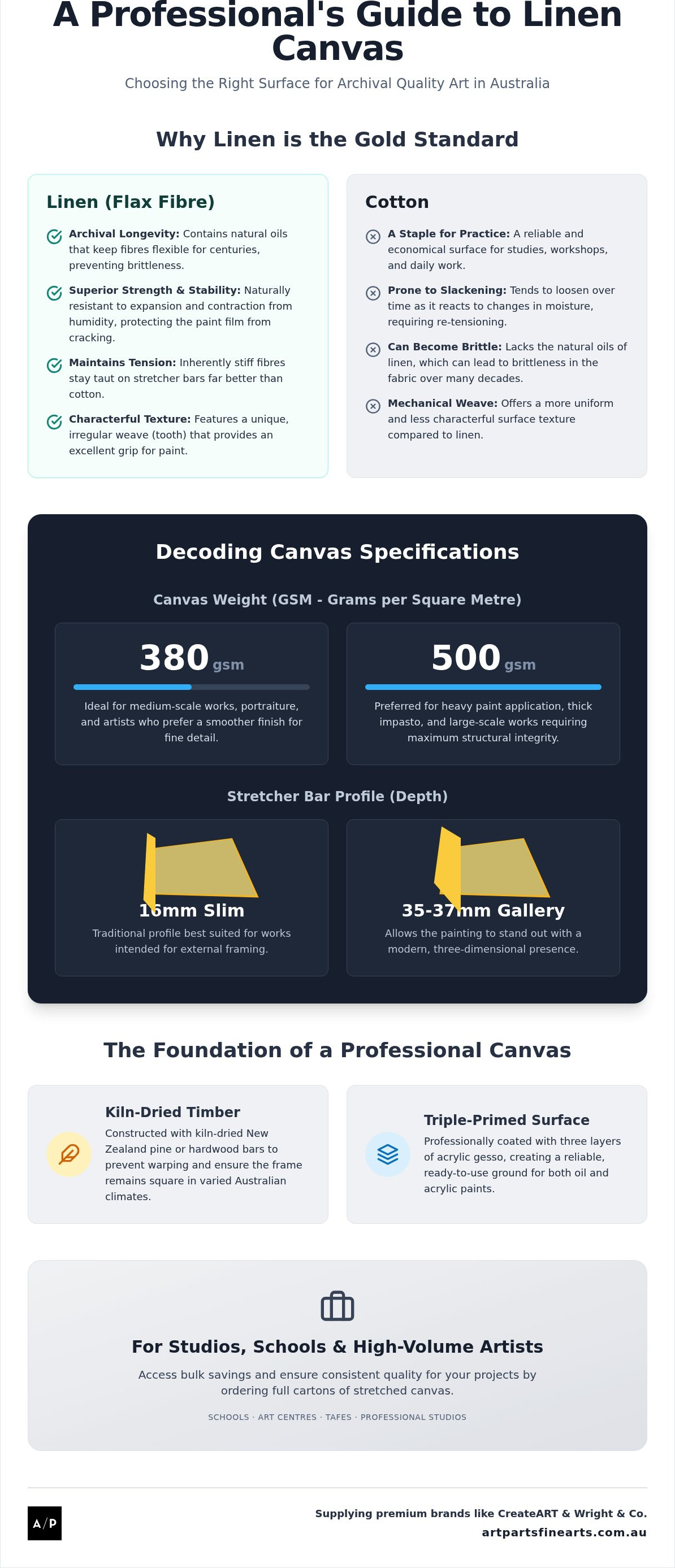
Linen is widely regarded as the ultimate surface for serious painting. It is a textile woven from flax fibres, offering a level of strength and longevity that cotton cannot match. For those looking for the highest quality Why Linen Canvas is the Gold Standard, the investment pays off in the physical endurance of the artwork. Linen contains natural oils that remain within the fibres. These oils keep the material flexible over centuries and prevent the brittleness often seen in aged cotton supports.
Archival Longevity and Structural Integrity
The structural benefits of linen are particularly evident in the Australian climate. Flax fibres are naturally resistant to the expansion and contraction caused by changes in temperature and humidity. This stability is vital for protecting your work; when a support moves too much, the dried paint film on top can eventually crack or delaminate. Professional linen is treated with sizing, which is an initial layer of glue or polymer that seals the fibres and protects them from the acidic nature of oil paints. Without this protection, the oil would rot the fabric over time. Using a stable, sized support ensures your work remains as intended for decades.
The Unique Texture and Tooth of Flax
Artists often choose linen for its tooth, which is the surface feel that allows paint to grab and hold onto the canvas. Unlike the mechanical regularity of cotton, linen has a characterful, irregular weave. When sourcing linen canvas australia, you can select different styles based on your specific technique. Fine-weave linen is ideal for detailed portraiture and smooth transitions, while coarse-weave options are better for heavy impasto or expressive palette knife work. Linen also stays taut on the stretcher bars much better than cotton. Cotton tends to slacken as it reacts to moisture, requiring frequent re-tensioning. Linen's inherent stiffness means once it is stretched on quality kiln-dried pine or hardwood bars, it maintains its tension reliably.
Understanding Weights and Profiles: From 380gsm to 500gsm
Selecting a premium linen canvas australia involves more than just picking a frame size. You need to understand how the weight and profile support your specific style and medium. GSM stands for grams per square metre; it is the standard measure for canvas density and thickness. A higher GSM indicates a heavier, more robust fabric that can withstand the significant tension required for large-scale frames without sagging over time. Most professional-grade linen is triple-primed with acrylic gesso, creating a surface that is often considered the Gold Standard for Professional Artists because it provides a reliable ground for both oil and acrylic paints.
GSM and Weave Consistency for Different Styles
A 380gsm linen is typically ideal for medium-scale works or artists who prefer a slightly smoother finish for portraiture or fine detail. When sourcing linen canvas australia for professional exhibitions involving heavy paint application or oversized supports, 500gsm is the preferred weight. Professional ranges from CreateART and Wright & Co often feature these heavier weights to provide the structural integrity needed for thick impasto. The consistency of the weave determines how your medium behaves; for example, the peaks and valleys of a heavy-duty linen will interact differently with the Matisse acrylic paint structure compared to a fine-weave portrait canvas. A tightly woven, high-GSM fabric ensures that the primer sits evenly on the surface rather than sinking into the fibres.
Stretcher Bar Profiles and Timber Quality
The profile refers to the depth of the stretcher bar and dictates how the work sits on the wall. Slim 16mm profiles are traditional and best suited for works intended for external framing, whereas 35mm to 37mm gallery-depth profiles allow the painting to stand out as a three-dimensional object. We always recommend kiln-dried New Zealand pine or hardwood bars to prevent warping, which is a common issue in varied Australian climates. Kiln-drying removes moisture from the timber in a controlled environment, ensuring the frame stays square and true. Professional bars also feature rounded edges to protect the fabric weave from being cut or stressed during the stretching process. If you are preparing for a large project or teaching a class, ordering a full carton of stretched canvas provides both consistency and better value for your studio.
Selecting the Right Surface for Your Medium
Most professional linen canvas Australia offers today comes triple-primed with acrylic gesso. This preparation makes it incredibly versatile, allowing you to use either acrylics or artist grade oil paints without needing extra preparation. The term 'ground' refers to this final surface layer that receives your first brushstroke. While the canvas provides the structural support, the ground determines how the paint flows, sits, and adheres to the fabric.
Technical material selection is a core part of Understanding Weights and Profiles for long-term conservation. Portrait artists usually seek out a fine-grained surface to ensure smooth skin tones and precise glazing. In contrast, landscape or abstract artists often prefer a more pronounced texture to hold heavy layers of paint. When selecting a linen canvas Australia based professionals often consider the specific tooth required for their technique to ensure the best results from their chosen medium.
Sizing and Priming for Oil vs Acrylic
Triple-priming is essential because it creates a non-porous barrier. This prevents oil pigments from soaking directly into the flax fibres, which would lead to rot over time. For acrylic artists, the gesso provides just enough absorbency to ensure the plastic polymer sticks firmly to the support. If you want to create dramatic, high-contrast works from the start, black-primed linen offers a dark base that makes vibrant colours pop immediately without the need for a preliminary wash.
Choosing for Detail or Texture
Fine-grained linen is the go-to for high-detail realism. It allows for thin glazing techniques where the texture of the fabric doesn't interfere with the rendered image. If your style involves palette knife work or thick impasto, a heavy-weight linen is a better match. It has the physical strength to support the weight of the paint without sagging or losing tension. For those who prefer custom sizes or the ritual of preparing their own supports, our professional linen canvas roll guide covers everything you need to know about stretching flax at home.
Sourcing Professional Canvas and Bulk Savings in Australia
Finding a reliable supply of linen canvas australia is a priority for any serious studio. CreateART and Wright & Co have become the benchmark for Australian professionals because they balance high-end material specs with practical availability. From our base in Albury, we ship these professional ranges Australia-wide; this ensures that whether you are in a regional art centre or a metropolitan studio, you can access the same archival quality used by major galleries.
CreateART and Wright & Co Ranges
Wright & Co has earned a strong reputation for its premium linen paired with sturdy hardwood stretcher bars. These frames are designed to resist twisting and warping, making them a reliable choice for works intended for long-term preservation. The CreateART range serves as a versatile, high-quality option for diverse studio needs, from daily practice to major exhibition pieces. Both brands prioritise archival, acid-free materials throughout their construction; this means the primer and the fabric won't react negatively with your pigments over the coming decades.
Full Carton Benefits for High-Volume Studios
For artists working on a large series or managing a busy classroom, the "full carton" concept is the most practical way to source materials. Purchasing full carton canvas provides significant savings, which is essential for schools, TAFEs, and art centres working within strict annual budgets. Beyond the cost benefits, buying by the carton ensures that every surface in your series has an identical tooth and tension. This consistency is a technical requirement when you are hanging a cohesive body of work, as it ensures your paint responds identically across every piece.
Consistency is often overlooked, yet it stays vital for a professional presentation. If you are preparing for an exhibition or need to stock a teaching studio, our team in Albury is available to provide advice on the best profiles and weights for your specific project. We paint ourselves and understand the logistical challenges of getting large canvases to your door safely. Feel free to explore our range online or get in touch for a chat about your studio requirements.
Investing in Your Artistic Legacy
Selecting a high-quality support is one of the most important technical decisions you'll make in your studio practice. By choosing linen, you are prioritising the archival integrity and structural stability that your work deserves. Whether you require a fine 380gsm surface for detailed portraiture or a heavy 500gsm linen for expressive impasto, matching the weight to your technique ensures your paint film remains secure for decades.
Our range of CreateART and Wright & Co canvases offers the consistency and durability needed for professional gallery work. We ship these premium surfaces Australia-wide from our Albury warehouse, making it easy to source the best linen canvas australia has to offer. For high-volume artists and schools, ordering by the full carton provides significant savings while ensuring every piece in a series shares the same high-quality gesso ground and kiln-dried frame.
We're here to help you find the right tools for your creative journey. If you have questions about specific weights or profiles, please reach out to our team for practical advice. We look forward to seeing what you create on these professional surfaces.
Frequently Asked Questions
Is linen canvas better than cotton for oil painting?
Linen is generally superior for professional oil painting because it is more archival and structurally stable than cotton. The natural oils in flax fibres keep the material flexible, which prevents the canvas from becoming brittle over time. Unlike cotton, which expands and contracts significantly with humidity, linen remains taut. This stability helps protect the paint film from cracking, making it the preferred choice for work intended for galleries or long-term preservation.
What does 500gsm mean for a linen canvas?
GSM stands for grams per square metre and represents the weight and density of the fabric. A 500gsm linen canvas is a heavy-duty professional surface that provides excellent structural integrity for large-scale works. This weight is thick enough to support heavy impasto techniques and high-tension stretching on gallery-depth bars. When choosing a linen canvas australia based artists often opt for 500gsm for oversized projects to ensure the support doesn't sag under the weight of the paint.
Can I use acrylic paint on any linen canvas?
You can use acrylic paint on linen provided it has been prepared with an acrylic gesso primer. Most professional ranges, such as CreateART and Wright & Co, come triple-primed with acrylic gesso, making them suitable for both acrylics and oils. If a canvas is specifically oil-primed, acrylic paint won't adhere properly and may peel off. Always check that the ground is universal or acrylic-based before starting your work with water-based mediums.
Why is linen canvas more expensive in Australia?
Linen is more expensive because the process of harvesting and weaving flax is significantly more complex than producing cotton. Flax fibres are stronger and more durable, which increases the manufacturing cost but results in a superior archival product. In the Australian market, the cost also reflects the use of high-quality components like kiln-dried pine or hardwood stretcher bars. While the initial investment is higher, the longevity and professional finish of linen provide better long-term value.
What is the difference between studio and gallery profiles?
The main difference lies in the depth of the stretcher bar and how the finished work is displayed. Studio profiles are typically slim, around 16mm, and are designed for works that will eventually be placed in an external frame. Gallery profiles are deeper, ranging from 35mm to 37mm, allowing the artwork to stand out from the wall. Gallery-depth bars are popular for a contemporary, frameless look and offer extra bracing for larger canvases.
How should I store large linen canvases in my studio?
Large canvases should be stored upright and slightly off the ground to avoid moisture absorption from the floor. It's best to store them face-to-face or back-to-back to prevent the wooden stretcher bars or staples from damaging the painted surfaces. Keep them in a dry environment with stable temperatures to prevent the timber from warping. Using a dedicated storage rack helps maintain the tension of your linen canvas australia throughout the changing seasons.

Article by
Art Parts Fine Arts
Art Parts Fine Arts is an Australian art-supplies store based in Albury, shipping Australia-wide. Hand-picked by artists, our range covers paints, canvas, brushes, paper, printmaking and more, for everyone from students to professionals. We share practical guides and tips to help you get the most out of your materials.
Disclaimer
This article is general information to help you choose and use art materials. It is not professional, health or safety advice. Always follow the manufacturer's instructions and safety guidance for any product, and take care when using solvents, varnishes and other materials. Product availability, specifications and pricing may change, so please check the current product page for details.