

Painting Mediums: The Artist’s Buying Guide to Acrylic and Oil Additives
Your paint is the engine of your artwork, but painting mediums are the steering wheel that let you dictate exactly where the bristles go. Many artists feel a sense of dread when looking at rows of technical bottles, fear…Your paint is the engine of your artwork, but painting mediums are the steering wheel that let you dictate exactly where the bristles go. Many artists feel a sense of dread when looking at rows of technical bottles, fearing that one wrong choice might cause a finished canvas to crack or never dry. It's common to feel overwhelmed by terms like viscosity and transparency, especially when you're trying to figure out if your Matisse acrylics can be mixed with a specific retarder.
We want to replace that uncertainty with the practical knowledge you need to master your materials. In this guide, you'll learn how to select the right additives to control texture, drying time, and finish for professional results in your studio. We will break down the differences between gels, oils, and solvents, focusing on high-quality Australian brands like Langridge and Matisse. This guide provides the clarity you need to achieve everything from thick impasto peaks to glass-smooth glazes with total confidence.
Key Takeaways
- Understand how painting mediums function as a binder without pigment to help you control the viscosity, transparency, and flow of your work.
- Explore how Matisse acrylic additives can be used to either extend your paint or build heavy impasto textures while maintaining archival standards.
- Learn to apply the 'fat over lean' rule using Langridge oil additives to ensure your layers dry at the correct speed for a durable finish.
- Follow a practical checklist to ensure your additives are compatible with your paint type and meet your specific requirements for drying time.
What are Painting Mediums and Why are They Essential?
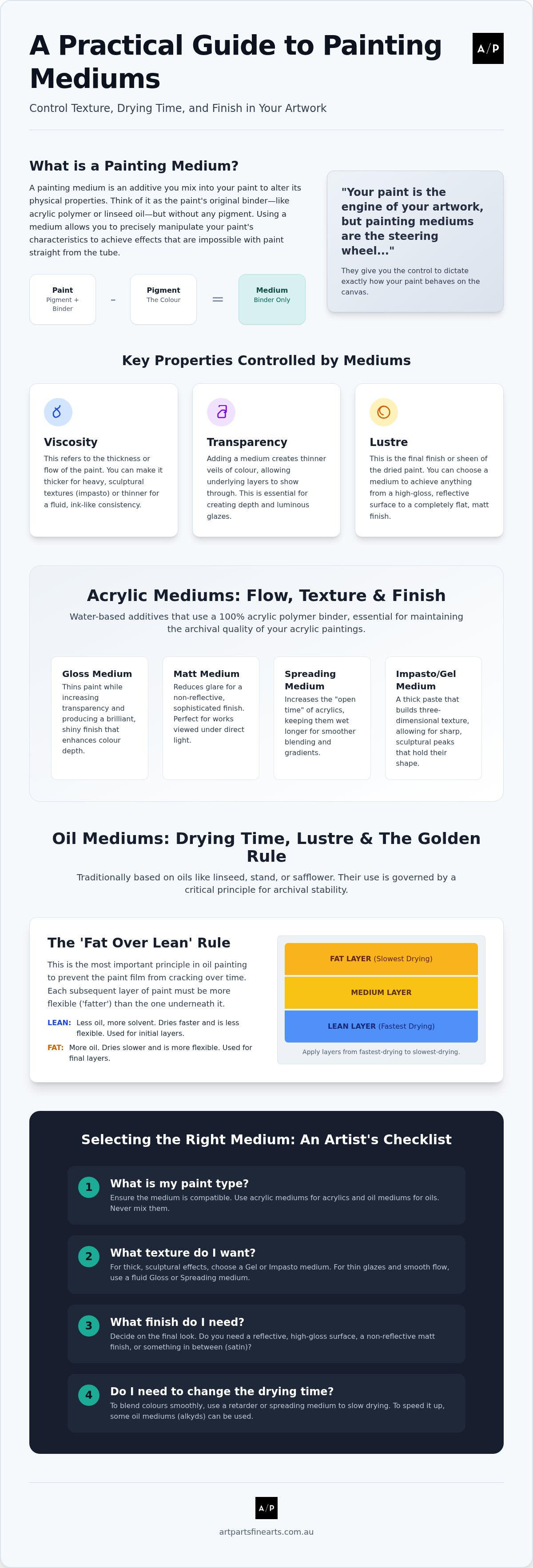
A painting medium is an additive mixed into your paint to alter its physical properties. While paint consists of pigment suspended in a binder, mediums are essentially that same binder without the colour. They allow you to manipulate viscosity, transparency, and drying time to achieve effects that tube paint cannot manage on its own, such as standing impasto peaks or luminous glazes.
Using professional additives ensures your work remains stable. While it's tempting to thin paint with water or cheap solvents, doing so often breaks down the binder, leading to a weak paint film that may flake off the canvas. Professional-grade options from brands like Matisse or Langridge maintain a strong bond, keeping your creative investment safe for decades.
Key properties changed by mediums
- Viscosity: This refers to the thickness or resistance of the paint. You can increase it for heavy texture or decrease it for a fluid, ink-like flow.
- Transparency: Adding more binder lets you create thin veils of colour, allowing underlying layers to glow through the top coat.
- Lustre: You can choose a finish ranging from a high-gloss sheen to a flat, dead matt, depending on the mood of the piece.
Archival quality and the chemistry of paint
The durability of your painting depends on the binder-to-pigment ratio. If you add too much water to acrylics, the polymer chains can't interlock properly. Professional additives prevent this by providing extra "glue" to hold the pigment in place. This chemistry is also vital during the initial preparation of your surface.
Foundational steps like sizing, a sealant that protects canvas fibres from acidic oil paint, and gesso, a primer that provides "tooth" or texture for the paint to grip, are the first mediums an artist uses. These layers ensure the paint bonds perfectly to the surface, preventing cracking or peeling as the years pass.
Acrylic Mediums: Enhancing Flow and Texture with Matisse
Acrylic mediums are water-based and typically use a 100% acrylic polymer emulsion as a binder. These additives are essential for maintaining the archival integrity of your work, especially in the variable Australian climate. An impasto medium is a thick paste used to create three-dimensional textures on the canvas, allowing you to build height that holds its shape as it dries. While Matisse Structure Acrylics are designed for heavy texture, adding specific mediums can further enhance these properties.
Gloss mediums increase colour depth and saturation by creating a smooth surface that reflects light evenly. Matt mediums reduce glare for a sophisticated finish, which is perfect for pieces that will be photographed or displayed under direct studio lights. Choosing the right finish is just as important as the technique itself when you're aiming for a professional result.
Popular Matisse mediums for acrylic painters
Matisse Gloss Medium is the standard choice for thinning paint while maintaining a brilliant, shiny finish. For those who prefer a non-reflective surface, Matisse Matt Medium is the reliable alternative. If you find your paint dries too quickly on a hot afternoon, Spreading Medium increases the "open time" of your acrylics. This allows for smoother blending and transitions similar to those found in traditional oil painting techniques.
Achieving texture and body
Gel mediums allow you to extend your paint volume significantly without losing colour intensity or pigment density. Integrating Matisse acrylic paint structure into your workflow provides a solid foundation for professional impasto effects. When you mix these with other heavy body acrylic paint brands, you gain the freedom to create varied heights and sharp, sculptural edges. If you're working on a large scale, consider using bulk stretched canvas to give yourself plenty of room to experiment with these heavy textures.
While artists often use mediums to build form on canvas, those looking for structural solutions for exterior architecture can explore Direct Product Sales to see how high-quality decorative foam mouldings provide similar sculptural depth on a larger scale.
Oil Mediums: Controlling Drying Time and Lustre with Langridge
Oil mediums are often based on linseed, stand, or safflower oils and require solvents for cleanup. Langridge oil mediums are formulated right here in Australia to provide consistent results for professional artists working in our unique climate. It is important to remember that drying oils like linseed oil increase the flexibility and gloss of the paint film, making them a staple in most studios.
The 'fat over lean' rule is the most important principle to follow when using these mediums. This rule ensures flexible, oil-rich layers sit atop leaner, solvent-heavy layers. By allowing the lower layers to dry faster and remain less flexible, you prevent the top surface from cracking or peeling as the paint film cures over several months.
Essential oil additives for the studio
- Refined Linseed Oil: This is the standard medium for increasing flow and transparency in artist grade oil paints online. It thins the paint without losing the structural bond of the binder.
- Stand Oil: This is a thickened, heat-treated oil that levels out brushstrokes. It is ideal for glazing and achieving a smooth, enamel-like finish.
- Odourless Solvents: These are safer, modern alternatives to traditional turpentine. They are essential for thinning your initial 'lean' layers and cleaning your brushes thoroughly.
Specialty oil mediums for unique effects
Cold Wax Medium is an excellent choice for artists wanting to create matt, thick textures that can be carved into or layered with a palette knife. If you need to work quickly, Alkyd Mediums use synthetic resins to significantly speed up the drying time of traditional oils, often making them touch-dry within 24 hours. Once your work is fully cured, which can take six to twelve months, applying professional varnishes and fixatives will protect the surface from dust and UV damage.
Selecting the Right Medium: A Practical Artist's Checklist
Choosing the right additive is a matter of matching your technical needs with your creative vision. First, identify your primary paint type. Acrylic and oil mediums are rarely interchangeable; using an oil-based additive in acrylics will prevent the paint from curing. Next, consider your desired drying time. If you need to blend colours for hours, a retarder or slow-drying oil is essential. For fast layering, choose alkyds or quick-drying gels. Finally, decide on your finish. Gloss enhances colour depth, while matt reduces glare. If you are working on a large scale, look for extenders that increase paint volume without sacrificing pigment intensity.
Common mistakes to avoid when using mediums
One frequent error is over-thinning with water for acrylics or spirit for oils. This dilutes the binder too much, which can cause the paint to under-bind and flake off the surface. While most professional Australian brands are compatible, always test mixing different brands before starting a major piece. For oil painters, applying varnish too early is a common pitfall. The paint film must be fully cured, which typically takes six months or longer, to avoid trapping moisture and causing future damage.
The Art Parts recommendation for professional results
We suggest starting with a basic gloss and matt medium to understand how they change your favourite colours. Investing in high-quality Australian-made products like Matisse and Langridge provides archival peace of mind and consistent handling. You can browse the full range of over 150 options in our mediums collection to find your perfect match. Our staff are practising painters who can help you navigate these technical choices to ensure your studio practise remains productive and rewarding.
Master Your Materials for Professional Results
Choosing the right painting mediums allows you to move beyond the limitations of tube paint and take full control of your creative process. By understanding how different additives affect viscosity, transparency, and drying speed, you can confidently achieve specific textures like heavy impasto or luminous glazes. Using professional-grade Australian brands like Matisse and Langridge ensures your work maintains its archival quality for years to come.
As stockists of these industry-standard materials, we understand the importance of having the right tools for every layer of your painting. Our team of practising artists is always available to offer expert advice if you feel uncertain about compatibility or technical terms. Whether you are a beginner or a professional, investing in the right additives is a step towards more predictable and polished outcomes in your studio.
We look forward to seeing how these materials help you refine your technique and bring your artistic vision to life on the canvas. Our goal is to ensure you feel supported at every step of your creative journey.
Frequently Asked Questions
What is the difference between a medium and a varnish?
A painting medium is mixed directly into your paint while you work to change its handling or finish. In contrast, a varnish is a final protective coating applied only after the painting is completely dry. While mediums become a permanent part of the paint film, most professional varnishes are designed to be removable for future cleaning and restoration without damaging the underlying artwork.
Can I use water to thin my acrylic paint instead of a medium?
You can use water for minor adjustments, but adding more than 25% water can weaken the acrylic binder. This leads to an unstable paint film that may peel or flake off your canvas over time. Using dedicated acrylic mediums ensures the pigment remains securely locked within a strong polymer film, maintaining archival durability even when the paint is thinned for transparent glazing or fluid techniques.
What does 'fat over lean' mean in oil painting?
This fundamental rule ensures that each successive layer of paint is more flexible than the one beneath it. Lean paint has more solvent and less oil, allowing it to dry faster. Fat paint contains more oil mediums, making it dry more slowly and remain more flexible. Following this sequence prevents the top layers from cracking as the lower layers of your oil painting continue to cure.
Do I need to use a medium for every painting?
You don't strictly need mediums for every project, as modern paints like Matisse Structure are ready to use straight from the tube. However, additives provide the control needed to achieve specific artistic goals that tube paint alone cannot manage. Whether you want to extend your paint for economic reasons or create thick impasto textures, these tools allow you to customise your materials to suit your individual style.
How do I speed up the drying time of my oil paints?
The most effective way to accelerate drying is by mixing your paint with an alkyd medium. These synthetic resins can reduce the drying time of traditional oils from weeks to just a day or two. You can also use odourless solvents for your initial layers to ensure they touch-dry quickly. Using these professional additives helps you maintain a steady workflow without waiting months for layers to cure.
Article by
Art Parts Fine Arts
Art Parts Fine Arts is an Australian art-supplies store based in Albury, shipping Australia-wide. Hand-picked by artists, our range covers paints, canvas, brushes, paper, printmaking and more, for everyone from students to professionals. We share practical guides and tips to help you get the most out of your materials.
Disclaimer
This article is general information to help you choose and use art materials. It is not professional, health or safety advice. Always follow the manufacturer's instructions and safety guidance for any product, and take care when using solvents, varnishes and other materials. Product availability, specifications and pricing may change, so please check the current product page for details.